
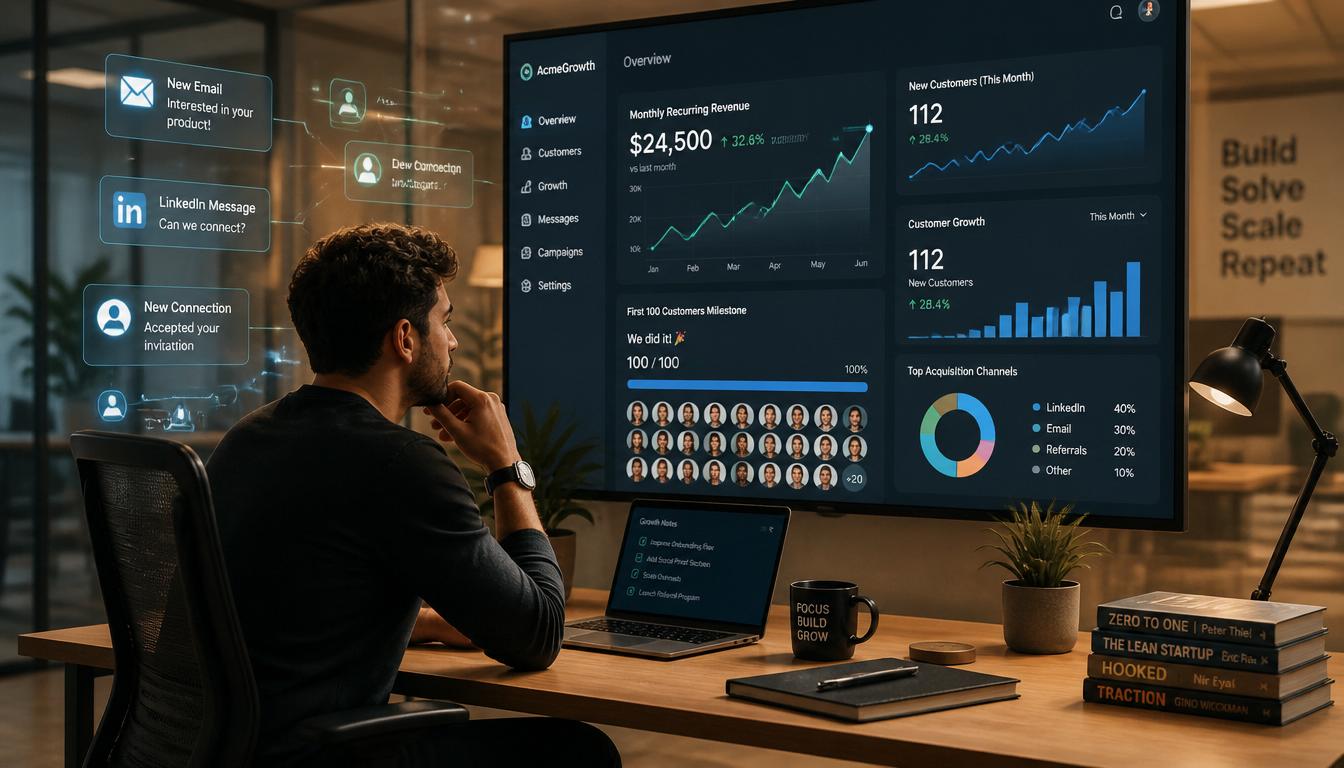
Fastest Way to Get Your First 100 Paying Customers (2026 Guide)
Getting your first 100 paying customers is one of the most important milestones in any business journey. It is not just about revenue, it is about proving that people actually want what you are building.
Research from CB Insights shows that a major reason startups fail is lack of market demand. If nobody is willing to pay, nothing else matters.
When I (Munawar Gul), a tech and business writer working closely with early-stage founders, helped a SaaS startup refine its early acquisition strategy, one pattern became clear: founders who focused on direct outreach and fast feedback loops consistently reached traction faster than those waiting for perfect branding or a polished product.
Your first 100 customers rarely come from scaling tactics. They come from conversations, experimentation, and speed.
Start With a Laser-Focused Target Audience
Trying to sell to everyone slows growth. Narrow targeting accelerates it.
When I worked with a B2B founder targeting “small businesses,” response rates were low and inconsistent. After narrowing the audience to “independent insurance brokers with fewer than 10 employees,” response rates improved significantly within days.
Define your ideal early customer
Break it into:
- Industry
- Specific pain point
- Location or environment
For example:
Instead of “e-commerce businesses,” use:
“Shopify store owners in Southeast Asia struggling with cart abandonment.”
This clarity improves messaging, outreach, and conversion rates almost immediately.
Validate Your Offer Before You Scale
Before investing in ads or building complex funnels, validate your offer manually with 10–20 real prospects.
When I set this up for a client recently, we discovered their pricing was completely misaligned with customer expectations. Running a small test early on helped them avoid spending weeks on unnecessary work.
Early validation helps you:
- Refine pricing
- Improve messaging
- Understand objections
This stage is about learning, not scaling.
Before you fully commit to scaling your idea, it can also help to understand beginner income paths in How to Make $100 a Day Online: 8 Legitimate Methods That Actually Pay, especially if you’re still exploring simple ways to generate early cash flow.
Use Direct Outreach as Your Fastest Growth Engine
Direct outreach remains one of the fastest ways to acquire early customers.
Channels include:
- Cold email
- LinkedIn messages
- WhatsApp outreach
- Instagram DMs
Benchmarks from Mailchimp suggest cold email performance varies widely, but strong targeting can significantly improve open and response rates.
What makes outreach effective
A strong message:
- Identifies a specific problem
- Shows understanding of the pain
- Offers a simple solution
- Ends with one clear call to action
Keep messages under 150 words. Long pitches tend to reduce response rates.
When I tested shortened outreach scripts for a consulting client, response rates nearly doubled within a week.
Tap Into Your Personal Network First
Your first customers are often already within your network.
Research from Wharton School of the University of Pennsylvania shows referred customers generally have higher long-term value than non-referred ones.
Instead of vague requests, be specific:
“Do you know someone struggling with [specific problem]? I’d appreciate a quick introduction.”
Being clear about what you need makes it easier for others to assist you.
If you already have a skill and want to monetize it quickly, How to Turn Your Skills into a Successful Freelance Side Gig is a useful guide that shows how to start freelancing and land your first paying clients.
Create Urgency With Early-Bird Offers
Scarcity influences buying decisions when used ethically and transparently.
Research from Journal of Consumer Psychology shows that limited availability can increase purchase intent in certain contexts.
Instead of random discounts, structure your offer:
Example:
Founding Member Offer: $49/month for the first 30 customers only. After that, pricing increases to $99.”
This creates urgency while maintaining trust.
Master One Channel Before Expanding
One focused channel outperforms scattered efforts across many platforms.
According to Nielsen, staying consistent helps people remember your brand better and makes your marketing more effective.
Choose based on your audience:
- B2B -> LinkedIn or cold email
- Consumer products -> Instagram or communities
- Local services -> WhatsApp or referrals
Focus on one marketing or outreach channel for a minimum of 30 days to see how it performs before exploring new avenues.
Solve a Painful and Urgent Problem
People buy quickly when the problem is painful and urgent.
A business losing $5,000 per month will act faster than one facing minor inconvenience.
Strong messaging focuses on:
- Cost of inaction
- Immediate consequences
- Clear outcome
Instead of listing features, emphasize what the customer loses by waiting.
Build Social Proof From Day One
Even a few testimonials can significantly improve conversion rates.
According to BrightLocal, most consumers trust reviews almost as much as personal recommendations.
When I helped a startup gather early feedback, even 3–5 testimonials noticeably improved landing page performance.
Ask early users for:
- Written feedback
- Measurable outcomes
- Specific results (e.g., time saved, revenue gained)
According to research from BrightLocal, most consumers trust online reviews almost as much as personal recommendations, which highlights how important early testimonials are for building credibility.
Partner With Micro-Influencers and Communities
Micro-influencers often outperform larger influencers in engagement.
Research from HubSpot shows that micro-influencers can drive higher engagement in niche audiences.
Focus on:
- Small Facebook groups
- WhatsApp communities
- Niche creators
Engage first, then pitch partnerships naturally.
Build a Simple High-Converting Landing Page
Your landing page only needs:
- Clear headline
- Problem + solution
- Three benefits
- CTA or pricing
- Testimonials
Tools like Carrd or Webflow can help you launch quickly.
Simple pages often outperform complex websites in early-stage testing because they reduce confusion and focus attention.
Sell Manually Before Automating Anything
Automation cannot replace early customer insight.
Manual conversations reveal:
- Real objections
- True pricing sensitivity
- Buying triggers
Based on my experience with startups in the early stages, it’s best to personally close the first 50 to 100 customers before turning to automated systems.
Making sure your messaging is based on facts and real experiences, not guesses or assumptions.
Iterate Fast Based on Real Data
Track every outreach effort:
- Channel used
- Message variation
- Response rate
- Conversion rate
After 1–2 weeks, clear patterns will emerge.
Concentrate on what has been effective and cut out what isn’t. Concentrating on your goals speeds up progress much more than trying random experiments without a clear plan.
Conclusion: Your Roadmap to 100 Customers
Getting your first 100 paying customers is not luck. It is execution.
The fastest path usually looks like this:
- Define a narrow audience
- Validate early
- Use direct outreach
- Focus on one channel
- Collect testimonials early
- Iterate quickly
Progress depends more on clarity and consistent effort than on overcomplicating processes or waiting for flawless strategies.
Frequently Asked Questions
1. How much time does it typically take to attract your first 100 customers?
For many founders, it can take 30–90 days if they use direct outreach and fast iteration. However, timelines vary based on pricing, product type, and market accessibility.
2. Do I need a website before getting customers?
No. Many founders close early customers using direct messages or email. A simple landing page can help, but it is not mandatory in the beginning.
3. What is the best channel for early customers?
It depends on your audience. B2B founders often succeed with LinkedIn and email. Consumer products tend to perform better on social platforms and communities.
4. Should I discount my product for early users?
Yes, but frame it as “founder pricing” in exchange for feedback or testimonials rather than a generic discount.
5. How do I get testimonials with no customers?
Offer free or discounted access to a small group of ideal users in exchange for detailed feedback and measurable outcomes.