
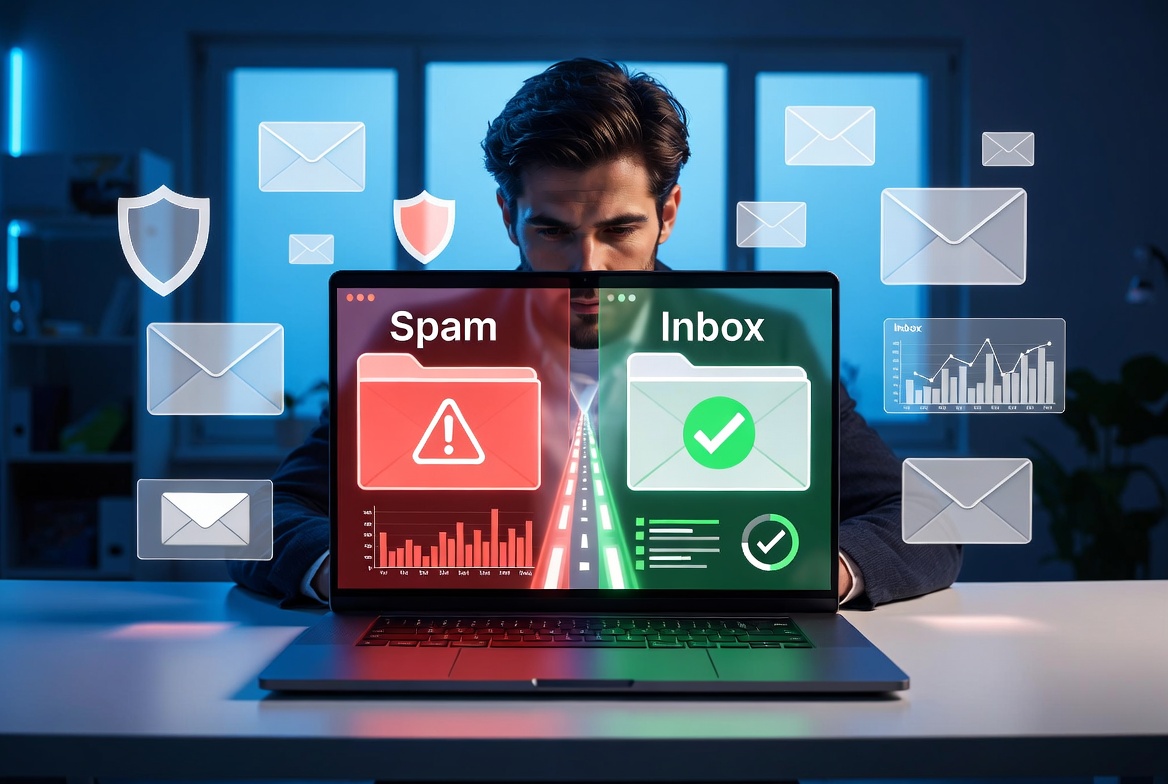
Why Your Email Marketing Emails Are Going to Spam
Sending marketing emails is still one of the most powerful ways to connect with your audience online. It delivers an excellent return on investment and helps businesses build long-term relationships with customers. However, all your effort is wasted if your messages never reach the inbox.
Many marketers get frustrated because their emails keep ending up in recipients’ spam folders. Instead of being read by subscribers, emails end up hidden in junk folders where they are often ignored or automatically deleted.
Spam filters have become smarter over the years. Email providers like Gmail, Outlook, and Yahoo analyze hundreds of factors before deciding whether your email deserves a place in the inbox. Understanding these factors is the first step toward improving your email marketing performance.
This guide explains the most common reasons emails go to spam and offers proven solutions that help improve inbox placement.
What Is Email Spam?
Email spam refers to unwanted or suspicious messages that email providers automatically move into a spam or junk folder. Spam filters exist to protect users from phishing attempts, scams, malware, and irrelevant marketing messages.
Modern spam filters evaluate many signals, including:
- Sender reputation
- Authentication records
- User engagement
- Email content
- Sending frequency
- Complaint rates
- Bounce rates
Even legitimate businesses can accidentally trigger these filters.
Why Your Email Marketing Emails Are Going to Spam
There isn’t usually one single reason. Instead, multiple small issues combine to reduce your sender reputation.
Some of the biggest causes include:
- Missing authentication records
- Poor-quality email lists
- Excessive promotional language
- Low open rates
- High unsubscribe rates
- Too many spam complaints
- Sending inconsistent campaigns
- Broken HTML formatting
Fortunately, every one of these problems has a solution.
Poor Sender Reputation
Your sender reputation is like a credit score, it’s a measure of how trustworthy your emails are.
Internet Service Providers (ISPs) monitor your sending history. If recipients frequently ignore, delete, or mark your emails as spam, your reputation drops.
If your reputation drops, it becomes harder for your emails to land in your subscribers’ inboxes.
How to Improve Your Reputation
- Send only to subscribers who opted in.
- Remove inactive contacts regularly.
- Maintain a consistent sending schedule.
- Monitor complaint rates.
- Keep bounce rates low.
Missing Email Authentication
One of the most overlooked reasons why your email marketing emails are going to spam is missing authentication.
Three important security protocols help prove your emails are legitimate:
SPF
SPF records tell email servers which servers are authorized to send emails on behalf of your domain.
DKIM
DKIM digitally signs your emails so providers know they haven’t been altered.
DMARC
DMARC works alongside SPF and DKIM to prevent spoofing and phishing attacks.
Without these records, many providers become suspicious of your emails.
Low Engagement Hurts Deliverability
Email providers closely watch how recipients interact with your messages.
Positive engagement includes:
- Opening emails
- Clicking links
- Replying
- Forwarding
- Moving emails from spam to inbox
Negative engagement includes:
- Ignoring emails
- Deleting without opening
- Marking as spam
The more your subscribers interact with your emails, the more likely your messages will reach their inboxes.
Tips to Increase Engagement
- Write compelling subject lines.
- Personalize emails.
- Segment your audience.
- Send valuable content.
- Include clear calls to action.
Spam Trigger Words
Certain words can increase spam risk, especially when overused.
Examples include:
- Free Money
- Guaranteed
- Risk-Free
- Winner
- Urgent
- Congratulations
- Act Now
- Earn Cash Fast
Using one of these words isn’t automatically bad, but stuffing subject lines with promotional language raises red flags.
Instead, write naturally and focus on providing value.
Buying Email Lists Is a Bad Idea
Purchased email lists often contain:
- Invalid addresses
- Spam traps
- Uninterested users
These lists generate high bounce rates and spam complaints, damaging your sender reputation.
Instead, grow your audience organically through:
- Website forms
- Blog subscriptions
- Free resources
- Webinars
- Lead magnets
People who choose to subscribe are more likely to open and interact with your emails.
Poor Email Design
How your emails look impacts how users experience them, and also influences whether they get marked as spam.
Avoid:
- Large image-only emails
- Too many colors
- Broken HTML
- Tiny fonts
- Excessive capitalization
- Too many links
Instead:
- Balance text and images.
- Use responsive layouts.
- Include alt text for images.
- Make buttons easy to click.
- Test emails before sending.
Sending Too Frequently
Sending emails every day may overwhelm subscribers.
Sending only once every six months can also hurt engagement because recipients forget who you are.
The ideal frequency depends on your audience.
Many successful businesses send:
| Business Type | Suggested Frequency |
| Blog | Weekly |
| E-commerce | 1–3 times weekly |
| SaaS | Weekly or biweekly |
| B2B | Weekly |
Monitor your unsubscribe rates and adjust accordingly.
Best Practices to Improve Email Deliverability
Follow these proven strategies:
- Authenticate your domain.
- Use confirmed opt-in forms.
- Remove inactive subscribers.
- Keep email lists clean.
- Personalize campaigns.
- Test subject lines.
- Avoid spammy wording.
- Monitor analytics.
- Segment audiences.
- Send valuable content consistently.
These simple habits can dramatically improve inbox placement over time.
Helpful Email Marketing Tools
Several trusted tools help monitor and improve email deliverability:
| Tool | Purpose |
| Mail-Tester | Spam score testing |
| Google Postmaster Tools | Monitor Gmail reputation |
| MXToolbox | Check DNS records |
| Litmus | Email previews and testing |
| Mailchimp | Email marketing automation |
For additional email deliverability best practices, visit the official Google Email Sender Guidelines.
Conclusion
Understanding why your email marketing emails are going to spam is essential for building successful email campaigns. Deliverability is influenced by many factors, including sender reputation, authentication, email content, subscriber engagement, and list quality.
The good news is that these issues are largely preventable. By authenticating your domain, maintaining a clean email list, sending valuable content, and following email marketing best practices, you can significantly improve inbox placement and build stronger relationships with your subscribers.
Sending marketing emails remains one of the most effective ways to reach your audience online. With careful attention to deliverability, your messages can consistently reach the inbox where they have the greatest chance of driving engagement, conversions, and long-term business growth.
Frequently Asked Questions
1. Why do my emails suddenly end up in spam folders?
This often happens because of a drop in sender reputation, authentication problems, or increased spam complaints.
2. Does Gmail automatically send marketing emails to spam?
No. Gmail evaluates sender reputation, authentication, engagement, and content before deciding where to place emails.
3. How can I check if my email is considered spam?
Use tools such as Mail-Tester or Google Postmaster Tools to evaluate your spam score and domain reputation.
4. Is buying an email list worth it?
No. Purchased lists usually result in poor engagement, high bounce rates, and spam complaints.
5. Do images increase spam risk?
Too many images with very little text can trigger spam filters. Maintain a healthy balance.
6. How long does it take to improve sender reputation?
It depends on your sending history. Consistent best practices can show improvements within a few weeks, while severely damaged reputations may take several months to recover.