How Aim Training Games Like Aimlabs Are Using AI to Make You a Better Gamer
AI is turning aim training from a repetitive shooting drill into something closer to a personal coach. Aimlabs now uses AI-powered coaching, adaptive tasks, performance analytics, and personalized training to identify weaknesses and change what you practice. Two players can use the same aim trainer and receive different training experiences.
The real reason Aimlabs feels smarter than a normal aim trainer
Most players think aim training is simple: shoot targets and chase a high score. But raw scores do not tell the whole story. You can score well while still struggling with micro-adjustments, tracking, shot timing, or target switching.
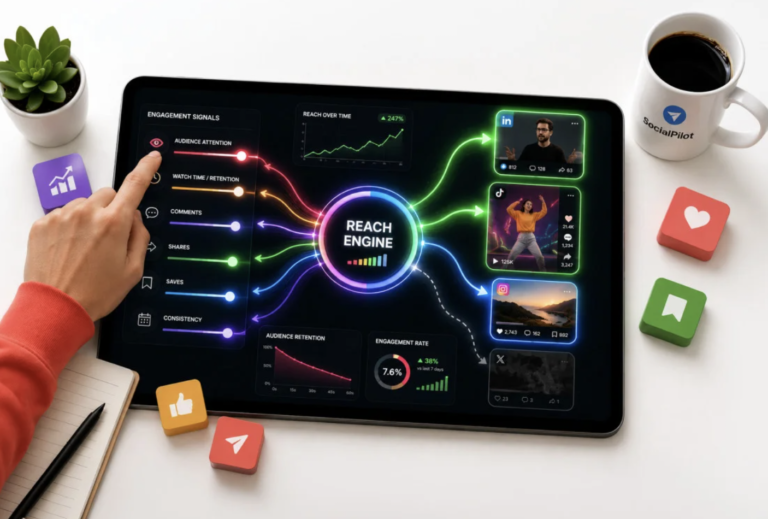
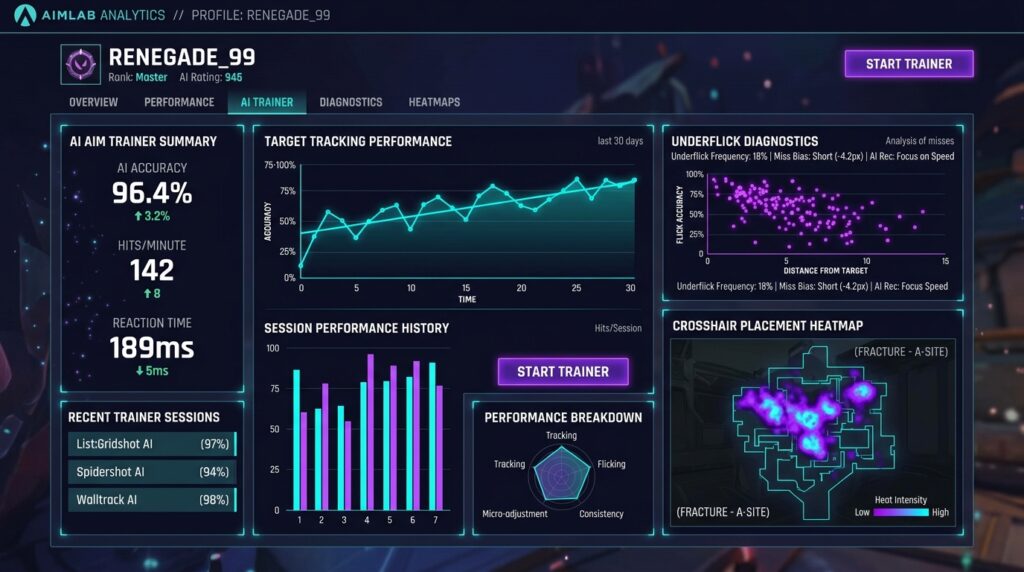
Aimlabs tracks more specific signals, including underflicks, overflicks, smoothness, shot timing, flick direction, path efficiency, and edge tracking. Those details give coaching tools more information than a single accuracy percentage.
This changes the training question. Instead of asking, “How do I get a higher score?” the system can focus on which part of your aim is holding you back.
Aimlabs also offers official Benchmarks across skills such as micro flicking, reactive tracking, and speed switching. Its 2026 guidance says benchmark results help diagnose weaknesses rather than automatically becoming the training plan.
AI is quietly replacing the one-size-fits-all practice routine
Traditional aim training can give everyone the same scenario at the same difficulty. That wastes time when a beginner finds a task overwhelming or an experienced player finds it too easy.
Adaptive Tasks are designed to change difficulty based on performance. Aimlabs says these tasks adjust training to match a player’s skill level. The idea is similar to adaptive learning: software responds to measurable behavior instead of forcing everyone through one routine.
For example, if you repeatedly miss because your mouse movement stops short, training can emphasize controlled corrections. If your tracking becomes unstable when targets move quickly, another challenge can put more pressure on that skill.
Better training may sometimes feel uncomfortable. A drill that exposes a weakness can produce a worse short-term score while creating a more useful practice stimulus.
The AI coach can turn mistakes into training instructions
Aimlabs has expanded beyond target shooting with AI coaching. Its current tools can identify weaknesses, provide personalized guidance, and generate custom tasks. Discovery also lets players ask questions and create or modify training scenarios through conversation.
That creates a useful loop: play, measure, interpret, train, and test again.
In my experience with clients, the biggest problem is often not a lack of information. It is knowing which information matters first. The same idea applies to gaming. A player can watch hours of aim guides but still practice the wrong weakness.
An AI coach can narrow that gap by connecting performance data with a suggested next action. If a player repeatedly loses fights after switching between targets, “aim better” is almost useless. A targeted system can suggest switching drills, adjust the challenge, and let the player compare results later.
That is a more practical use of AI than simply adding a chatbot.
What nobody tells you about AI aim training: mechanics still need context

Better aim does not automatically mean better gameplay. FPS performance also depends on movement, positioning, crosshair placement, decision-making, map knowledge, and game sense.
Aimlabs offers game-specific training, including hundreds of FPS game profiles and a Valorant Training Center with 1:1 map recreations and game-specific practice.
Aim is context-dependent. A player might have excellent flick speed but still lose fights by holding the wrong angle. Another may have average benchmark numbers but make better decisions in real matches.
AI can optimize the practice environment, but it cannot turn a training score into a complete picture of competitive performance.
Did You Know? Aimlabs currently says more than 40 million players use its platform, while its Steam listing says Aimlabs has passed 50 million players. The different figures appear to reflect different update points or counting methods, so they should not be treated as the same measurement.
AI training is becoming personalized, but consistency still decides results
The trend is personalization. Aimlabs already combines adaptive tasks, performance metrics, training programs, AI coaching, and task generation. Discovery can create custom tasks from natural-language requests, while 2026 Creator Studio updates added more control over bot movement, spawning, and task conditions.
Imagine starting with a benchmark, completing several drills, and receiving a revised routine based on what happened. If tracking improves but target switching falls behind, the next session could shift toward switching.
There is a limit: AI recommendations are only as useful as the data and goals behind them. A player training for leaderboard scores may need different priorities from someone climbing ranked matches.
AI cannot replace consistency. Start by measuring one weakness, train it at a challenging difficulty, then test it in your actual FPS game. If your Aimlabs score rises but in-game performance does not, reconsider the routine.
The promise is not that AI makes you a great gamer overnight. It is that practice can become more targeted, measurable, and responsive.
Today, identify your weakest measurable aim skill and train that weakness in your next session. Then test the result in your game.
What part of your aim causes you the most problems: flicking, tracking, target switching, or something else?
Frequently Asked Questions
Is Aimlabs using AI for aim training?
Yes. Aimlabs currently offers AI-powered coaching, adaptive tasks, personalized training programs, and tools that can generate or modify training tasks. These features are designed to interpret performance and provide more tailored practice instead of giving every player the same routine.
Can AI actually improve FPS aim?
AI can make practice more targeted, but improvement still depends on deliberate practice and transfer to real games. Adaptive difficulty and performance analysis can help you focus on weaknesses. They cannot replace fundamentals such as movement, positioning, crosshair placement, and game-specific decision-making.
Is Aimlabs better than practicing only in my game?
Aimlabs can isolate specific mechanics more easily than a normal match, making it useful for focused practice. However, real games provide context that aim trainers cannot fully reproduce. A balanced routine can combine aim drills with actual matches, game-specific scenarios, movement practice, and review of mistakes.