What Is Biometric Data and Why You Should Care Who Has Access to Yours
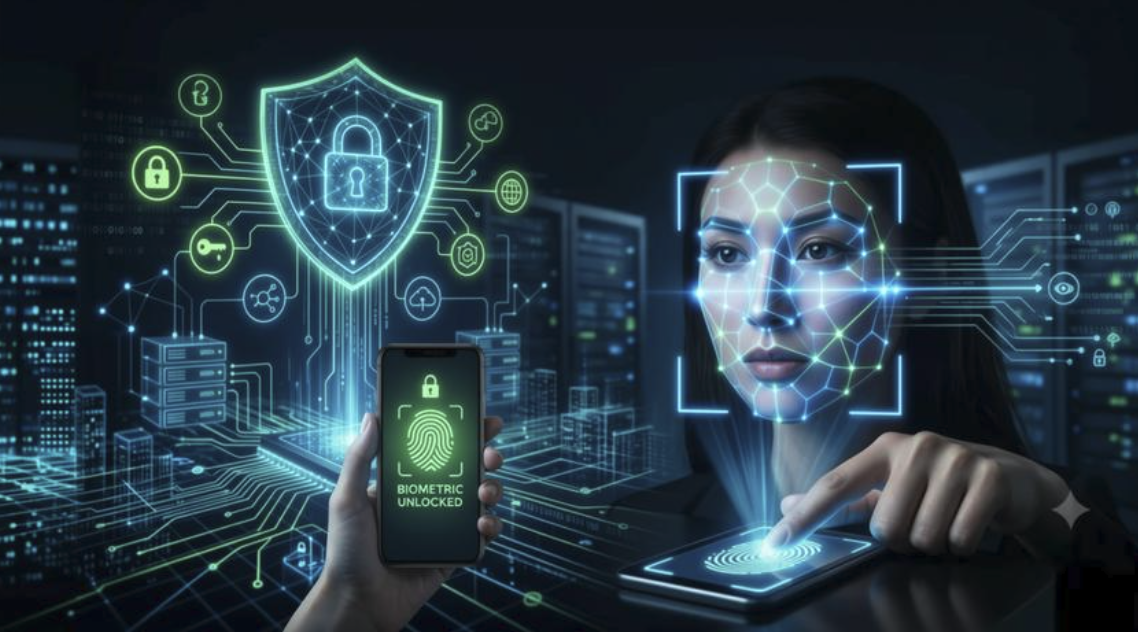
Whenever you unlock your smartphone with your fingerprint, utilize facial recognition to open applications, or go through airport security checks, you are engaging with your biometric data. Although these innovations enhance convenience, they also bring up critical concerns regarding privacy and data protection.
Unlike passwords, biometric information cannot simply be changed if it is stolen. You can reset a password, but you cannot replace your fingerprint or your face. This is why it’s essential to know who can access your biometric information, as awareness is growing regarding data privacy issues.
In this article, you’ll learn what biometric data is, how organizations collect and use it, the risks involved, and how you can protect your personal information.
What Is Biometric Data?
Biometric information includes distinctive physical features or behavioral traits that can help verify an individual’s identity.
Common types of biometric data include:
- Fingerprints
- Facial recognition scans
- Voice patterns
- Iris scans
- Retina scans
- Hand geometry
- DNA
- Typing patterns
- Walking style
Since these traits are specific to every person, they are commonly employed for confirming identity and secure access.
How Does Biometric Authentication Work?
Biometric systems work by capturing your unique features and converting them into digital data.
The process usually involves four steps:
- Data collection through a scanner or camera.
- Conversion into a digital template.
- Storage in a database or device.
- Comparison when authentication is needed.
When a biometric scan aligns with stored data, permission is granted to proceed.
Where Is Biometric Data Used?
Biometric technology has become part of everyday life.
Common examples include:
- Smartphones
- Banking apps
- Airports
- Smart homes
- Office buildings
- Healthcare systems
- Border control
- Online payment systems
Companies utilize biometric technologies to enhance safety measures while also making processes more user-friendly.
Types of Biometric Data
Fingerprint Recognition
Many smartphones use fingerprint sensors for quick and secure access.
Facial Recognition
Cameras analyze facial features to confirm identity.
Voice Recognition
Voice recognition is used by virtual assistants and banking institutions to authenticate users.
Iris and Retina Scans
These technologies analyze the unique structure of the eye.
Behavioral Biometrics
Some systems identify users based on typing speed, mouse movements, and other behaviors.
Why Companies Collect Biometric Data
Organizations collect biometric data for several reasons.
Better Security
Biometrics are more difficult to copy than traditional passwords.
Faster Authentication
Users can unlock devices in seconds.
Fraud Prevention
Banks use biometrics to reduce identity theft.
Improved User Experience
Biometric systems eliminate the need to remember multiple passwords.
Why You Should Care Who Has Access to Your Data
Biometric information is highly sensitive. If it falls into the wrong hands, the consequences can be serious.
Potential risks include:
- Identity theft
- Unauthorized surveillance
- Data breaches
- Financial fraud
- Tracking without consent
- Privacy violations
Unlike passwords, biometric data is permanent.
What Happens If Biometric Data Is Stolen?
A stolen password can be changed in minutes. Biometric data is different.
If hackers gain access to biometric records, victims may face long-term problems such as:
- Fraudulent account access
- Fake identity creation
- Privacy violations
- Security risks
- Unauthorized monitoring
This is why strong data protection measures are essential.
How Companies Store Biometric Data
Organizations typically store biometric information in one of two ways.
Local Storage
Data remains on the user’s device.
Advantages:
- Better privacy
- Faster authentication
- Lower risk of large-scale breaches
Cloud Storage
Data is stored on remote servers.
Advantages:
- Easy synchronization
- Remote access
- Centralized management
Users should understand where their data is stored.
The Privacy Risks of Biometric Technology
Although biometrics improve convenience, they also create privacy concerns.
Major concerns include:
- Mass surveillance
- Data sharing with third parties
- Lack of user consent
- Inaccurate identification
- Government monitoring
- Commercial misuse
Consumers should always review privacy policies before sharing biometric information.
Biometric Data and Smart Devices
Many smart devices rely on biometrics.
Examples include:
- Smartphones
- Smart locks
- Smart speakers
- Security cameras
- Wearable devices
As smart-home technology grows, protecting biometric information becomes even more important.
Laws Protecting Biometric Data
Many countries have introduced laws to regulate the use of biometric information.
These laws often require companies to:
- Obtain user consent
- Explain how data will be used
- Secure stored information
- Delete unnecessary records
- Notify users about data breaches
However, regulations vary from country to country.
How to Protect Your Biometric Data
You can reduce the risk of misuse by following these security practices.
Use Strong Device Security
Enable passwords and two-factor authentication.
Check App Permissions
Only grant biometric access to trusted applications.
Read Privacy Policies
Understand how companies use your data.
Update Your Devices
Install security updates regularly.
Avoid Untrusted Services
Do not share biometric information with unknown platforms.
The Role of Artificial Intelligence in Biometrics
Artificial intelligence is making biometric systems more advanced.
AI can:
- Improve facial recognition accuracy
- Detect suspicious activity
- Analyze voice patterns
- Strengthen fraud prevention
However, AI also raises concerns about surveillance and privacy.
The Future of Biometric Technology
The development of biometric systems is expected to advance significantly over the coming ten years.
Future developments may include:
- Password-free authentication
- AI-powered security systems
- Advanced behavioral biometrics
- Improved privacy controls
- More secure local processing
The challenge will be balancing convenience with privacy.
Conclusion
In today’s world, biometric information is increasingly integrated into everyday activities. From unlocking smartphones to accessing bank accounts, biometrics offer speed and convenience that traditional passwords cannot match.
However, because biometric information is permanent and highly personal, it is important to understand who has access to your data and how it is being used.
By staying informed, reviewing privacy settings, and sharing data only with trusted organizations, you can better protect your digital identity.
FAQ’s
1. What is biometric data?
Examples of biometric data encompass one-of-a-kind physical features and behavioral traits, including fingerprints, facial recognition, and voice signatures.
2. Why is biometric data important?
It is used for identity verification, security, and fraud prevention.
3. Can biometric data be stolen?
Yes. Hackers can target databases containing biometric information, making strong security essential.
4. How can I protect my biometric data?
Use trusted apps, enable two-factor authentication, update your devices, and review privacy settings regularly.