What Is Matter 2.0 Protocol and How It Finally Fixed Smart Home Problems
Smart homes promised a future where lights, speakers, cameras, locks, and appliances would work together seamlessly. However, for years, many users faced frustrating problems. Devices from different brands often failed to connect, required separate apps, or stopped working after software updates.
This is where Matter 2.0 comes in. Developed by major technology companies, Matter 2.0 aims to create a universal standard for smart home devices. The goal is simple: make smart homes easier to set up, more secure, and compatible across different ecosystems.
But what exactly is Matter 2.0, and how does it solve the problems that have frustrated smart-home users for years? Let’s explore.
What Is Matter 2.0 Protocol?
Matter 2.0 is an open-source smart-home communication protocol designed to allow devices from different manufacturers to work together.
The protocol was created by the Connectivity Standards Alliance (CSA) and is supported by major technology companies.
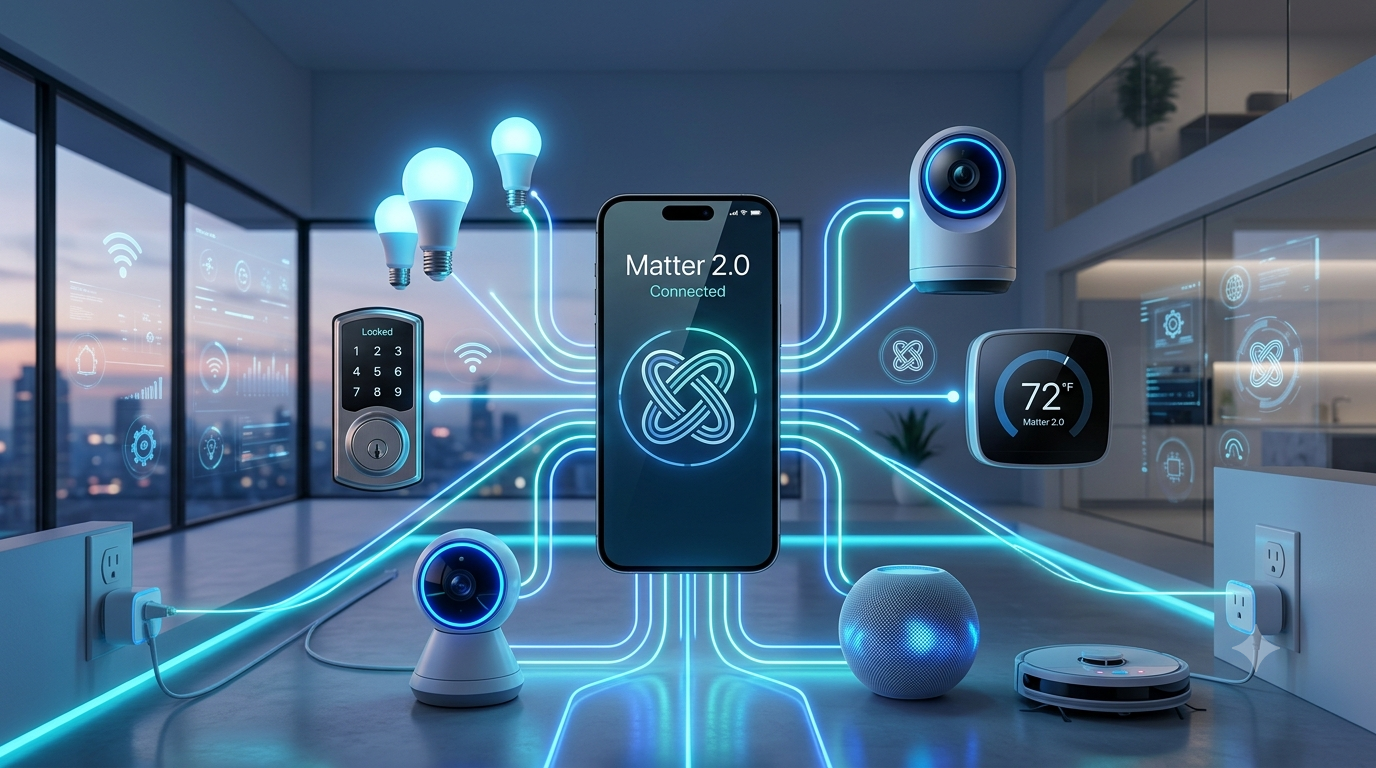
Matter 2.0 enables smart-home devices to communicate regardless of whether they come from different brands.
For example, a smart bulb from one company can work with a smart speaker from another company without requiring complicated setups.
To learn more about the Matter standard and certified devices, visit the official Matter website.
Why Smart Homes Had Problems Before Matter 2.0
Before Matter, smart-home users faced several common issues:
- Devices from different brands could not communicate.
- Users needed multiple mobile apps.
- Setup processes were complicated.
- Security standards varied between manufacturers.
- Internet connectivity problems affected performance.
- Software updates sometimes broke compatibility.
As smart homes became more popular, these issues became increasingly frustrating.
How Does Matter 2.0 Work?
Matter 2.0 creates a common language that allows smart-home devices to communicate with each other.
The process works like this:
- A smart device joins the home network.
- Matter verifies and authenticates the device.
- The device communicates using standardized protocols.
- Multiple ecosystems can control the same device.
- Users manage everything through their preferred platform.
This approach reduces compatibility issues and simplifies device management.
Key Technologies Behind Matter 2.0
Matter 2.0 relies on several technologies to deliver a smooth smart-home experience.
Wi-Fi
Wi-Fi connects devices that require high bandwidth, such as cameras and streaming devices.
Thread
Thread is a low-power networking technology that improves reliability and reduces delays.
Ethernet
Some smart-home hubs use Ethernet for stable and fast communication.
Bluetooth Low Energy
Bluetooth helps devices connect during the initial setup process.
Major Problems Matter 2.0 Solves
1. Device Compatibility
One of the biggest problems with smart homes was compatibility.
Matter 2.0 allows devices from different brands to work together more easily.
2. Easier Setup
Users no longer need to spend hours configuring devices.
Many Matter-enabled devices can be connected with a simple QR code scan.
3. Better Security
Matter 2.0 includes strong encryption and authentication standards to protect user data.
4. Local Control
Many Matter devices can communicate locally, reducing dependence on cloud servers.
5. Improved Reliability
Because devices communicate more efficiently, smart-home systems become more stable.
Which Devices Support Matter 2.0?
Matter 2.0 supports an expanding range of smart-home products, including:
- Smart lights
- Smart plugs
- Door locks
- Thermostats
- Sensors
- Smart speakers
- Security cameras
- Smart TVs
- Robot vacuums
More categories are expected to be added in future updates.
Benefits of Matter 2.0 for Homeowners
Matter 2.0 offers several advantages.
Simpler Smart Homes
Users can control multiple devices from a single ecosystem.
Greater Flexibility
People are no longer locked into one manufacturer.
Faster Setup
Adding new devices takes only a few minutes.
Better Privacy
Local communication reduces the amount of data sent to external servers.
Long-Term Compatibility
Devices are more likely to remain compatible as technology evolves.
Matter 2.0 and Voice Assistants
Matter 2.0 works with popular voice assistants, making it easier to control devices using voice commands.
Examples include:
- Voice-controlled lighting
- Smart thermostats
- Security systems
- Smart entertainment devices
Users can choose their preferred voice assistant without worrying about compatibility.
Matter 2.0 vs Older Smart-Home Standards
| Feature | Older Standards | Matter 2.0 |
| Cross-brand support | Limited | Excellent |
| Setup process | Complex | Simple |
| Security | Varies | Strong |
| Local control | Limited | Better |
| Compatibility | Inconsistent | Improved |
Matter 2.0 addresses many of the weaknesses found in older systems.
Are There Any Limitations?
Although Matter 2.0 solves many problems, some challenges still exist.
These include:
- Older devices may require updates.
- Not all manufacturers support every feature.
- Some advanced functions remain ecosystem-specific.
- Adoption is still growing.
As more companies adopt Matter, these limitations are expected to decrease.
How to Start Using Matter 2.0
If you want to build a Matter-enabled smart home, follow these steps:
- Check whether your devices support Matter.
- Update your existing devices.
- Buy Matter-certified products.
- Use a compatible smart-home hub.
- Connect devices through your preferred ecosystem.
Starting with a few compatible devices can simplify the transition.
The Future of Matter 2.0
Matter 2.0 is expected to play a major role in the future of smart homes.
Future improvements may include:
- Support for additional device categories
- Better energy management
- Enhanced automation
- Improved security features
- Smarter AI integration
As adoption increases, smart homes could become easier and more reliable than ever before.
Conclusion
Matter 2.0 represents a major step forward for smart-home technology. By creating a universal standard, it solves long-standing problems related to compatibility, setup, security, and reliability.
For homeowners, Matter 2.0 means fewer apps, simpler installations, and greater freedom to choose devices from different brands.
As more manufacturers adopt the protocol, Matter 2.0 could finally deliver the seamless smart-home experience that users have wanted for years.
FAQ’s
1. What is Matter 2.0?
Matter 2.0 is a smart-home communication protocol that allows devices from different brands to work together.
2. Does Matter 2.0 require an internet connection?
Many Matter devices can communicate locally, although some features still require internet access.
3. Which devices support Matter 2.0?
Devices such as smart lighting, outlets, thermostats, speakers, locks, sensors, and various other connected home gadgets are compatible with Matter 2.0.
4. Is Matter 2.0 more secure?
Yes. Matter 2.0 includes stronger encryption and authentication features to improve security.