
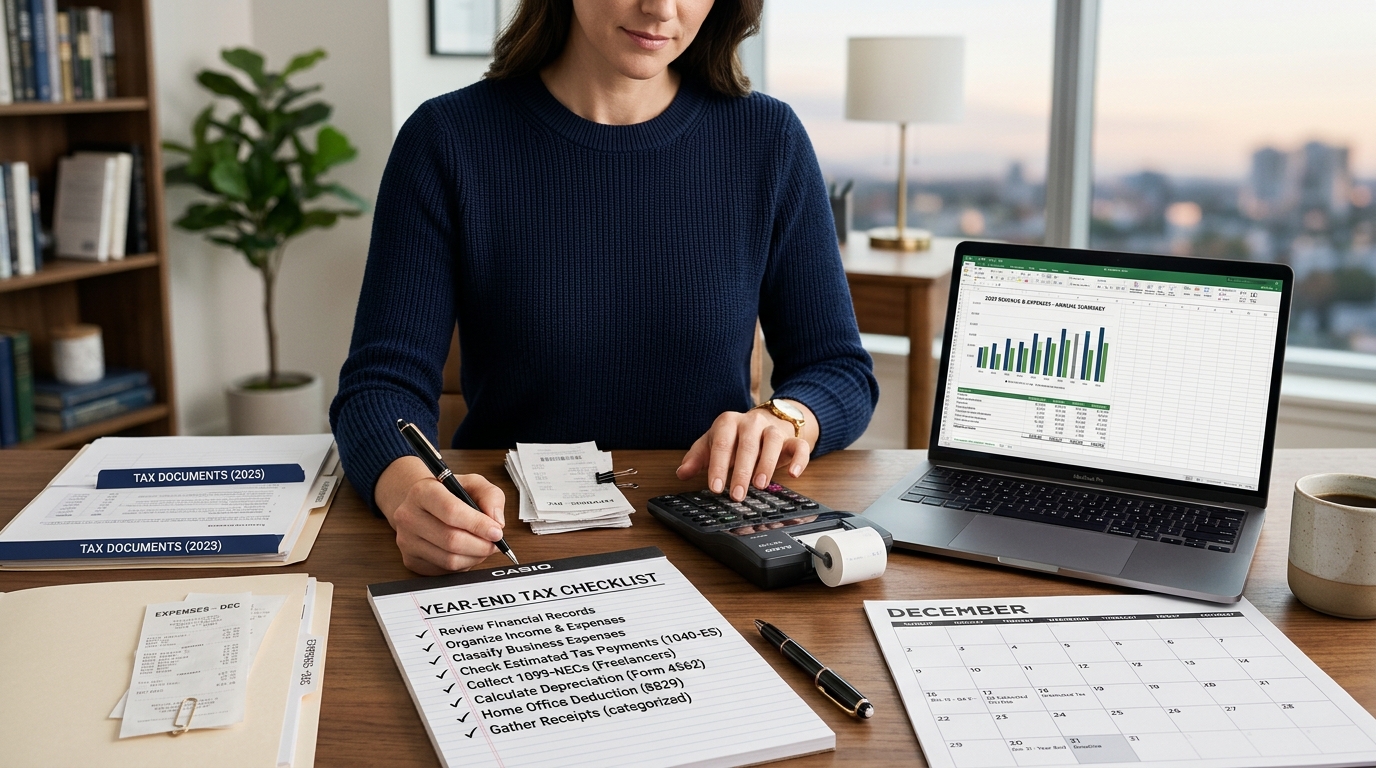
Year-End Tax Checklist: 15 Essential Steps for Freelancers and Small Business Owners
Preparing your taxes before December ends can save time and money. However, many freelancers and business owners wait until tax season. As a result, they miss deductions, overlook expenses, and face unnecessary stress.
A year-end tax checklist helps you organize financial records. It also helps identify potential tax savings before deadlines arrive. Whether you run a small business or work independently, preparation matters.
As the year draws to a close, make time for these 15 important tasks.
1. Review Your Business Income
Start by working out how much income your business earned throughout the year. Include payments from clients, online platforms, and other sources.
Next, compare your income with previous financial records. Check invoices against bank deposits and payment processor statements.
Additionally, identify outstanding client payments. This gives you a clearer picture of your financial position.
2. Organize Business Expenses
Accurate expense records make tax preparation easier. Therefore, review every business transaction before closing your books.
Separate personal purchases from business expenses. Also, categorize expenses into appropriate groups.
Common business expenses include:
- Office supplies and equipment
- Internet and phone services
- Business software subscriptions
- Marketing and advertising costs
- Professional services and consulting
- Business travel expenses
However, only claim expenses that qualify under applicable tax rules.
3. Identify Eligible Tax Deductions
Tax deductions can reduce your taxable business income. Therefore, review potential deductions before the year ends.
Freelancers may qualify for several business-related deductions. Small business owners may also claim eligible operating expenses.
For example, software subscriptions and professional fees might qualify. However, eligibility depends on local tax regulations.
Keep supporting receipts and payment records for every claim.
4. Check Your Estimated Tax Payments
Many freelancers and business owners make estimated tax payments. Therefore, compare your payments with your expected annual tax liability.
If you paid too little, you might face penalties. Conversely, overpayments could result in a refund.
Review your tax calculations before the final payment deadline. When necessary, consult a qualified tax professional.
5. Review Your Business Bank Accounts
Separate business and personal finances whenever possible. This makes financial reporting much easier.
Additionally, review every bank statement for unexpected transactions. Check outstanding payments, service charges, and duplicate expenses.
Reconcile your records with actual bank balances. This process helps identify errors before filing.
6. Update Your Invoices and Payment Records
Unpaid invoices can create problems during tax preparation. Therefore, review your accounts receivable before December ends.
Contact clients with overdue payments. Also, confirm whether outstanding invoices contain accurate information.
Keep copies of issued invoices and payment confirmations. Organized records support accurate financial reporting.
7. Review Payroll and Contractor Payments
If you employ workers, review your payroll records. Confirm salaries, bonuses, benefits, and required tax withholdings.
Additionally, check payments made to independent contractors. Verify that their information and payment records remain accurate.
Prepare required employment tax documents according to local deadlines. This helps prevent reporting mistakes and potential penalties.
8. Evaluate Retirement Contributions
Retirement contributions may offer tax advantages. Therefore, review available retirement plans before the year ends.
Freelancers and eligible business owners have several potential options. These include individual retirement accounts and self-employed retirement plans.
However, contribution limits and deadlines vary by plan. Check current regulations before making additional contributions.
9. Review Business Equipment and Assets
Check purchases involving computers, furniture, machinery, and other equipment. Some qualifying purchases may receive favorable tax treatment.
For example, certain equipment expenses may qualify for depreciation deductions. Other purchases might qualify for specific immediate deductions.
Keep purchase receipts and installation records. Also, review asset disposal and replacement transactions.
10. Check Home Office Expenses
Many freelancers operate businesses from home. Consequently, they should review potential home office deductions.
Depending on local regulations, qualifying expenses may include:
- Eligible office space expenses
- A portion of utility costs
- Internet and communication services
- Certain maintenance expenses
However, home office deduction requirements differ between jurisdictions. Check the applicable rules before claiming anything.
11. Review Business Insurance and Licenses
Business insurance protects against unexpected financial risks. Therefore, review your existing coverage before renewal dates.
Check professional liability, property, and general business insurance. Also, confirm that required licenses remain valid.
Additionally, identify upcoming renewal fees. Include eligible business costs in your financial records.
12. Prepare for Tax Law Changes
Tax regulations can change between financial years. Therefore, review updates affecting freelancers and small businesses.
Pay attention to deduction limits, reporting requirements, and contribution rules. These changes could influence your tax planning.
Use official government resources for accurate information. Alternatively, consult a qualified accountant for personalized guidance.
13. Back Up Important Financial Documents
Losing financial records can create serious problems. Therefore, create secure backups before the year ends.
Store digital copies of invoices, receipts, and bank statements. Additionally, organize documents into clearly labeled folders.
Consider using encrypted cloud storage for important files. Keep access restricted to authorized individuals.
14. Review Your Accounting Software
Accounting software helps simplify financial management. However, outdated or incorrect information can create reporting problems.
Review your software subscriptions and financial settings. Confirm that income and expense categories remain accurate.
Also, export important reports before closing the year. This makes future tax preparation more convenient.
15. Schedule a Meeting With a Tax Professional
Professional advice can prevent expensive mistakes. Therefore, consider scheduling a year-end tax review.
An accountant can identify overlooked deductions and reporting issues. They can also explain relevant tax planning opportunities.
Prepare your financial documents before the meeting. This helps make the discussion more productive.
Common Year-End Tax Mistakes to Avoid
Even organized business owners sometimes overlook important details. However, avoiding common mistakes can make tax preparation easier.
Watch out for these problems:
- Mixing personal and business expenses.
- Forgetting to report certain income.
- Claiming deductions without supporting documents.
- Missing estimated tax payment deadlines.
- Ignoring outstanding invoices and liabilities.
- Failing to maintain accurate financial records.
Most importantly, review your financial information before submitting tax documents.
Final Thoughts
Year-end tax preparation requires organization and careful financial planning. However, completing these steps can make the process manageable.
Start by reviewing income, expenses, deductions, and estimated payments. Next, organize receipts, payroll records, and financial statements.
Finally, review applicable tax rules and seek professional guidance. A proactive approach can reduce filing stress and prevent avoidable mistakes.