Webinarach Explained: The Powerful Online Learning Experience Revolutionizing Digital Education
The way people learn has changed dramatically over the last decade. Traditional classrooms no longer limit access to quality education. Today, anyone with an internet connection can attend expert-led sessions from almost anywhere.
That shift has introduced innovative learning methods, and Webinarach has become one of the most effective. Whether you are a student, educator, entrepreneur, or business professional, Webinarach creates an engaging environment for learning and knowledge sharing.
Unlike ordinary online videos, it combines structured presentations, interactive features, and real-time communication to create an immersive educational experience.
Why Webinarach Matters Today
Furthermore, organizations increasingly rely on Webinarach to educate employees, train customers, and connect with audiences across the globe. Its flexibility, affordability, and accessibility continue to reshape digital education.
As technology advances, Webinarach is becoming an essential part of modern learning strategies. This comprehensive guide explores everything about Webinarach, including its meaning, features, benefits, applications, challenges, and future innovations.
By the end, you will understand why Webinarach has become one of the most valuable tools in today’s digital learning landscape.
What Is Webinarach?
Webinarach is an online educational presentation conducted over the internet. It allows presenters to teach, train, demonstrate, or discuss a specific topic with participants regardless of their physical location.
Unlike traditional seminars that require attendees to gather in one venue, Webinarach removes geographical barriers completely. Participants simply join through computers, tablets, or smartphones using internet-based webinar platforms. Depending on the purpose, Webinarach sessions can be broadcast live or offered as pre-recorded presentations. Both formats provide valuable educational content, although each serves different learning needs.
As online education continues expanding, Webinarach has become a trusted solution for schools, universities, businesses, training institutes, and independent educators.
Understanding Webinarach as a Modern Online Educational Presentation
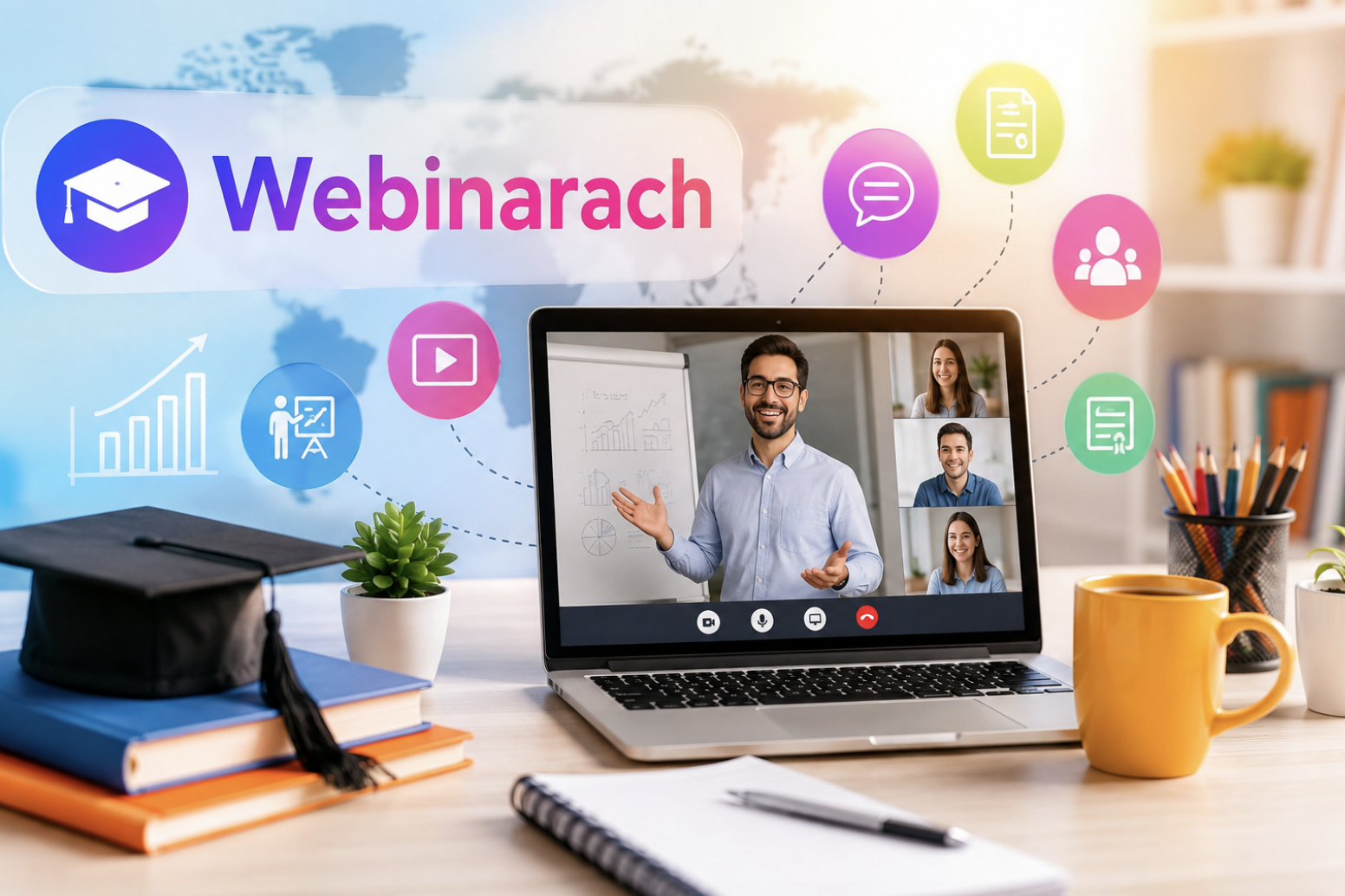
At its core, Webinarach delivers structured educational content through digital communication technology. A typical Webinarach includes a presenter who explains concepts using visual aids, slides, demonstrations, and screen sharing. Participants watch the presentation while interacting through chat boxes, live questions, polls, or discussion sessions. Because everything happens online, people from different countries can participate simultaneously.
Consequently, organizations can educate larger audiences while significantly reducing travel expenses and logistical challenges. Moreover, Webinarach encourages continuous learning by allowing participants to revisit recorded sessions whenever necessary.

The Evolution of Webinarach in Digital Learning
The concept behind Webinarach developed alongside improvements in internet technology and virtual communication. Initially, educational institutions depended heavily on face-to-face seminars. However, faster internet speeds and reliable video conferencing software transformed remote learning possibilities. Several major developments accelerated Webinarach adoption:
- High-speed broadband internet
- Cloud-based communication platforms
- Interactive video conferencing tools
- Learning management systems
- Increased demand for remote education
- Growth of hybrid workplaces
- Expansion of online certification programs
Today, Webinarach has become a standard learning method across numerous industries.
How Webinarach Works
Although every Webinarach differs slightly, most follow a carefully planned structure. The session usually begins with an introduction that explains the objectives and expected outcomes.
Next, the presenter introduces the main topic using professionally designed slides, graphics, videos, or live demonstrations. Throughout the presentation, participants often interact by asking questions, answering polls, or joining discussions. These interactive elements keep audiences engaged while improving knowledge retention.
Finally, the presenter summarizes the key points before ending with a question-and-answer session or additional learning resources. This organized format ensures participants remain focused from beginning to end.
Different Types of Webinarach Presentations
Webinarach generally exists in two primary formats.
Live Webinarach
A live Webinarach takes place in real time. Participants join at a scheduled time and communicate directly with the presenter. This format offers several advantages. Attendees receive immediate answers to their questions. Presenters can adapt explanations based on audience feedback.
Interactive discussions also create stronger engagement throughout the presentation. Live Webinarach works exceptionally well for training workshops, product launches, educational classes, coaching sessions, and conferences.
Pre-Recorded Webinarach
Pre-recorded Webinarach sessions are created before publication and made available for viewers whenever convenient. This format offers greater flexibility because participants learn at their own pace. Organizations frequently use recorded Webinarach content for employee onboarding, customer education, online courses, certification programs, and evergreen training materials.
Since recordings remain available indefinitely, they provide long-term educational value.
Essential Features That Make Webinarach Effective
Several characteristics distinguish Webinarach from ordinary online presentations. Professional presentations include clear audio and high-definition video quality. Visual slides support the instructor’s explanations without overwhelming viewers. Screen sharing enables software demonstrations and practical tutorials. Interactive chat allows participants to ask questions instantly. Polls and quizzes maintain audience attention while reinforcing important concepts.
Many Webinarach platforms also provide downloadable materials, attendance tracking, automated recordings, breakout rooms, and analytics dashboards. Together, these features create a dynamic learning environment that improves participant satisfaction.
Benefits of Webinarach for Modern Learning
Webinarach delivers numerous advantages that traditional classroom instruction cannot always provide. One significant benefit is accessibility. Learners participate from virtually anywhere without commuting.
Additionally, Webinarach reduces educational costs because organizations eliminate expenses associated with physical venues, printed materials, and travel. Another major advantage involves flexibility. Participants attend live sessions or watch recordings later according to their schedules.
Furthermore, Webinarach supports thousands of attendees simultaneously, making it ideal for large organizations. Knowledge sharing also becomes much faster because presenters can instantly reach audiences worldwide. Perhaps most importantly, Webinarach encourages continuous professional development through convenient online learning opportunities.
How Educational Institutions Use Webinarach
Schools, colleges, and universities increasingly incorporate Webinarach into their teaching strategies. Professors conduct online lectures that students attend remotely. Guest speakers connect with classrooms from different countries without traveling.
Many institutions organize examination preparation sessions using Webinarach platforms. Others deliver virtual laboratory demonstrations, research presentations, and academic workshops. Distance learning programs also depend heavily on Webinarach because students receive high-quality instruction regardless of their location.
Consequently, educational institutions expand learning opportunities while maintaining academic standards.
The Growing Importance of Webinarach in Business
Businesses have embraced Webinarach as an efficient communication and training solution. Human resource departments use Webinarach to onboard new employees and introduce company policies. Sales teams conduct product demonstrations for potential customers worldwide. Marketing departments organize educational events that generate qualified leads.
Customer success teams host onboarding webinars that improve user satisfaction and reduce support requests. Executive leadership also relies on Webinarach for internal meetings, leadership development, and company-wide announcements.
As organizations become increasingly global, Webinarach continues strengthening communication across distributed teams.
Industries That Benefit from Webinarach
Almost every industry now uses Webinarach for education, communication, and training. Healthcare professionals attend medical education webinars that introduce new treatment methods. Financial institutions educate customers about investment strategies and banking services.
Technology companies launch software products through live Webinarach demonstrations. Educational organizations deliver complete online courses using webinar platforms. Government agencies conduct public awareness campaigns through virtual presentations.
Nonprofit organizations also organize fundraising events and volunteer training using Webinarach sessions. Its versatility makes Webinarach valuable across nearly every professional sector.
Popular Technologies That Support Webinarach
Successful Webinarach sessions depend on reliable technology. Modern webinar platforms include high-quality video conferencing systems with screen-sharing capabilities. Presentation software allows instructors to display slides, animations, and multimedia content. Learning management systems integrate Webinarach into complete online education programs.
Cloud storage services simplify recording distribution and resource sharing. Analytics software tracks attendance, engagement, completion rates, and participant behavior. Artificial intelligence increasingly enhances Webinarach through automated captions, language translation, audience insights, and personalized recommendations.
How to Create an Outstanding Webinarach Presentation
Creating an effective Webinarach requires careful planning before the session begins. Start by selecting a topic that addresses your audience’s specific interests. Next, organize information into logical sections that build understanding gradually. Design visually appealing slides that support your message instead of distracting viewers.
Practice your presentation several times to improve confidence and timing. Use real-world examples because practical demonstrations increase comprehension. Encourage participation throughout the session rather than waiting until the end.
Finally, conclude with a concise summary that reinforces the most important learning points. Preparation consistently produces more engaging Webinarach experiences.
Audience Engagement Strategies for Better Results
Audience participation significantly improves learning outcomes. Presenters should ask thoughtful questions throughout the session to encourage involvement. Live polls provide immediate feedback while maintaining participant interest. Interactive quizzes help reinforce key concepts before moving forward. Chat discussions encourage collaboration among attendees from different backgrounds.
Real-life case studies make complex subjects easier to understand. Offering downloadable guides, worksheets, and presentation slides provides additional educational value after the Webinarach concludes. These techniques transform passive viewers into active learners.
Common Webinarach Challenges and Practical Solutions
Although Webinarach offers numerous advantages, presenters occasionally encounter obstacles. Technical problems remain one of the most common concerns. Stable internet connections, updated software, and equipment testing greatly reduce disruptions.
Maintaining audience attention can also become challenging during lengthy presentations. Breaking content into smaller sections while encouraging interaction keeps participants engaged. Time management requires careful planning because presenters often attempt to cover too much information. Audio and video quality significantly influence learning experiences.
Therefore, investing in professional microphones, cameras, and lighting improves overall presentation quality. Finally, presenters should prepare backup plans for unexpected technical issues to minimize interruptions.
Future Trends Shaping Webinarach
Technology continues transforming Webinarach into a more personalized learning experience. Artificial intelligence will deliver customized educational recommendations based on participant behavior.
Virtual reality environments may soon create immersive classrooms where learners interact naturally. Augmented reality demonstrations could improve technical training through realistic simulations. Real-time language translation will connect international audiences more effectively.
Advanced learning analytics will help instructors measure engagement and improve future presentations. Gamification features will further increase motivation by rewarding participation and achievement. These innovations promise an even more engaging future for Webinarach.
Why Webinarach Is Becoming Essential for Digital Education
The growing popularity of Webinarach reflects changing educational expectations. Modern learners value flexibility, convenience, affordability, and accessibility. Organizations seek scalable solutions that deliver consistent training worldwide. Educators require interactive teaching methods that encourage participation beyond traditional classrooms.
Fortunately, Webinarach successfully combines these needs into one efficient learning format. As remote work, online education, and global collaboration continue expanding, Webinarach will remain a central pillar of digital knowledge sharing.
Conclusion
Webinarach has transformed the way people learn, teach, and collaborate in today’s connected world. It bridges geographical distances while delivering structured educational experiences through interactive online presentations. Whether conducted live or accessed on demand, Webinarach provides flexibility, affordability, and outstanding accessibility for learners across every industry.
Furthermore, educational institutions, corporations, healthcare providers, and nonprofit organizations continue adopting Webinarach because it simplifies knowledge sharing while increasing engagement. Emerging technologies such as artificial intelligence, virtual reality, and advanced analytics will make Webinarach even more interactive and personalized.
As digital education evolves, Webinarach stands ready to shape the future of online learning. Organizations and educators that embrace this powerful format will continue reaching larger audiences while delivering meaningful educational experiences that inspire continuous growth.
Frequently Asked Questions
1. What is Webinarach?
Webinarach is an online educational presentation delivered live or as a recorded session through the internet.
2. Is Webinarach only for educational institutions?
No, businesses, nonprofits, healthcare organizations, and government agencies also use Webinarach extensively.
3. Can Webinarach sessions be recorded?
Yes, most Webinarach platforms allow sessions to be recorded for future viewing.
4. What equipment is needed for Webinarach?
A stable internet connection, computer, microphone, webcam, and webinar software are usually sufficient.
5. What is the biggest advantage of Webinarach?
Its ability to deliver interactive learning to participants anywhere in the world.
6. Can attendees interact during a live Webinarach?
Yes, participants can ask questions, join polls, and communicate through live chat.
7. Is Webinarach suitable for employee training?
Yes, many organizations use Webinarach for onboarding, compliance training, and professional development.
8. How long should a Webinarach session last?
Most effective Webinarach sessions last between 30 and 90 minutes.
Can Webinarach improve learning outcomes?
Yes, interactive features and structured presentations help increase engagement and knowledge retention.
What does the future hold for Webinarach?
Artificial intelligence, virtual reality, and personalized learning will make Webinarach even more effective and immersive.