
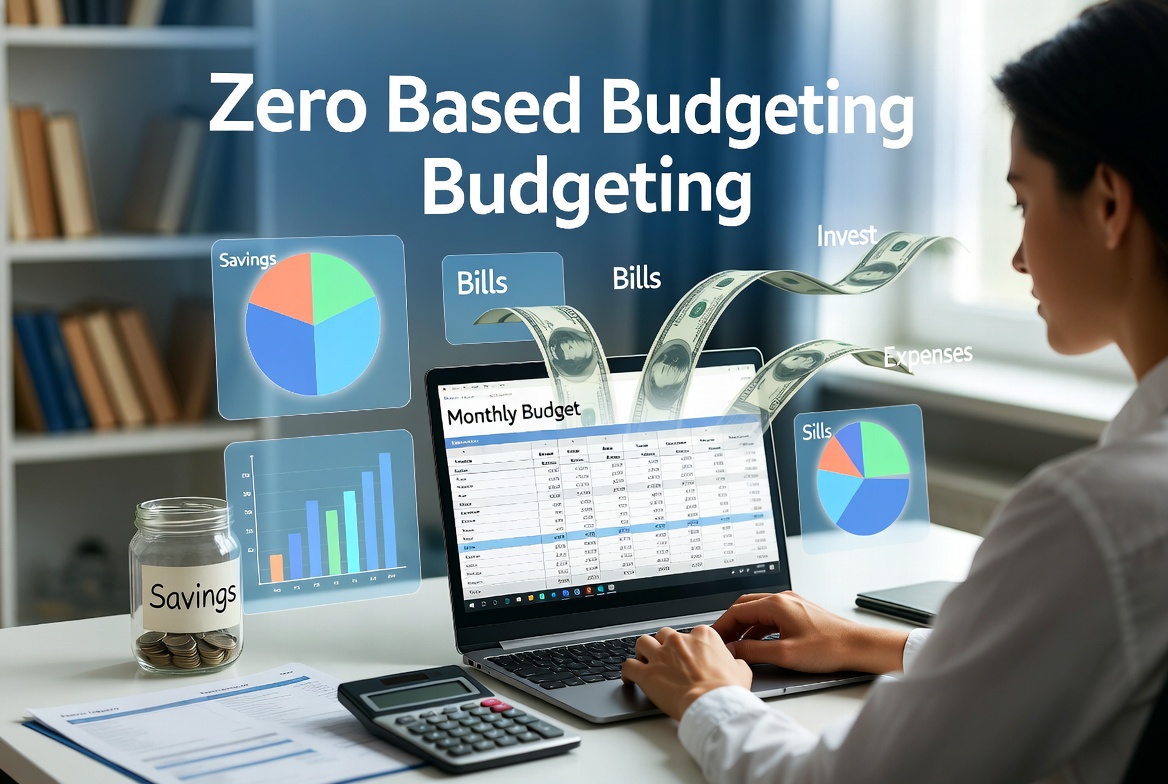
What is Zero-Based Budgeting? How to Start a Budget That Works
If you’ve ever finished the month wondering where your money went, you’re not the only one. Many people struggle to understand exactly where their money goes, especially when expenses change from month to month. This is where zero-based budgeting can help.
Zero-based budgeting is a money management method where every dollar of income is assigned a purpose before the month begins. That purpose can be bills, savings, investments, debt payments, or personal spending. The goal is not to spend every dollar but to make sure every dollar has a clear role.
I have spent years researching personal finance strategies and reviewing budgeting systems for everyday consumers. While trying out zero-based budgeting, I realized the biggest benefit wasn’t just saving money; it was empowering individuals to make thoughtful spending choices beforehand. The system works best when the budget reflects real-life priorities rather than unrealistic restrictions.
Whether your goal is paying down debt, building an emergency fund, saving for a home, or simply gaining more control over your finances, zero-based budgeting provides a structured approach.
Understanding Zero-Based Budgeting
Zero-based budgeting (ZBB) is a budgeting approach where:
Income − Expenses − Savings − Debt Payments = Zero
The “zero” does not mean your bank account is worth nothing. Instead, it means there are no unassigned dollars left after you plan your spending.
For example, if you earn $4,000 per month, your budget should allocate that entire amount:
- Housing
- Food
- Transportation
- Insurance
- Debt payments
- Savings
- Investments
- Entertainment
- Personal expenses
Every category receives a planned amount until the full $4,000 has been assigned.
The method originally became popular in corporate finance. Peter Pyhrr introduced zero-based budgeting at Texas Instruments during the 1970s, and the approach later gained attention in government budgeting discussions when President Jimmy Carter introduced it at the federal level in 1977.
Nowadays, this idea has been tailored to fit personal financial management. Many financial educators recommend variations of zero-based budgeting because it encourages people to actively decide where money should go instead of simply repeating previous spending habits.
According to research from the National Foundation for Credit Counseling, many Americans do not maintain detailed monthly budgets. This lack of visibility can make it harder to control spending, prepare for emergencies, and achieve long-term financial goals.
How Zero-Based Budgeting Differs From Traditional Budgeting
Traditional budgeting often looks at previous spending patterns and adjusts them slightly. For instance, if you spent $500 on groceries last month, you might just plan to spend the same amount this month.
Zero-based budgeting takes a different approach. Instead of asking:
“How much money did I spend earlier?”
Asking yourself,
“How should I best use my money this month?”
This forces you to review every category regularly.
For example, you may discover that:
- Many people are wasting money on subscriptions they no longer need or use.
- Your entertainment budget does not match your current goals.
- Before splurging on non-essential items, focus on boosting your savings first.
In my review of budgeting methods for small households, I discovered that starting fresh each month helps people see spending habits they’ve overlooked for a long time. The biggest advantage was awareness—people became more deliberate because every category had a reason behind it.
Key Differences Between Budgeting Methods
| Traditional Budgeting | Zero-Based Budgeting |
| Adjusts previous spending habits | Creates a new plan every month |
| May leave extra money unassigned | Gives every dollar a purpose |
| Often focuses mainly on expenses | Includes savings and financial goals |
| Can become automatic over time | Requires active decision-making |
How to Start Zero-Based Budgeting This Month
Starting zero-based budgeting does not require expensive software or professional financial advice. You can begin with a notebook, spreadsheet, or budgeting application.
The important part is creating a complete picture of your income and expenses.
Step 1: Calculate Your Monthly Take-Home Income
Start with the money that actually reaches your account after taxes and deductions.
Include:
- Salary income
- Freelance earnings
- Side business income
- Bonuses (if predictable)
- Other regular income sources
If your income changes each month, avoid using your highest earning month as your baseline. A safer approach is to calculate an average or use a lower recent income amount.
For example:
- Month 1 income: $4,500
- Month 2 income: $4,100
- Month 3 income: $3,800
A conservative budget might use $3,800 as the starting point.
This reduces the risk of planning expenses based on money that may not arrive.
Creating a zero-based budget is not only about numbers; it is also about building better financial habits that help you make smarter decisions with your money over time
Step 2: List Every Monthly Expense
The next step is identifying where your money needs to go.
Create categories such as:
Essential Expenses
- Rent or mortgage
- Utilities
- Groceries
- Transportation
- Insurance
- Healthcare costs
Financial Goals
- Emergency savings
- Retirement contributions
- Debt payments
- Investments
Lifestyle Expenses
- Restaurants
- Entertainment
- Clothing
- Hobbies
- Travel
Many people make the mistake of only budgeting fixed monthly bills. However, irregular expenses can create major problems.
Examples include:
- Annual insurance payments
- Vehicle maintenance
- Holiday spending
- School expenses
- Home repairs
A better approach is to divide these costs into monthly amounts.
For example:
A $1,200 yearly car insurance payment becomes:
$1,200 ÷ 12 = $100 per month
That $100 becomes part of your regular budget instead of an unexpected expense.
How to Start Zero-Based Budgeting This Month

Starting zero-based budgeting does not require expensive software, complicated formulas, or a professional financial planner. You can begin with a simple spreadsheet, notebook, or budgeting app. The most important part is creating a system where every dollar has a clear purpose before you spend it.
When I tested this approach while helping small business owners and freelancers organize irregular income, I noticed that the biggest improvement was not just saving money. It was reducing the uncertainty people felt about upcoming bills because they already had a plan for where their money needed to go.
Step 1: Calculate Your Monthly Take-Home Income
The first step is knowing exactly how much money you have available to manage. Use your after-tax income, not your gross salary.
Include all reliable income sources:
- Full-time salary
- Freelance payments
- Side business income
- Rental income
- Regular investment income
If your income changes every month, avoid using your highest earning month as your baseline. A safer approach is to calculate an average from the previous three to six months or use your lowest expected income amount.
For example, if your freelance income has ranged between $3,000 and $4,500 monthly, building your budget around $3,000 gives you more breathing room. Any extra income can then be assigned toward savings, investments, or debt reduction.
Step 2: List Every Monthly Expense
After calculating income, create a complete list of where your money goes. This is where many people discover spending categories they never noticed before.
Separate expenses into three groups:
Fixed expenses
These remain mostly the same each month:
- Rent or mortgage payments
- Insurance premiums
- Loan payments
- Internet bills
- Subscription services
Variable expenses
These change depending on your lifestyle:
- Groceries
- Fuel
- Dining out
- Entertainment
- Shopping
Future expenses
These are costs that happen occasionally but should still be planned:
- Car repairs
- Medical expenses
- Annual memberships
- Holiday gifts
- Home maintenance
A common mistake is ignoring future expenses because they do not appear every month. Zero-based budgeting solves this by turning irregular costs into predictable monthly categories.
For example, if your car insurance costs $1,200 annually, you can assign $100 every month toward that expense instead of scrambling when the bill arrives.
Step 3: Assign Every Dollar a Job
This is the core idea behind zero-based budgeting.
Your calculation should look like this:
Monthly income – planned expenses – savings – investments – debt payments = $0
The goal is not to spend your entire income on purchases. The goal is to make sure every dollar is intentionally assigned.
For example, someone earning $5,000 per month might create a budget like this:
- Housing: $1,500
- Groceries: $600
- Transportation: $450
- Utilities: $300
- Insurance: $250
- Debt payments: $700
- Emergency savings: $500
- Investments: $400
- Entertainment and personal spending: $300
Total assigned amount: $5,000
Nothing is left without a purpose.
This approach helps prevent accidental overspending because money is already allocated before emotional or unnecessary purchases happen.
Step 4: Track Spending Throughout the Month
Creating a budget is only the beginning. The real power comes from checking whether your actual spending matches your plan.
Review your categories regularly:
- Check your budget once or twice per week
- Update expenses after purchases
- Move money between categories when priorities change
- Adjust before overspending happens
Apps such as YNAB and EveryDollar make this process easier by showing how much money remains in each category.
However, a spreadsheet works just as well if you prefer a manual system. The tool matters less than the habit of reviewing your numbers consistently.
When I reviewed budgeting systems used by different professionals, I noticed that successful users were not necessarily using advanced tools. They were simply checking their budget frequently and making small adjustments before problems grew.
Step 5: Review and update your budget each month to stay on track
A zero-based budget is not a permanent financial rule that never changes. It is a flexible system designed to adapt as your life changes.
As your income increases, expenses rise, or your priorities shift, you can stay on top of those changes effortlessly. The best zero-based budgets adapt to your changing circumstances instead of forcing rigid rules that don’t fit your life.
For example:
- December may require more money for gifts and travel.
- Summer months may require a larger vacation budget.
- A new job may allow you to increase savings or investments.
- Unexpected medical or repair costs may require temporary adjustments.
The key is to rebuild your budget at the beginning of every month. Resetting your budget every month keeps you aware of where you stand financially, instead of repeating past spending mistakes.
In my experience working with business owners with unpredictable income, reviewing their budget at the start of each month helped them steer clear of credit card dependence during leaner times. The biggest benefit was having a clear plan before financial pressure appeared.
Common Zero-Based Budgeting Mistakes to Avoid
Zero-based budgeting is simple in concept, but beginners often make mistakes that cause frustration. Understanding these problems early can help you build a system that actually lasts.
Before creating a successful budget, it is important to understand your current spending habits. You can start by tracking your expenses and identifying where your money is actually going
Mistake 1: Forgetting Irregular Expenses
Many people create budgets based only on monthly bills and forget expenses that appear occasionally.
Examples include:
- Vehicle repairs
- Medical costs
- Birthday gifts
- Home maintenance
- Annual subscriptions
- School expenses
These expenses are not surprises. They are predictable costs that simply do not happen every month.
A better approach is to create sinking funds. A sinking fund allows you to save small amounts regularly for future expenses.
For example:
If your yearly car maintenance cost is approximately $600, saving $50 per month prevents a sudden financial hit when repairs are needed.
Mistake 2: Making the Budget Too Restrictive
A common mistake is creating a budget that removes every enjoyable activity.
Some people eliminate:
- Restaurants
- Entertainment
- Hobbies
- Personal spending
While this may work temporarily, extremely restrictive budgets are difficult to maintain long term.
A realistic zero-based budget should include reasonable spending for things you enjoy. The goal is not to remove all freedom. The main aim is to be deliberate with how you handle your finances.
A budget that includes small rewards is often easier to follow than one that feels like punishment.
Mistake 3: Ignoring Debt Payments and Savings Goals
Some beginners focus only on bills and daily expenses but forget future financial goals.
A complete zero-based budget should include categories for:
- Emergency savings
- Retirement contributions
- Investments
- Debt reduction
- Future purchases
Savings should not be treated as whatever money remains after spending. It should be assigned a place in the budget before the month begins.
Mistake 4: Giving Up After One Difficult Month
Unexpected situations happen. You may overspend, receive an unexpected bill, or have a month where your income is lower than expected.
That does not mean the system failed.
The purpose of zero-based budgeting is awareness and control. If something changes, adjust your categories and continue.
Consistency matters more than perfection.
Why Zero-Based Budgeting Works for Americans Today

Managing money has become more challenging as households deal with changing costs, higher living expenses, and financial uncertainty.
According to the U.S. Bureau of Labor Statistics, consumer prices have increased significantly since 2020, affecting everyday expenses such as food, housing, transportation, and services. A detailed budgeting system helps households understand where their money is going and make better decisions when prices change.
Zero-based budgeting works because it changes the question from:
“Can I afford this?”
to:
“Is spending this money the most important thing right now, compared to my other goals?”
That small shift creates a more intentional relationship with money.
Instead of discovering at the end of the month that savings were impossible, you decide in advance how much goes toward:
- Emergency funds
- Debt payments
- Investments
- Family goals
- Personal spending
If zero based budgeting feels too detailed at first, beginners can also explore simple money management methods like the 50/30/20 budgeting approach to build better financial habits.
Benefits of Zero-Based Budgeting
A properly managed zero-based budget can provide several practical benefits.
Better Control Over Spending
Many financial problems happen because money disappears through small, unnoticed purchases. Assigning every dollar a category makes those spending patterns visible.
You can easily spot which parts of your budget need tweaking, no more guessing involved.
Faster Progress Toward Financial Goals
Because savings and debt payments are planned in advance, progress becomes more consistent.
For example, instead of hoping to save whatever remains at the end of the month, you decide:
“This month, I plan to contribute $300 to my emergency savings.”
That decision becomes part of your financial plan.
Reduced Financial Stress
Uncertainty is one of the biggest sources of money-related stress.
Knowing that upcoming bills, savings goals, and expenses already have a plan can make financial decisions easier.
Who Should Use Zero-Based Budgeting?
Zero-based budgeting can work well for many different situations, including:
- Families managing household expenses
- People paying down debt
- Freelancers with changing income
- Small business owners separating personal and business finances
- Anyone who wants more awareness of their spending
However, it may require more effort than simpler budgeting methods because it involves regular tracking and monthly planning.
Someone with very stable finances and minimal expenses may prefer a simpler approach. The best budgeting system is the one you can consistently maintain.
Small business owners and freelancers can also benefit from structured financial planning by learning business budgeting techniques that improve cash flow control.
Zero-Based Budgeting vs Other Budgeting Methods
Zero-based budgeting is one of several popular ways to manage money. Understanding how it compares with other methods can help you decide whether it fits your financial situation.
Zero-Based Budgeting vs 50/30/20 Budget Rule
The 50/30/20 rule splits your income into three main groups:
- 50% for needs
- 30% for wants
- 20% for savings and debt payments
This method is easier for beginners because it requires less tracking. However, it provides less detail because spending is grouped into larger categories.
Zero based budgeting takes a more customized approach. Instead of following fixed percentages, you decide exactly how much goes toward each priority based on your current goals.
For someone aggressively paying off debt or saving for a major purchase, zero-based budgeting may provide more control.
Zero-Based Budgeting vs Traditional Budgeting
Traditional budgeting often looks at previous spending habits and adjusts them slightly. For example, if you spent $500 on groceries last month, you may set a similar amount for the next month.
Zero-based budgeting starts from the beginning. Every category must be intentionally reviewed.
This makes it easier to identify unnecessary expenses, but it also requires more involvement.
The best approach varies based on your personality and financial aims—some prefer detailed plans, while others like a straightforward overview.
If you’re having difficulty developing an effective budget or seeking assistance with your financial management, organizations such as the National Foundation for Credit Counseling offer expert guidance and financial counseling resources that can help you build better money habits
Final Thoughts: Start Your Zero-Based Budget This Month
Zero-based budgeting is not about restricting every purchase or removing enjoyment from your life. It is about making conscious decisions with your money before it disappears.
The biggest advantage of this method is awareness. Instead of wondering where your paycheck went, you already know where every dollar is going.
Start small:
- Calculate your monthly income.
- List every expense.
- Assign every dollar a purpose.
- Review your spending regularly.
- Adjust your plan as your life changes.
When used consistently, zero-based budgeting can become a practical tool for improving financial organization and building better money habits.
Your budget does not need to be perfect on day one. The goal is to create a system you can follow, improve, and maintain over time.
Frequently Asked Questions
1. What does zero-based budgeting mean?
Zero based budgeting means assigning every dollar of your income a specific purpose before you spend it. Your income minus your planned expenses, savings, investments, and debt payments should equal zero. It does not mean spending all your money; it means making sure every dollar has a planned destination.
2. Is zero-based budgeting only for people with debt?
No. Zero based budgeting can benefit anyone who wants more control over their finances. People use it to pay off debt, build emergency savings, invest for retirement, plan large purchases, or simply understand where their money goes each month.
3. What happens if my income changes every month?
Zero based budgeting can still work with irregular income. Many freelancers and business owners use this method by creating a conservative budget based on the expected minimum income. When extra money comes in, they assign it toward savings, investments, debt payments, or future expenses.
4. Do I need a budgeting app to use zero-based budgeting?
No. A budgeting app can make tracking easier, but it is not required. You can create a zero-based budget using a spreadsheet, notebook, or simple document. The important part is consistently assigning income and reviewing spending throughout the month.
5. Wondering how much time it takes to set up a zero-based budget?
Your first budget may take one to several hours because you need to identify income sources, expenses, and financial goals. After creating the system, monthly updates usually become faster because your categories and priorities are already established.
6. Can zero-based budgeting help save money?
Yes, it can help many people save more because it turns savings into a planned expense rather than an afterthought. However, results depend on income, expenses, and personal financial decisions. A budget creates a structure, but it does not automatically increase income or remove financial obligations.