

Dumpor Explained: The Hidden World of Anonymous Social Media Browsing and Public Content Discovery
Social media has become one of the biggest sources of information, creativity, entertainment, and digital communication. Every day, millions of users share photos, videos, stories, opinions, and updates across different platforms. However, many people now want a simpler way to explore public content without dealing with endless notifications, advertisements, or complicated app features.
This growing demand has increased interest in tools like Dumpor. The platform has gained attention because it offers an alternative approach to discovering publicly available social media content. Instead of focusing on likes, comments, and personal interactions, Dumpor is mainly connected with browsing, searching, and exploring visible online information.
As digital privacy becomes more important, users are becoming more curious about anonymous browsing tools. They want to understand how these platforms work, what benefits they provide, and what risks they may involve. Therefore, learning about Dumpor can help users better understand the changing relationship between social media access, privacy, and online content discovery.
What Is Dumpor and Why Is It Popular?
Dumpor is known as a third-party social media viewing platform that allows users to explore publicly available content through a simplified browsing experience. Unlike official social media applications, it focuses mainly on discovering profiles, posts, and other public information. The main attraction of Dumpor comes from convenience. Many users prefer accessing public content through a lightweight interface rather than navigating through complete social media platforms filled with personalized feeds and interactive features.
Furthermore, platforms like Dumpor appeal to people who want quick access to online trends, public profiles, and searchable content. Bloggers, researchers, marketers, and casual internet users may find these tools useful when studying digital conversations or analyzing public information.
However, users should understand that third-party platforms depend on external social media networks. Their features, availability, and performance can change because of updates, technical restrictions, or policy changes.
Understanding How Dumpor Works Behind the Scenes
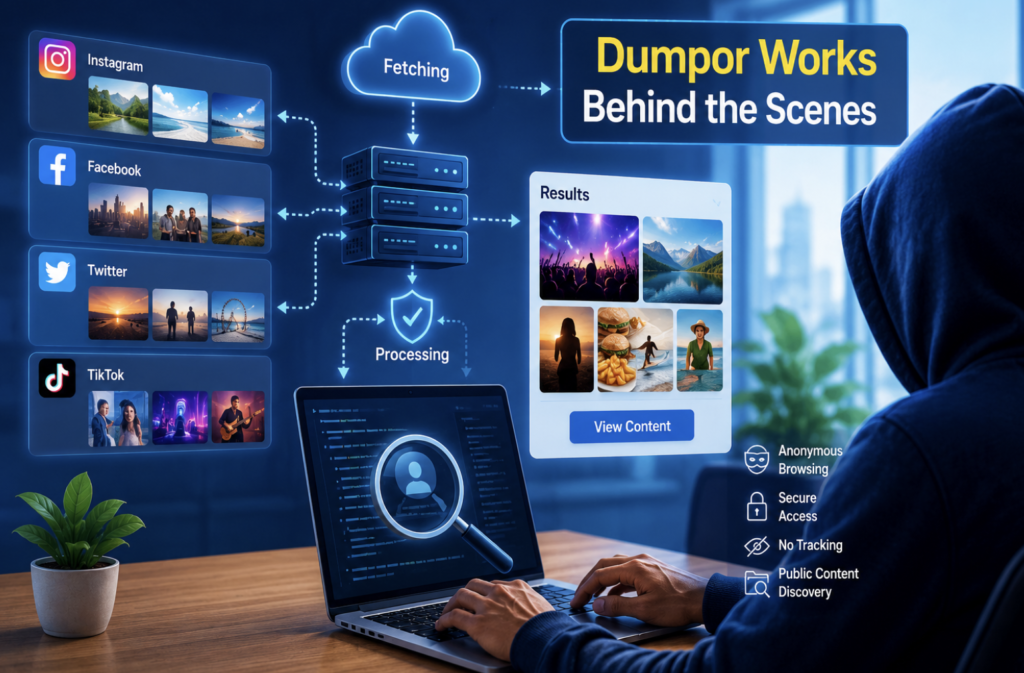
The working process of Dumpor is based on accessing publicly available social media information. Users typically enter a username, keyword, or search term to find related content. The platform then presents available public information through its own browsing interface. Depending on current features, users may explore profiles, posts, hashtags, or trending discussions.
Unlike traditional social media apps, Dumpor does not primarily encourage interaction. Instead, it provides a search-focused environment where users can concentrate on finding information. The general browsing process usually involves:
- Opening the platform through a web browser.
- Searching for a public username or keyword.
- Reviewing available content results.
- Exploring visible posts or profile information.
This simplified approach attracts users who want faster content discovery without becoming part of a complete social media ecosystem.
Key Features That Make Dumpor Interesting
Public Profile Exploration
One of the biggest reasons people use platforms like Dumpor is the ability to explore publicly available profiles. Users can discover creators, brands, influencers, and online communities without using traditional browsing methods. This feature can help users understand online trends and observe how different accounts present their content.
Anonymous Content Browsing
Anonymous browsing is one of the most discussed features connected with Dumpor. Many users prefer exploring public information without directly interacting with accounts. This type of browsing can provide a more private viewing experience. However, users should always respect privacy boundaries and avoid using such tools for inappropriate purposes.
Simple Search-Based Navigation
Modern social platforms often rely on algorithms that decide what users see. While this can improve recommendations, it can also limit direct searching. Dumpor-style platforms provide a more straightforward approach. Users can search for specific content rather than depending entirely on automated recommendations.
Content Discovery for Research
Digital professionals often analyze public social media information to understand audience behavior. Marketers may study trends, while researchers may examine online discussions. Dumpor can represent one type of tool used for observing publicly accessible information. However, collected information should always be handled responsibly.
Why Are People Looking for Dumpor?
The popularity of anonymous browsing platforms reflects changing user expectations. Many internet users want more control over their online experiences. Some people search for Dumpor because they want to explore public profiles quickly. Others may be interested in researching competitors, tracking trends, or discovering creative content.
Additionally, users sometimes prefer avoiding unnecessary social media engagement. Official applications are designed around interaction, including notifications, recommendations, and user activity. A simplified browsing tool can feel less distracting.
However, convenience should always be balanced with responsible online behavior. Public content should not be copied, misused, or distributed without proper permission.
Benefits of Using Dumpor for Online Content Discovery
Faster Access to Public Information
Dumpor-style platforms can make searching for public content more efficient. Users may save time by focusing only on specific information rather than browsing through multiple sections of an application.
Better Trend Monitoring
Businesses and digital creators often need to understand online conversations. Public content discovery tools can support trend analysis by helping users identify popular topics and discussions.
Reduced Social Media Distractions
Many people spend hours scrolling through social networks. A focused browsing platform can provide a more controlled experience by removing unnecessary features.
Browser-Based Convenience
Web-based platforms are often easier to access because they do not require additional installations. Users can open them from different devices whenever needed.
Dumpor and Social Media Privacy Concerns
Privacy remains one of the most important topics surrounding third-party browsing services. Although public information can be viewed online, responsible usage is still necessary. Users should avoid sharing personal details on unknown websites. They should also be careful about platforms requesting passwords, financial information, or unnecessary permissions.
Moreover, third-party websites may collect technical information such as device details, cookies, or browsing patterns. Understanding privacy policies can help users make safer decisions.
Digital responsibility means respecting content creators, protecting personal information, and following online rules.
Is Dumpor Safe to Use?
The safety of Dumpor or similar platforms depends on several factors, including website security, privacy practices, and user behavior. Users should always verify website authenticity before entering any information. They should also avoid downloading unknown applications, extensions, or files connected with unofficial services.
A safer online approach includes using updated browsers, maintaining security software, and avoiding suspicious links.
While browsing public content may seem harmless, users should remember that every online service carries potential privacy considerations.
Limitations of Dumpor You Should Know
Although Dumpor can provide a convenient browsing experience, it also has certain limitations. First, third-party platforms may not always display complete information. Changes made by official social media networks can affect availability and accuracy. Second, features may disappear or change without warning. Since these platforms depend on external systems, their reliability can vary. Finally, third-party tools may not provide the same security standards as official applications. Users should carefully evaluate whether the convenience is worth the potential risks.
Dumpor Compared With Traditional Social Media Platforms
Official social media platforms are designed for complete user experiences. They include messaging, content creation, recommendations, advertisements, and personalized features. In contrast, Dumpor focuses more on viewing and discovering public information. It provides a different experience for users who do not need full social interaction.
For someone wanting to communicate with friends or build an online presence, official platforms remain the better choice. However, users interested in simple content exploration may appreciate alternative browsing tools.
Responsible Ways to Use Dumpor
Responsible usage is essential when exploring any third-party online platform. Users should:
- Respect copyright ownership.
- Avoid accessing private information.
- Never misuse someone’s personal content.
- Avoid sharing sensitive information.
- Check security details before using websites.
Following these practices creates a safer and more ethical browsing experience.
The Future of Anonymous Browsing Platforms
The demand for alternative content discovery methods is expected to continue growing. People increasingly want flexible ways to search, analyze, and explore online information. At the same time, privacy laws, social media policies, and technological developments will influence the future of platforms like Dumpor.
Successful platforms will likely need to provide transparency, strong security practices, and responsible access methods. Users will continue looking for convenience, but privacy protection will become equally important.
Conclusion: Is Dumpor Worth Exploring?
Dumpor represents the growing interest in simpler and more flexible ways to explore public social media content. Its appeal comes from easy searching, content discovery, and an alternative browsing experience. However, users should approach third-party platforms carefully. Understanding privacy concerns, security risks, and ethical responsibilities is essential before using any online service.
As social media continues evolving, tools that provide easier access to public information may remain popular. The future of digital browsing will depend on balancing convenience, privacy, and responsible internet behavior.
Frequently Asked Questions
1. What is Dumpor mainly used for?
Dumpor is mainly used for exploring publicly available social media content through alternative browsing methods.
2. Can Dumpor access private profiles?
No, Dumpor cannot legitimately access private social media accounts.
3. Does Dumpor require a social media account?
Many third-party browsing tools do not require users to create accounts.
4. Is Dumpor an official social media platform?
No, Dumpor is considered a third-party browsing service.
5. Can businesses use Dumpor for research?
Yes, businesses may use public information tools for trend analysis and research.
6. Is anonymous browsing completely risk-free?
No, users should always consider privacy and security risks.
7. Can Dumpor download private content?
No, users should not attempt to access restricted or private material.
8. Why do people prefer anonymous browsing tools?
People often prefer them because they offer simpler content discovery.
9. Does Dumpor always show updated content?
No, content availability may depend on external platform changes.
10. Should users share personal information on Dumpor?
Users should avoid sharing unnecessary personal information on unknown websites.