What Is Data Deduplication and How Does It Save Storage Space?
Organisations managing growing volumes of stored data increasingly rely on data deduplication technology to reduce storage requirements without simply deleting potentially needed information.
Understanding what data deduplication actually involves, and how this technology achieves meaningful storage savings, provides valuable insight into an important, though often invisible, technology supporting efficient data storage management.
What Data Deduplication Actually Means
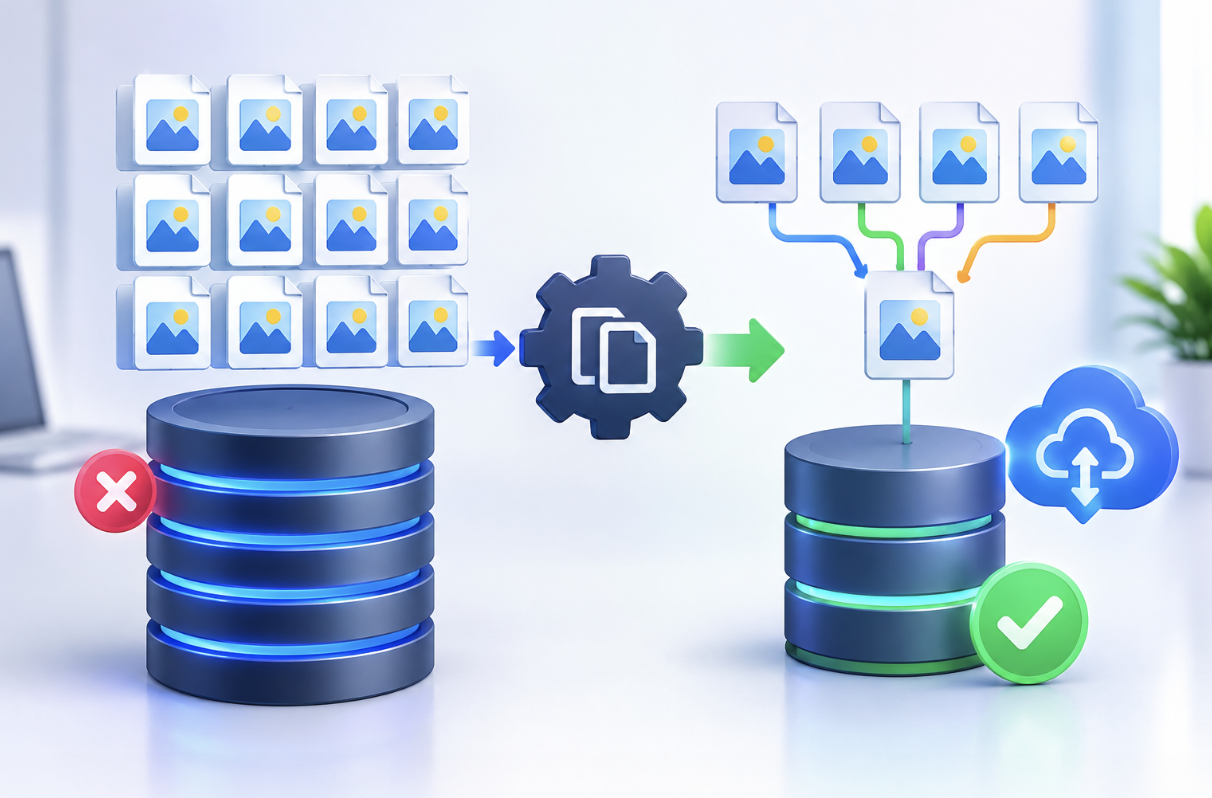
Data deduplication refers to a technique that identifies and eliminates redundant copies of data, storing only a single instance of identical or similar data while replacing duplicate instances with references pointing back to this single stored copy. This approach allows organisations to reduce their actual storage requirements considerably, particularly in environments where substantial data redundancy naturally occurs.
This redundancy elimination approach matters, since many organisational storage environments contain considerable duplicate data, whether from multiple users storing identical files, repeated backup processes capturing largely unchanged data, or various other common scenarios where identical or highly similar data ends up stored multiple times without deduplication technology addressing this redundancy.
Why Data Redundancy Accumulates Within Storage Systems
The reasons why storage systems commonly accumulate substantial data redundancy helps clarify why deduplication technology provides such meaningful, practical value.
- Multiple users within an organisation often store identical or very similar files independently
- Backup processes capture considerable amounts of largely unchanged data during repeated backup cycles
- Email systems store duplicate attachments when the same file gets sent to multiple recipients
- These common redundancy sources helps clarify deduplication technology’s, practical relevance
This backup redundancy deserves particular emphasis, since organisations performing regular backup processes often capture enormous amounts of data that remains largely unchanged between consecutive backup cycles, meaning without deduplication technology, each backup cycle would store essentially duplicate copies of this unchanged data repeatedly, consuming dramatically more storage capacity than would be necessary if this redundant, unchanged data could instead be efficiently identified and stored only once.
Technical Process Behind Data Deduplication
How data deduplication technology actually identifies and eliminates redundant data helps clarify the technical mechanism that make this storage efficiency improvement practically possible.
- Deduplication systems analyse data, breaking it into smaller segments for comparison purposes
- These segments get compared against already-stored data to identify duplicates
- When duplicates are identified, the system stores only one copy, with references replacing the redundant instances
- This process helps clarify how deduplication achieves its storage efficiency improvements
This segment-based comparison deserves particular emphasis, since rather than simply comparing entire files for exact duplication, sophisticated deduplication systems break data into smaller segments, allowing the system to identify and eliminate redundancy even when files are not identical overall, but share substantial common segments, providing considerably more comprehensive, storage savings compared to simpler approaches that could only identify and address completely identical files.
the Difference Between File-Level and Block-Level Deduplication
The distinction between these two common deduplication approaches helps clarify important technical variations relevant to how this technology actually gets implemented in practice.
- File-level deduplication identifies and eliminates completely identical files stored multiple times
- Block-level deduplication operates at a more granular level, identifying redundant segments even within otherwise different files
- Block-level approaches generally achieve greater storage savings due to this more granular redundancy identification
- This distinction helps clarify why different deduplication implementations achieve different efficiency levels
This granularity advantage deserves particular emphasis, since block-level deduplication’s ability to identify redundancy within portions of otherwise different files, rather than only recognising completely identical files, allows this approach to achieve considerably more comprehensive storage savings, particularly relevant for scenarios like backup systems where files might be largely, though not completely, identical between different backup versions or slightly modified copies.
Where Data Deduplication Provides the Most Significant Value
The storage environments and use cases where data deduplication technology provides particularly significant, meaningful storage savings helps illustrate this technology’s practical relevance across different contexts.
- Backup and archival storage systems benefit enormously from deduplication given their inherent data redundancy
- Virtual machine storage environments contain considerable redundancy across similar virtual machine images
- Email and document storage systems accumulate significant redundancy from shared or repeated content
- These particularly favourable use cases helps clarify where deduplication investment provides maximum value
This virtual machine relevance deserves particular emphasis, since organisations running numerous virtual machines often deploy these machines using very similar or identical base images, meaning the underlying operating system files and common software remain largely identical across numerous different virtual machine instances, creating substantial redundancy that deduplication technology can address considerably more efficiently than storing each virtual machine’s complete data independently without this redundancy elimination.
Performance Considerations Deduplication Introduces
The data deduplication, despite its genuine storage efficiency benefits, involves real performance considerations worth understanding helps provide balanced, honest context for this technology’s practical implementation.
- The process of analysing and comparing data for deduplication requires meaningful computational resources
- This processing overhead can affect storage system performance, particularly during active deduplication processing
- Organisations need to balance storage efficiency gains against these real performance implications
- This trade-off helps clarify why deduplication implementation requires thoughtful technical planning
How Deduplication Relates to Data Compression
The relationship between data deduplication and data compression, two related but distinct storage efficiency techniques, helps clarify how these approaches often work together within comprehensive storage management strategies.
- Data compression reduces file size by encoding data more efficiently, addressing a different redundancy type
- Deduplication specifically addresses redundancy between multiple, separate pieces of stored data
- Organisations often implement both techniques together for maximum storage efficiency
- This complementary relationship helps clarify comprehensive approaches to storage optimisation
Practical Considerations for Organisations Implementing Deduplication
The practical guidance for organisations actually considering data deduplication implementation helps translate this technology’s benefits into informed, practical adoption decisions.
- Evaluate your specific storage environment for the types of redundancy deduplication would actually address
- Consider the performance implications alongside anticipated storage savings for your specific systems
- Research specific deduplication solutions’ particular approach and demonstrated effectiveness for your use case
- Understand that realisable storage savings vary considerably depending on your actual specific data characteristics
How Deduplication Affects Data Recovery Speed
How deduplication genuinely affects the actual speed of restoring data from backup helps clarify an important, practical operational consideration beyond simply storage space savings alone.
- Reconstructing deduplicated data requires reassembling information from its stored references
- This reconstruction process can introduce some additional time compared to restoring non-deduplicated data
- Well-designed deduplication systems work to minimise this recovery time impact where practically possible
- This consideration helps organisations evaluate the genuine, complete trade-offs deduplication technology involves
Why Deduplication Ratios Vary Considerably Across Different Data Types
Why the storage savings deduplication achieves varies so considerably depending on the specific type of data being stored helps set realistic, informed expectations for this technology’s practical benefit.
- Highly repetitive data, like backup archives, achieves considerably higher deduplication ratios
- Already compressed or naturally unique data, like certain media files, sees more modest deduplication benefit
- Your specific data’s characteristics helps set realistic expectations for actual storage savings
- This variation helps explain why deduplication effectiveness differs so significantly across different storage environments
Final Thoughts
Data deduplication reduces storage requirements by identifying and eliminating redundant data copies, storing only single instances while using efficient references for duplicate content, providing particularly significant value within backup, virtual machine, and other storage environments prone to natural data redundancy.
Both this technology’s storage efficiency benefits and its real performance considerations helps organisations make informed decisions about implementing deduplication as part of their broader, comprehensive data storage management strategy.
Frequently Asked Questions
1. How much storage savings can organisations typically expect from data deduplication?
This varies considerably based on the specific data environment and redundancy levels present, though backup and virtual machine environments particularly prone to redundancy often see substantial storage savings, sometimes considerably reducing actual required storage capacity compared to non-deduplicated storage.
2. Does data deduplication risk losing or corrupting important data?
Well-implemented deduplication systems are designed with data integrity as a core priority, using reliable reference mechanisms to ensure data can always be reconstructed accurately, though organisations should still maintain appropriate backup and verification practices as standard, prudent data management practice.
3. Is data deduplication relevant for smaller organisations, or primarily large enterprises?
While large organisations with substantial storage needs often see the most dramatic absolute savings, smaller organisations can benefit as well, particularly if their specific data environment involves meaningful redundancy that deduplication could address.
4. Does data deduplication happen automatically, or does it require active management?
This varies by specific implementation, with many modern storage systems handling deduplication automatically in the background, though understanding and occasionally reviewing your specific system’s deduplication performance remains worthwhile ongoing practice.
5. Can data deduplication be combined with encryption for secure, efficient storage?
Yes, though this combination requires careful technical implementation, since encryption can potentially interfere with deduplication’s ability to identify redundant data, making the specific technical approach used for combining these technologies are important for achieving both security and storage efficiency goals.
6. Is data deduplication technology mature and reliable for production use today?
Yes, data deduplication represents well-established, mature technology with considerable real-world deployment across numerous organisations, reflecting confidence in this technology’s reliability and practical value for actual production storage environments.