
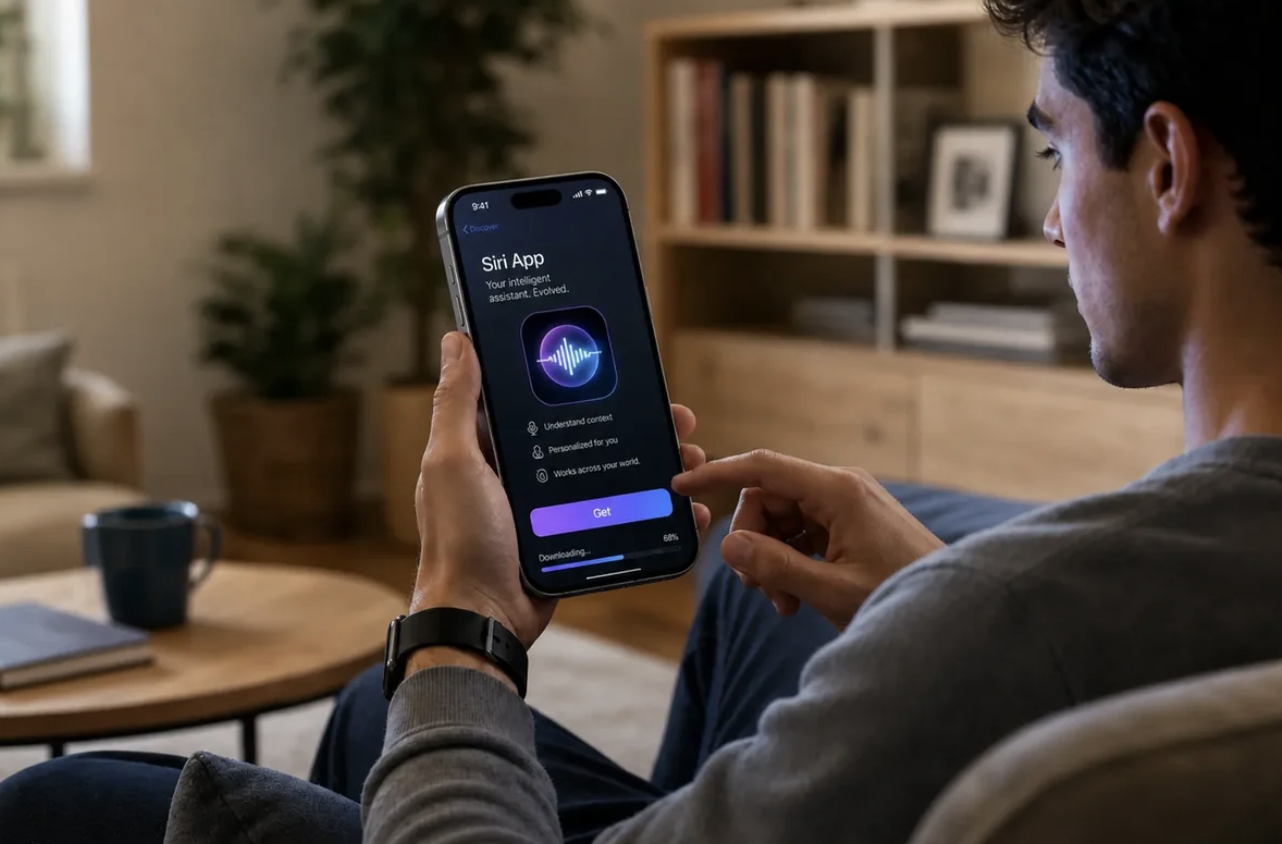
What Apple Gemini Siri Beta Means for the Future of AI Assistants
A strange thing happened in 2026: Apple confirmed that its next-generation Siri architecture was developed in collaboration with Google and its Gemini models. That changes the AI assistant story. The race is no longer only about which chatbot gives the smartest answer. It is about which assistant can understand your context, work across devices, and help complete tasks.
Apple’s Siri AI began rolling out in beta in September 2026 with personal context, onscreen awareness, web knowledge, and broader app actions. Apple says the system combines its foundation models with Google’s Gemini technology while using on-device processing and Private Cloud Compute.
The Apple Gemini Siri Beta Reveals a Surprising AI Strategy
Most people assume Apple wants Siri to beat Gemini directly. The reality is more interesting. Apple is building the experience, system integration, privacy layer, and interface while collaborating with Google on model technology.
Siri may draw on details from your messages, emails, and photos, interpret what’s displayed on your screen, find up-to-date information online, and carry out tasks across different apps. The real product is the connection between the model and your device.
Why Gemini matters even when you may not see it
The Apple Gemini Siri Beta story is not simply about putting a Google chatbot inside an iPhone. Apple says its latest Apple Foundation Models were built in collaboration with Google and its Gemini models for integrated Apple Intelligence experiences.
For users, the underlying model could become infrastructure rather than the product itself. You ask Siri to find information, summarize something, draft a message, or work with an app, without needing to know which model handled the request.
Siri Is Quietly Becoming an Action Layer, Not Just a Chatbot
Here is the counterintuitive part: better conversation may not be the most important Siri upgrade.
A chatbot can explain how to create a travel plan. An assistant connected to your apps can potentially find information, organize it, and help you act on it. Apple’s Siri is designed around systemwide app actions and personal context, moving the experience toward task completion.
This is where Apple’s platform integration matters. But integration creates a challenge: the more useful an assistant becomes, the more access it needs. Permissions, privacy, security, and user controls become as important as model quality.
The Biggest Change May Be Privacy, Not Intelligence
AI assistants need context to become useful. They also become more sensitive when that context includes messages, photos, calendars, and files.
Apple says Siri’s AI features rely on processing on your device and its Private Cloud Compute system. Apple says Private Cloud Compute is designed to process requests without retaining users’ personal data or making it available to the company. Apple also describes the architecture as privacy-focused.
That matters because future assistants need trust. People may accept deeper access only if they understand where information goes and how it is protected.
The catch is that privacy claims must be considered alongside settings, regional availability, and future feature changes. Apple notes that feature availability can differ depending on your language and location.
The beta label still matters
Siri AI is rolling out as a beta, so users should expect changes. Apple says access depends on whether your device, language, and region are supported. Siri AI is not initially available on iOS, iPadOS, or watchOS in the European Union, and Apple says it is unavailable in mainland China while regulatory requirements are addressed.
That shows AI assistants are shaped by regulation, privacy rules, hardware limits, and language support as well as model technology.
Apple Gemini Siri Beta Could Change the AI Assistant Business
In my experience writing about AI assistants, the most useful systems are not always the ones giving the longest answers. The real value comes from reducing the steps between a question and an action.
That is where the Apple Gemini Siri Beta points.
The focus may move from asking “Which AI model is the most capable?” to “Which assistant has useful access to your digital life while keeping you in control?”
Google has Gemini. OpenAI has ChatGPT. Apple has Siri connected to its hardware and operating systems. These companies compete over models, distribution, data access, developer ecosystems, and daily habits.
For developers, app integration could become more important. Apple has highlighted App Intents as a way for developers to let Siri surface information and perform actions. That can make apps more useful through natural-language requests.
Did You Know? Apple describes Siri AI as deeply integrated across iPhone, iPad, Mac, Apple Watch, and Vision Pro, with personal context, onscreen awareness, web knowledge, and systemwide actions.
Conclusion: The Future Assistant May Feel Invisible
The biggest shift may be psychological.
Today, people often decide when to open an AI app. Future AI tools could be built directly into the operating system.
That creates a new standard. A useful assistant understands context, asks for permission when needed, completes tasks, and stays out of your way.
The Apple Gemini Siri Beta also shows why partnerships may become normal in AI. One company can provide hardware, operating-system integration, and privacy infrastructure while another contributes model technology.
The bottom line is simple: Siri’s future is less about sounding human and more about becoming useful inside your real digital life.
The action you can take today is to check which Apple Intelligence and Siri AI features your device supports before installing a beta or changing settings.
Would you trust an AI assistant with deeper access to your personal life if it could genuinely save you time?
Read more about Xiaopan
FAQ’s
Is the Apple Gemini Siri Beta powered by Google Gemini?
Apple says its next-generation Apple Foundation Models were developed in collaboration with Google and its Gemini models. Siri AI is not presented as a standalone Google Gemini app inside iOS. Gemini technology is part of a broader Apple Intelligence architecture that Apple integrates across its platforms.
What can the new Siri AI do?
Siri AI can understand personal context, use onscreen information, answer questions using broad web knowledge, and perform systemwide actions across apps. Apple says it can work with messages, emails, and photos while supporting tasks such as drafting emails and editing or sharing photos.
Is Siri AI available to everyone?
No. Siri AI is rolling out in beta with device, language, and regional requirements. Apple lists supported iPhone, iPad, Mac, Vision Pro, and Apple Watch hardware, while some regions have restrictions. English is available first, with additional languages scheduled to expand during October 2026.