
Meal Planning on a Budget: A Guide to Cutting Grocery Costs
Food is one of the few household expenses you can change within a single week. Rent and insurance are fixed by contracts, but what you buy at the store and how you use it is up to you. Yet many households overspend on groceries without noticing, through impulse buys, duplicate purchases, takeout on tired evenings, and food that spoils before anyone eats it.
Meal planning is the simplest antidote. It means deciding in advance what you will eat, buying only what that plan needs, and using what you buy. It does not require elaborate spreadsheets, exotic recipes, or hours in the kitchen. A basic plan, built around the foods your household already likes, can reduce stress as well as spending.
This guide shows how to cut grocery costs through planning. You will learn how to audit your current spending, build a flexible weekly plan, shop smarter inside the store, stock a pantry that stretches your money, cook in batches and store food properly, and reduce waste. Prices differ by region and change often, so use the tips as methods rather than fixed numbers, and adapt them to the stores and foods available where you live.
Auditing Your Current Food Spending
You cannot improve what you have not measured. Before changing anything, take a clear look at where your food money goes now. Gather a month of bank and card statements and receipts, then separate spending into groceries, takeout and restaurants, coffee and snacks, and delivery fees. Many people are surprised by how much goes to meals outside the home.
Next, look at patterns. Which days do you spend the most? Do you shop several times a week for small items? Do you overbuy fresh produce that wilts? Do you routinely pay for convenience foods when you are tired? These habits point to the changes with the largest payoff.
Check your kitchen as well. Open the refrigerator, freezer, and pantry and list what you already own. Note items that are close to their date and duplicates you forgot you had. This inventory will shape your first meal plan, and it often reveals a week of meals hiding in plain sight.
Set a realistic budget. A useful approach is to choose a weekly or monthly grocery number slightly below your current average, then adjust after a few weeks. Avoid cutting too deeply at the start, since extreme budgets are hard to keep. Include a small line for treats so you do not feel deprived.
Consider the hidden role of time as well. Rushed evenings produce expensive choices, so note how many of your food purchases happen when you are short on energy. If most of your restaurant spending comes on two or three predictable nights, those are the nights to protect with a ready-made plan. This small insight often saves more than any coupon.
Decide how you will track progress. A notes app, a simple spreadsheet, or your bank’s spending categories will do. Review totals once a week for a few minutes. Seeing the trend is motivating and helps you catch overspending early.
- Statement review: Sort a month of spending into groceries, takeout, snacks, and delivery fees.
- Habit check: Note shopping frequency, impulse buys, and convenience purchases.
- Kitchen inventory: List what you already have so you can build meals around it.
- Target budget: Set a weekly figure slightly below your current average and adjust.
- Weekly tracking: Review spending on a fixed day to spot drift early.
Building a Flexible Weekly Plan
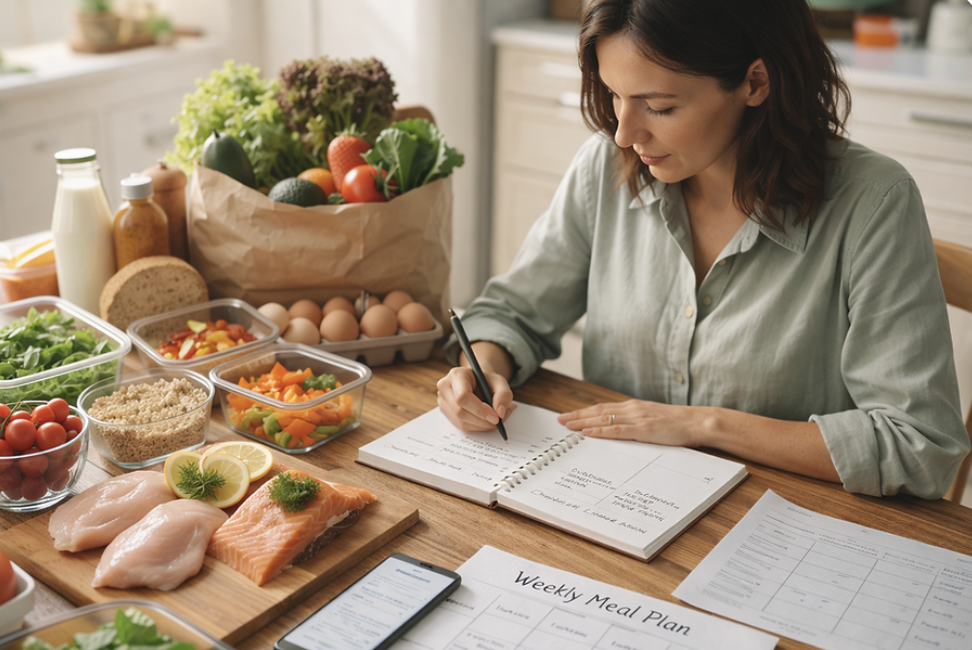
A good plan guides without trapping you. The goal is not to dictate every bite but to ensure that the ingredients you buy become meals. Start small, planning five dinners instead of twenty-one meals, and leave room for leftovers and the occasional night out.
Begin with what you have. Choose recipes that use the items from your kitchen inventory, especially perishable ones. Then fill in gaps with budget-friendly meals your household enjoys. Rely on a rotation of familiar dishes rather than constantly trying new ones. Familiar meals are faster, less wasteful, and less likely to be rejected by picky eaters.
Build meals around versatile ingredients that appear in several dishes. A roasted chicken can become dinner, sandwiches, and soup. A pot of rice can serve as a side one night and fried rice the next. Beans, eggs, lentils, canned fish, and frozen vegetables offer low-cost protein and fiber. Choose a mix of cooking methods so you are not spending hours in the kitchen every night.
Write the plan where everyone can see it, such as on a whiteboard or a shared note. Include a simple slot system: one pasta night, one soup or stew, one sheet-pan meal, one breakfast-for-dinner night, and one leftovers night. Slots make decisions easier and prevent the daily question of what to cook.
Plan around your schedule. Put quick meals on busy nights and save longer recipes for days with more time. If you know Thursdays are chaotic, assign that night a pantry meal or a slow-cooker dish prepared earlier. Anticipating tired evenings is the best defense against costly takeout.
Involve the household. When everyone has a say in the menu, fewer meals are rejected and fewer ingredients are left over. Let each person pick one dinner per week, and teach older children to cook a simple recipe. Shared ownership makes the plan easier to follow and spreads the work.
Finally, build your shopping list directly from the plan. Check your kitchen against each recipe, and write only what is missing. A list tied to meals prevents the aimless buying that inflates receipts.
- Dinner slots: Assign themes like pasta, soup, or sheet-pan meals to reduce daily decisions.
- Overlap ingredients: Use the same produce, grains, and proteins across several meals.
- Schedule match: Put fast recipes on busy nights and slower ones on relaxed days.
- Leftover night: Reserve one evening for finishing what remains.
- Plan-based list: Write the shopping list from the plan, after checking your kitchen.
Shopping Smarter Inside the Store
Stores are designed to encourage spending. With a few strategies, you can shop with intention and keep more money in your pocket.
Shop with a list and stick to it. Go after you have eaten, since hunger makes impulse buys more tempting. Take advantage of curbside pickup or delivery if you tend to overspend in person, but watch for fees and check that substitutions do not raise the price. Many stores let you build a cart online, which makes the total visible before you commit.
Compare prices using the unit price, which is the cost per ounce, pound, or similar measure shown on the shelf tag. A larger package is not always cheaper per unit, and a smaller brand may undercut a famous one. Store brands often cost less than name brands, and many are comparable in quality. Try one or two swaps each week and keep the ones your household accepts.
Look at sales with a plan. Sales are useful for foods you already buy, but they are traps when they push you to buy things you do not need. Check weekly flyers or apps before you finalize your plan, and let discounted proteins or produce shape the menu. Combine sales with coupons and loyalty programs if the store offers them, but do not let coupons override the list.
Consider the layout. Staples like produce, dairy, and meat are often along the outer edges, while processed items fill the middle aisles. Items at eye level tend to be priced higher, so look at the top and bottom shelves. End-of-aisle displays are not always bargains.
Check the cart before checkout. Scan your receipt or online cart for items that do not belong, price errors, and duplicated products. Mistakes happen, and a quick review can recover real money. If a sale price does not ring up correctly, ask for a correction on the spot, since many stores will honor the shelf price.
Compare different types of stores. Discount grocers, warehouse clubs, ethnic markets, farmers markets, and online retailers each have strengths. A discount store may be cheapest for staples, while an ethnic market may offer spices and produce at lower prices. Warehouse clubs can save money on items you use steadily, but only if you have the storage space and will use the goods before they expire.
- Unit pricing: Compare the cost per ounce or pound rather than the package price.
- Store brands: Test lower-priced alternatives and keep the ones you like.
- Sale discipline: Buy discounted items you already use, not items you merely find tempting.
- Store mix: Use different retailers for different categories to capture the best prices.
Pantry Staples That Stretch Every Dollar
A well-stocked pantry is the backbone of budget cooking. When basic ingredients are on hand, you can assemble a meal without a special trip to the store, which saves both money and impulse spending.
Focus on foods with a long shelf life and many uses. Rice, pasta, oats, flour, dried or canned beans, lentils, canned tomatoes, cooking oil, and broth cover the foundation of countless meals. Add flavor builders like onions, garlic, vinegar, soy sauce, mustard, and a small set of spices. A few inexpensive seasonings can turn plain ingredients into satisfying dishes.
Build the pantry gradually. Each week, add one or two staples when they are on sale rather than stocking up all at once. Buy larger quantities of items you use constantly and that keep well, but avoid hoarding foods your household does not eat. Rotate older items to the front so they are used first.
The freezer is a powerful ally. Frozen fruits and vegetables are often cheaper than fresh out of season and can be as nutritious, since they are typically frozen soon after harvest. Freeze bread, shredded cheese, cooked grains, and sauces. Label containers with the contents and date so nothing gets lost.
Keep a short list of pantry meals for days when plans fail. Examples include pasta with canned tomatoes and beans, rice with eggs and vegetables, lentil soup, and bean quesadillas. Knowing these meals by heart makes it easy to cook at home even on the worst evening.
Make your own versions of costly convenience foods. Salad dressing, granola, pizza dough, flavored yogurt, and seasoning blends are easy to prepare, and the homemade versions usually cost less per serving. Choose two or three items you buy often and try making them once to see whether the effort is worth the savings.
Be careful with bulk buying. A low unit price saves nothing if half the product spoils. Consider your storage space, your household’s appetite, and the shelf life before buying large packages.
- Grains and legumes: Rice, pasta, oats, beans, and lentils offer cheap, filling bases.
- Canned basics: Tomatoes, fish, and vegetables extend meals and keep for months.
- Flavor builders: Onions, garlic, spices, and sauces make simple foods taste varied.
- Frozen items: Vegetables, fruit, and bread reduce waste and often cost less.
- Emergency meals: A short list of pantry dinners prevents costly takeout.
Batch Cooking and Smart Storage
Cooking in batches turns one session of effort into several meals. It saves time during the week and reduces the temptation to order food when you are tired. It also lets you buy ingredients in larger, cheaper quantities.
Pick one or two cooking sessions each week, such as Sunday afternoon. Prepare components rather than full meals: a pot of grains, a tray of roasted vegetables, a protein, and a sauce. These can be combined in different ways during the week, so meals do not feel repetitive. Or cook full dishes like soups, stews, chili, and casseroles that freeze well, and portion them into containers.
Storage is as important as cooking. Cool food quickly, then refrigerate it in shallow, airtight containers. Follow food safety guidance from your national health or food safety agency about how long cooked food keeps and how to reheat it. When in doubt, check official sources rather than relying on guesswork. Freeze portions you will not eat within a few days, and label them with the date.
Use the right tools without overspending. A slow cooker, a pressure cooker, or a large pot can make batch cooking easier, but you do not need special equipment. A good knife, a sheet pan, and a few containers are enough to begin.
Plan for variety. Change sauces, spices, and toppings to give the same base a new character. Rice and beans can become burritos, bowls, or stuffed peppers. Roasted vegetables can go into pasta, wraps, or omelets. Variety keeps your household satisfied and prevents the plan from collapsing under boredom.
Build a small rotation of grab-and-go lunches too. Packed lunches from home, made from last night’s leftovers or batch-cooked grains and vegetables, often cost far less than buying lunch out. Keep a few reusable containers ready so packing takes two minutes rather than twenty.
Finally, schedule your cooking time as you would any other commitment. Even an hour of focused preparation can save far more time later in the week.
Reducing Food Waste at Home
Wasted food is wasted money. Reducing it can lower your grocery bill without changing what you eat. The key is to see your food clearly and use it in time.
Start by organizing your refrigerator. Keep older items in front and place a visible area for foods that need to be used soon. Many households find that a single shelf or bin labeled eat first helps everyone make better choices. Store produce properly, since different items keep best in different conditions.
Check reliable guides for how to store herbs, greens, berries, and root vegetables.
Learn what date labels mean. Many labels indicate quality rather than safety, and the wording differs between countries and products. Use your senses and official food safety guidance to judge whether food is acceptable, and treat items with strict use-by dates carefully, especially meat, fish, and dairy.
Cook with the whole ingredient. Vegetable trimmings can flavor stock. Stale bread can become croutons or breadcrumbs. Overripe fruit works in smoothies or baking. Leftover rice can become fried rice. A weekly clean-out meal, such as soup, a stir-fry, or a frittata, rescues odds and ends before they spoil.
Buy only what you will use. Be honest about how often you cook, how much your household eats, and how quickly perishable goods spoil. It is better to make a second quick trip for fresh items than to throw away half a bag of greens.
Track what you throw out for a couple of weeks. Writing down each discarded item reveals patterns, such as a certain vegetable that always goes limp. Adjust your shopping and planning accordingly. Compost scraps if you can, but remember that preventing waste saves more money than composting it.
Final Thoughts
Cutting grocery costs does not require extreme couponing or a rigid diet. It requires attention. Measure what you spend, plan meals around what you already own, shop with a list and unit prices, keep a flexible pantry, cook in batches, and use what you buy. Each habit saves a little, and together they add up over a year.
Start with one change this week. Perhaps you inventory the refrigerator and plan three dinners. Next week, add a shopping list and a pantry meal. Build momentum slowly so the habits last.
Prices, sales, and food safety guidance vary by location and change over time, so confirm details with your local stores and official food safety agencies. This article offers general tips and is not nutritional or medical advice.
Read more about Xiaopan
Frequently Asked Questions
How much can I really save by meal planning?
Savings vary by household, region, and starting habits. People who currently buy impulsively, eat out often, or throw away a lot of food tend to see the largest improvement. Track your spending for a month before and after to measure your own results rather than relying on general claims.
Do I have to plan every meal of the week?
No. Planning five dinners and leaving room for leftovers and flexible nights works well for many people. Breakfast and lunch can follow simple rotations. The goal is to reduce guesswork, not to schedule every bite.
Is buying in bulk always cheaper?
Not always. Bulk prices help only for items you will use before they spoil and have room to store. Compare unit prices, check expiration dates, and avoid buying large amounts of unfamiliar products.
How do I keep meals interesting on a tight budget?
Change the flavors and formats of the same base ingredients. Use different spices, sauces, and toppings, and rotate cuisines that rely on inexpensive staples like beans, rice, lentils, and vegetables. Trying one new recipe a week keeps the routine fresh.
Are frozen vegetables as good as fresh ones?
They can be a nutritious, affordable choice. Frozen produce is usually processed soon after harvest and keeps for months, which reduces waste. Fresh produce is best when it is in season and you plan to eat it quickly.
How do I plan for dietary needs or picky eaters?
Plan meals around components. Cook a shared base and let each person add toppings or sides. Involve everyone in choosing recipes, and introduce new foods alongside familiar ones. For medical dietary needs, follow guidance from your healthcare provider.