
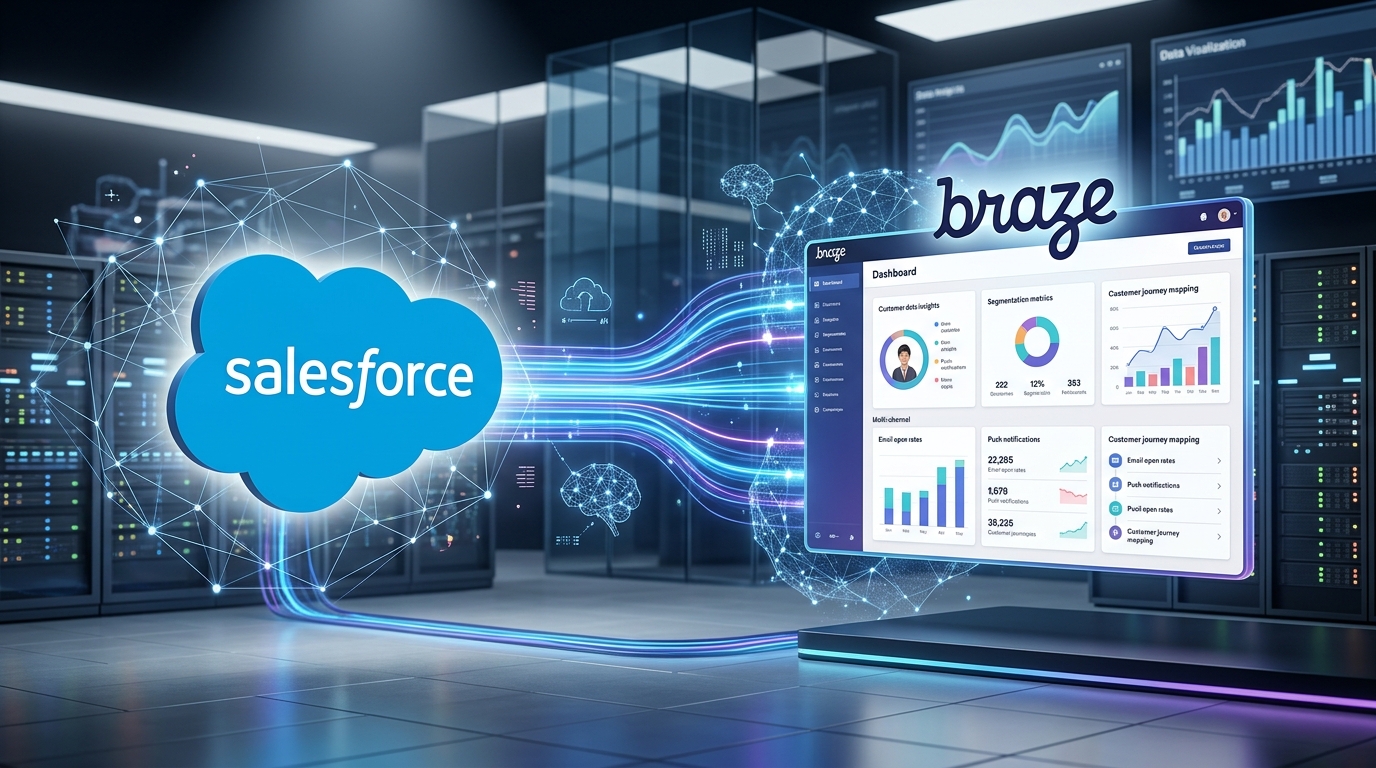
What Is the Salesforce-Braze $5.66 Billion Deal and What It Means for B2B Marketing
The reported Salesforce-Braze $5.66 billion deal raises important questions about the future of digital marketing. Businesses increasingly want personalized customer experiences across multiple channels. Consequently, marketing technology companies continue to compete for stronger customer engagement capabilities.
However, the deal’s exact structure and status require verification before publication. Readers should distinguish confirmed announcements from reports, estimates, and speculation. The strategic implications remain important for understanding the broader marketing technology landscape.
What Is Salesforce and Why Does It Matter?
Salesforce is a widely used platform that helps businesses manage customer relationships and sales activity. It helps businesses manage customer information, sales activities, service operations, and marketing campaigns. As a result, companies can coordinate customer interactions across different departments.
Moreover, Salesforce offers tools that support marketing automation and data-driven decisions. Businesses can use customer information to identify prospects and personalize communications. These capabilities make CRM systems valuable for modern B2B marketing teams.
For example, a software company can track a prospect’s website activity and sales conversations. Its marketing team can then deliver relevant content based on the prospect’s interests. Consequently, sales representatives can focus on better-qualified opportunities.
What Does Braze Bring to Marketing Technology?
Braze specializes in customer engagement and personalized messaging. Its platform helps brands communicate through channels such as email, mobile push notifications, and in-app messages. Therefore, marketers can coordinate campaigns around customer behavior and preferences.
Braze also supports real-time engagement strategies. Businesses can respond to customer actions instead of relying entirely on scheduled campaigns. This approach helps companies deliver messages when they are more relevant.
For instance, a customer might explore a product without completing a purchase. A business could follow up with useful information or a personalized reminder. However, successful engagement still depends on appropriate timing, consent, and message quality.
Why Would Salesforce and Braze Attract Attention?
Salesforce and Braze operate in related areas of customer engagement. Their capabilities illustrate how businesses combine customer data with personalized communication.
If a partnership or acquisition connects their technologies, companies could explore more coordinated marketing workflows. Nevertheless, the actual benefits would depend on the announced terms, technical integration, and product availability.
1. Better Customer Data Coordination
B2B companies often store customer information across several platforms. This separation can create inconsistent records and fragmented customer experiences.
A well-integrated technology stack could help marketing teams coordinate customer information more effectively. Consequently, teams might reduce manual work and improve campaign consistency.
2. More Personalized Marketing Campaigns
Generic marketing messages rarely address every prospect’s needs. Instead, B2B marketers can use customer insights to tailor messages to specific audiences.
For example, a cybersecurity company might send different content to IT managers and financial executives. Each audience receives information that reflects its responsibilities. Therefore, personalization can make communication more useful and relevant.
3. Stronger Marketing Automation
Marketing automation helps businesses deliver messages based on defined actions and conditions. Teams can create workflows for new leads, product demonstrations, and customer onboarding.
Furthermore, better coordination between engagement and CRM tools could help marketers connect campaign activity with sales follow-ups. However, businesses would still need reliable data and carefully designed workflows.
What the Deal Could Mean for B2B Marketing
B2B marketing involves longer sales cycles and multiple decision-makers. Companies must build trust before prospects commit to expensive products or services.
Consequently, personalized communication can play an important role throughout the buying journey. A coordinated marketing platform could help businesses deliver relevant information at different stages.
More Relevant Lead Nurturing
Lead nurturing means staying in touch with prospective customers and earning their trust over time. Instead of sending the same email repeatedly, marketers can respond to engagement signals.
For example, a prospect who downloads a technical guide might receive an implementation checklist. Meanwhile, another prospect could receive a product comparison. This approach helps marketing teams address different needs.
Improved Sales and Marketing Alignment
Sales and marketing teams sometimes disagree about lead quality and campaign performance. Shared customer information can help both departments understand prospect behavior.
This can give sales teams useful background on a prospect before they reach out. Marketing teams can see which campaigns are helping spark valuable discussions with potential customers.
More Measurable Campaign Performance
B2B companies need to understand whether marketing investments generate business results. Engagement metrics provide useful signals, but they do not tell the entire story.
Therefore, businesses should measure qualified leads, conversion rates, pipeline contribution, and customer retention. Combining these metrics provides a clearer picture of marketing effectiveness.
Potential Challenges Businesses Should Consider
Technology integration does not automatically improve marketing performance. Companies must address several practical challenges before expecting measurable results.
Data Privacy and Security
Customer information requires careful handling. Businesses must follow applicable privacy regulations and respect communication preferences.
Additionally, organizations should review access controls, data retention policies, and consent management. These safeguards help protect customers and reduce compliance risks.
Integration Costs and Complexity
Connecting marketing platforms can require technical resources and employee training. Existing systems may also use inconsistent data formats.
Consequently, businesses should evaluate implementation costs before committing to a new technology stack. A phased rollout can help teams identify problems early.
The Risk of Over-Personalization
Personalized messages can become intrusive when businesses use customer information carelessly. Customers may lose trust if communications feel excessively targeted.
Therefore, marketers should prioritize usefulness, transparency, and appropriate frequency. Personalization should improve the customer experience rather than create unnecessary pressure.
How B2B Companies Can Prepare
B2B marketers do not need to wait for a major acquisition or integration announcement. They can strengthen their marketing operations through practical improvements.
First, audit existing CRM and marketing automation systems. Identify duplicate records, disconnected tools, and missing customer information.
Next, establish clear campaign goals and measurement standards. Track engagement alongside qualified leads, pipeline value, and revenue contribution.
Additionally, review data privacy practices and communication permissions. Ensure that every campaign serves a clear customer need.
Finally, evaluate new platforms against specific business requirements. Consider integration options, pricing, reporting, scalability, and vendor support before making a decision.
Final Thoughts
The reported Salesforce-Braze $5.66 billion deal highlights the growing importance of customer engagement technology. Salesforce’s CRM capabilities and Braze’s messaging tools represent complementary areas of marketing technology.
However, the reported transaction details should be confirmed through reliable company announcements. Businesses should not assume that a proposed deal automatically creates new products or immediate benefits.
For B2B marketers, the broader lesson is clear. Better customer data, relevant messaging, and measurable campaigns can strengthen marketing performance. Ultimately, technology delivers value when companies connect it to genuine customer needs and clear business goals.