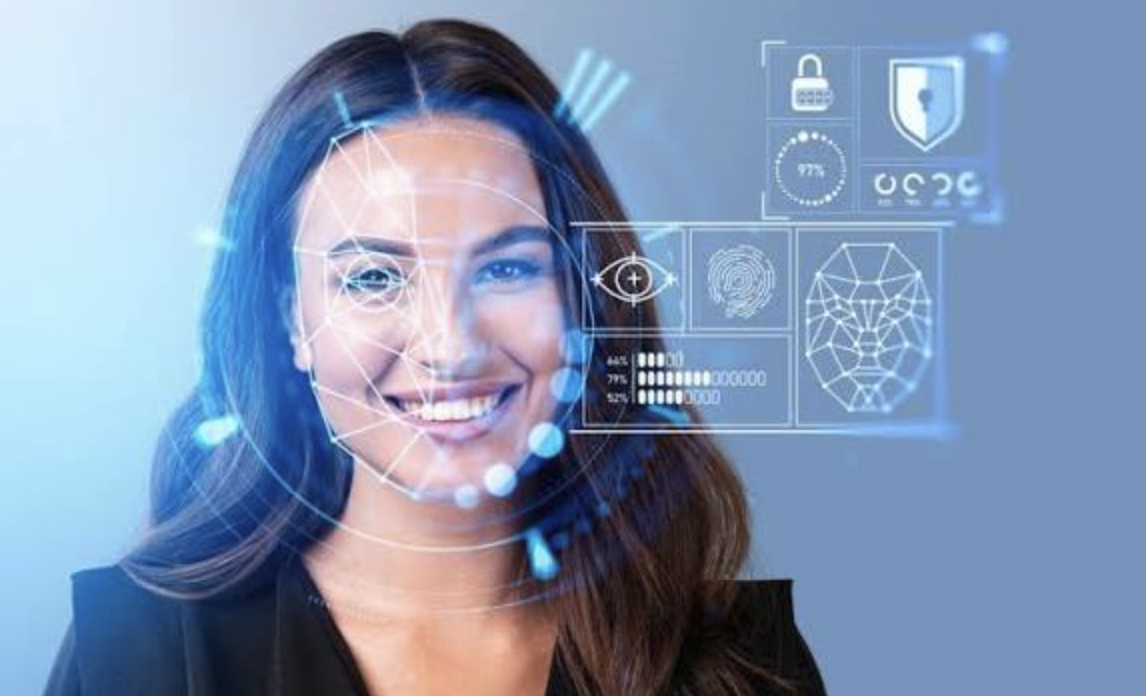
How Does Facial Recognition Technology Work? Explained Simply
You have probably used facial recognition technology without giving it much thought.
It may unlock a smartphone, help organize photos, verify someone’s identity, or support security systems. The technology can seem almost magical because a computer can look at an image and determine whether a face belongs to a particular person.
But facial recognition is not actually “seeing” people in the same way humans do.
Instead, computer systems analyze visual information, identify patterns and features, convert those patterns into mathematical representations, and compare them with available reference data.
Understanding how facial recognition technology works becomes much easier when the process is broken into a few simple stages.
From detecting a face to creating a digital representation and comparing it with stored information, here is what happens behind the scenes.
What Is Facial Recognition Technology?
Facial recognition technology is a type of biometric technology that uses characteristics of a person’s face to help identify or verify them.
Biometrics refers to using measurable human characteristics for recognition.
Examples include:
- Face
- Fingerprints
- Voice
- Iris patterns
- Other physical or behavioral characteristics
A facial recognition system generally starts with an image or video containing a face. It then analyzes relevant facial characteristics and creates data that can be compared with another facial representation.
The technology can be used for different purposes, so not every facial recognition system works in exactly the same way.
For example, a smartphone may use facial recognition to verify that the person trying to unlock the device matches the enrolled user.
A security system might instead compare faces against a larger database.
Facial Recognition vs. Face Detection
These two terms are often confused, but they are not the same.
Face Detection
Face detection answers:
“Is there a face in this image, and where is it?”
A camera application, for example, may detect several faces in a photograph and place a box around each one.
It does not necessarily know who those people are.
Facial Recognition
Facial recognition goes a step further.
It attempts to determine whether a detected face matches a known identity or reference.
In simple terms:
Face detection finds a face. Facial recognition attempts to determine whose face it is or whether it matches a particular person.
This distinction is important because a system can detect faces without identifying anyone.
1. The System Captures an Image
The process begins with an image or video.
A camera captures the person’s face, which may appear under different conditions.
For example, the person could be:
- Looking directly at the camera
- Standing at an angle
- Wearing glasses
- In bright or dim lighting
- Near or far from the camera
- Moving slightly
The quality of the image can affect what happens next.
Better lighting, a clearer view, and an appropriate camera angle can generally make facial analysis easier for a computer system.
2. The System Detects the Face
Next, the software searches the image for patterns that indicate the presence of a face.
Modern systems commonly use machine learning and computer vision techniques to perform this task.
The software may identify the approximate location of the face and separate it from the surrounding background.
Imagine a photograph showing five people in a crowd.
The detection stage attempts to locate each face.
At this point, the system does not necessarily know who those people are.
It is simply determining where the faces are.
3. The System Identifies Facial Features
After detecting a face, the system analyzes characteristics within it.
Depending on the technology, these can include relationships between different facial landmarks and other visual patterns.
Examples might involve:
- Position of the eyes
- Shape and structure of the face
- Relationship between facial features
- Nose and mouth placement
- Jaw and cheek structure
- Other measurable visual characteristics
The important point is that the system is not simply storing a photograph and looking for an exact pixel-by-pixel copy.
Faces can appear different because of lighting, expressions, camera angles, hairstyles, aging, and other factors.
Instead, modern systems generally use mathematical representations designed to capture useful characteristics of the face.
4. Transforming a Face into a Numerical Model
This is one of the most interesting parts of the process.
A facial recognition system can transform information from a face into a numerical representation, sometimes called a face embedding or feature representation.
You can think of this as converting a visual pattern into a set of numbers that a computer can compare.
The numbers themselves are not meaningful to a person in the way a photograph is. They are useful because algorithms can calculate how similar two representations are.
For example:
Face A -> numerical representation
Face B -> numerical representation
The system can then calculate how closely those representations correspond.
This makes it possible to compare faces without relying only on the original image.
5. The System Compares the Facial Data
Once the system has a facial representation, it can compare it with another representation.
There are two common ways this can happen.
One-to-One Verification
The system asks:
“Does this face match the person who claims to be this identity?”
For example, a device might compare the current face with the facial data previously enrolled for that device.
One-to-Many Identification
The system asks:
“Does this face match anyone in this collection of known identities?”
This can involve comparing the facial representation against multiple reference records.
The difference is important because identification can involve a much larger search than simple verification.
6. A Similarity Score Is Calculated
The system needs a way to determine whether two facial representations are sufficiently similar.
It can calculate a similarity or distance score between them.
A simplified example might look like this:
Current facial representation -> comparison -> reference representation -> similarity result
If the similarity meets the system’s configured criteria, the system may treat the faces as a match.
If it does not meet the required threshold, the system may reject the match.
The exact algorithms and thresholds vary considerably between systems.
This is one reason facial recognition should not be thought of as simply asking a computer whether two photographs “look the same.”
7. Machine Learning Helps Improve Recognition
Modern facial recognition systems often rely heavily on machine learning.
Instead of manually programming every possible variation of a human face, developers can train models using large collections of facial images and associated information.
During training, machine learning systems learn patterns that can help distinguish between different faces.
This can help systems deal with variations such as:
- Different lighting
- Facial expressions
- Camera angles
- Image quality
- Natural changes in appearance
However, machine learning does not make facial recognition perfect.
The quality and diversity of training data can affect how well a system performs across different populations and real-world situations.
Where Is Facial Recognition Used?
Facial recognition has become part of many different technologies and services.
Smartphone Security
Some smartphones use facial recognition as one method of device authentication.
The system checks whether the person attempting to access the device matches the enrolled user.
Photo Organization
Some photo applications can identify faces appearing across a collection of images and group photographs containing the same person.
This can make it easier to find pictures.
Airport and Border Processing
Some airports and border systems use biometric technologies to assist with identity verification and traveler processing.
The exact process depends on the country, airport, and specific program.
Financial Services
Some financial services use facial verification as part of identity checks or account security.
It can be combined with other authentication methods and identity documents.
Access Control
Organizations can use biometric systems to control access to certain facilities or systems.
However, the specific technology and privacy requirements depend on how the system is implemented.
What Are the Benefits of Facial Recognition?
Facial recognition can provide several practical advantages when implemented appropriately.
Convenience
A person may be able to verify their identity without entering a password.
Speed
Automated facial matching can process images quickly.
Contactless Authentication
Unlike fingerprint readers or physical cards, facial recognition can work without direct physical contact with a sensor.
Automation
Organizations can automate certain identity verification processes instead of relying entirely on manual checks.
Fraud Prevention
In some applications, biometric verification can provide an additional security layer.
However, facial recognition should generally be viewed as one component of a broader security system rather than a perfect solution.
What Are the Limitations?
Facial recognition technology has limitations.
Lighting and Image Quality
Poor lighting, low-resolution cameras, or unusual angles can make facial analysis more difficult.
Changes in Appearance
People’s appearance naturally changes over time.
Hair, glasses, facial hair, aging, and other factors can affect recognition performance.
False Matches
A system can sometimes incorrectly determine that two faces belong to the same person.
False Rejections
A legitimate user may also fail to match successfully.
Bias and Unequal Performance
The performance of a facial recognition system can vary depending on the system, data used to develop it, and population being evaluated.
For this reason, testing across diverse populations and real-world conditions is an important part of evaluating biometric systems.
Facial Recognition and Privacy
Privacy is one of the biggest issues surrounding facial recognition.
A face is a biometric characteristic, meaning it can be used as part of identifying or verifying an individual.
Unlike a password, you cannot simply choose a new face if biometric information is compromised.
This creates important questions about:
- How facial data is collected
- Where it is stored
- Who can access it
- How long it is retained
- Whether people have given meaningful consent
- How the technology is used
- Whether people can opt out
The privacy implications can be very different depending on whether facial recognition is being used privately on a personal device or deployed across a large public environment.
That is why transparency and appropriate safeguards are important when biometric systems are introduced.
Is Facial Recognition the Same as Face Unlock?
Not exactly.
“Face unlock” is an application of facial recognition or related face-based authentication technology.
A phone may use a specialized system designed specifically to determine whether the current user matches the enrolled owner.
Different devices use different combinations of cameras, sensors, algorithms, and security techniques.
Some systems may also incorporate technologies designed to help distinguish a real person from a photograph or other presentation attempt.
So, while face unlock and facial recognition are closely related, they are not interchangeable terms in every technical context.
What Happens If Facial Recognition Gets It Wrong?
A recognition system can produce an incorrect result.
There are two important types of errors.
False Acceptance
The system incorrectly accepts a person as the enrolled or expected individual.
For security applications, this can be a serious concern.
False Rejection
The system incorrectly rejects the legitimate person.
For example, someone may be unable to unlock their device even though they are the correct user.
System designers need to balance these types of errors according to the purpose of the technology.
A highly secure application may prioritize preventing unauthorized acceptance, while a convenience-focused application may place greater emphasis on avoiding unnecessary rejection.
The Future of Facial Recognition Technology
Facial recognition is likely to continue developing as computer vision and machine learning improve.
Future systems may become better at handling difficult lighting, movement, camera angles, and other real-world conditions.
At the same time, the conversation around privacy, consent, security, and responsible use will remain important.
The future of facial recognition is therefore not simply a question of whether computers can recognize faces.
It is also about when they should be allowed to do so, under what conditions, and with what protections for the people being analyzed.
Conclusion
Facial recognition technology works by turning visual information about a face into data that a computer can analyze and compare.
The basic process is easier to understand when broken down into stages: capture an image, detect the face, analyze its features, create a mathematical representation, compare it with reference data, and determine whether the similarity meets the system’s criteria.
The technology can make authentication and identity verification faster and more convenient, but it also has limitations.
Accuracy can be affected by image quality and other conditions, while privacy and responsible data handling remain important concerns.
As facial recognition becomes more common, understanding how it works can help people make better-informed decisions about the technology they use and the systems they encounter.
Frequently Asked Questions
1. Can you explain how facial recognition functions in easy-to-understand language?
Facial recognition detects a face, analyzes its measurable characteristics, converts those characteristics into a mathematical representation, and compares that representation with stored or reference facial data.
2. Is facial recognition the same as face detection?
No. Face detection identifies where a face appears in an image. Facial recognition attempts to determine whether that face matches a known identity or reference.
3. Can facial recognition be fooled?
Facial recognition systems can make mistakes and may be vulnerable to certain attacks depending on their design. Security-focused systems can use additional sensors and techniques to help reduce these risks.
4. Is facial recognition accurate?
Accuracy varies depending on the technology, image quality, environment, algorithm, and population being evaluated. No facial recognition system should be assumed to be perfect.
5. Does facial recognition store your actual face?
It depends on the system. Some technologies store or process mathematical representations of facial characteristics rather than simply keeping a conventional photograph. How data is handled depends on the specific product or service.
6. Why is facial recognition controversial?
Facial recognition raises concerns about privacy, consent, surveillance, data security, and potential differences in performance across groups. The risks depend heavily on how and where the technology is deployed.