
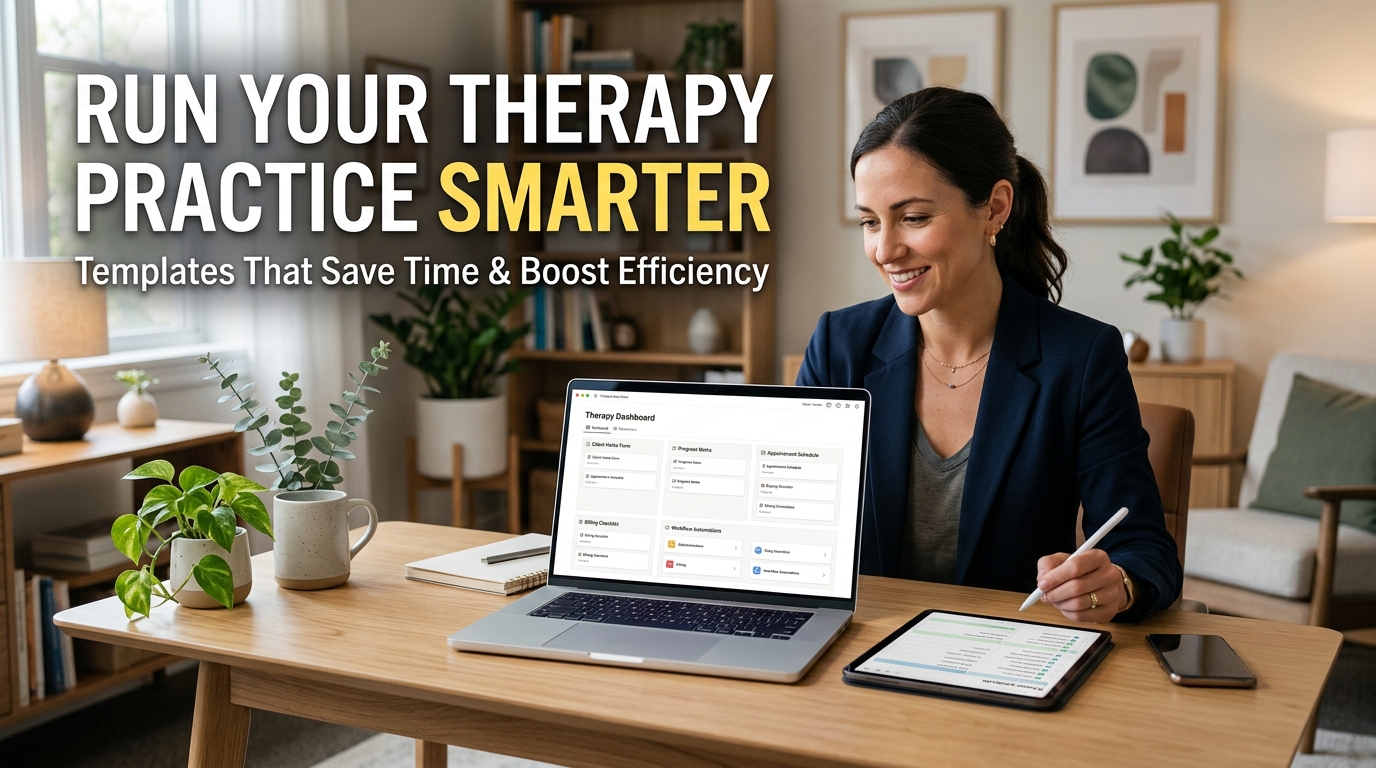
How Solo Therapists Are Using Templates to Run Their Practice Efficiently
Running a therapy practice alone can feel overwhelming. Solo therapists manage clients, appointments, paperwork, billing, marketing, and follow-ups.
However, templates can make these daily responsibilities much easier. They reduce repetitive work and create consistent workflows.
Today, many therapists use templates to save time and stay organized. As a result, they can focus more attention on their clients.
Why Templates Matter for Solo Therapists
Solo therapists often handle every part of their practice themselves. Therefore, small administrative tasks can quickly consume valuable hours.
Templates provide ready-to-use structures for repeated activities. They can cover emails, forms, notes, social posts, and client communications.
Instead of starting from scratch, therapists can customize an existing template. This simple change can create significant time savings.
Client Communication Templates
Clear communication helps therapists maintain professional client relationships. Templates can make common messages faster to create.
For example, therapists can prepare templates for appointment confirmations and reminders. They can also create messages for cancellations and rescheduling requests.
Templates can also support follow-up communication after sessions. However, therapists should always personalize messages when client circumstances require it.
Appointment Scheduling Templates
Scheduling can become complicated when therapists manage everything independently. A simple scheduling template can make the process more predictable.
Therapists can create standard messages for available appointment times. They can also prepare cancellation and rescheduling responses.
Furthermore, templates can support automated scheduling systems. This reduces unnecessary back-and-forth communication with clients.
Documentation Templates Save Valuable Time
Documentation represents another major responsibility for therapists. Consistent templates can make documentation workflows more efficient.
Therapists can create structured templates for recurring documentation tasks. These templates can include prompts for relevant information.
However, templates should never replace professional judgment. Therapists must complete documentation accurately and according to applicable requirements.
Email Templates for Everyday Tasks
Email management can consume more time than expected. Solo therapists often answer similar questions throughout their working week.
Email templates provide quick starting points for common situations. Therapists can prepare responses for inquiries, referrals, reminders, and follow-ups.
Moreover, templates help maintain a consistent professional tone. They also reduce the effort required to write repetitive emails.
Marketing Templates for Solo Practices
Marketing can feel difficult when therapists already have busy schedules. Templates make regular marketing activities easier to manage.
Therapists can create templates for blog posts, newsletters, and social media content. They can also prepare reusable promotional graphics.
A content template provides a consistent structure for future posts. Consequently, therapists can maintain their online presence with less effort.
Social Media Content Templates
Social media requires consistent publishing to remain effective. Yet creating every post from scratch can quickly become exhausting.
Therapists can develop templates for educational tips and practice updates. They can also create templates for frequently asked questions.
Using these structures allows therapists to produce content faster. They can then spend more time engaging with their audience.
Financial and Billing Templates
Financial administration represents another important part of running a private practice. Templates can simplify several repetitive billing tasks.
Therapists can prepare invoice formats and payment reminder messages. They can also create templates for basic financial tracking.
Additionally, standardized templates reduce confusion around recurring administrative processes. Therapists should still follow applicable financial and professional requirements.
Referral Templates Improve Professional Relationships
Referrals can become an important part of private practice growth. Templates can make referral communication more efficient.
Therapists can prepare professional introduction and referral follow-up messages. These templates provide a consistent starting point for communication.
However, every referral should receive appropriate personal attention. A template should support communication rather than make it feel automated.
Templates for Practice Policies
Clear policies help clients understand how a practice operates. Templates can help therapists organize these policies consistently.
Common examples include cancellation, communication, scheduling, and payment policies. Therapists can adapt these documents to their specific practice.
Regular reviews are also important. Policies should remain accurate and aligned with current professional requirements.
How Templates Reduce Mental Overload
Administrative work creates mental clutter for many solo professionals. Repeatedly deciding how to complete routine tasks adds unnecessary cognitive effort.
Templates remove many of those repeated decisions. Instead, therapists can follow established processes.
As a result, they can preserve mental energy for more important responsibilities. This benefit can become especially valuable during busy periods.
How to Build an Effective Template Library
Therapists should begin with their most repetitive tasks. These tasks usually offer the fastest opportunity for time savings.
Next, they can organize templates into clear categories. Useful categories include clients, scheduling, billing, marketing, and administration.
Each template should remain simple and easy to customize. Overly complicated templates can create more work instead of reducing it.
Personalization Still Matters
Templates should never make communication feel cold or generic. Therapists should personalize messages whenever appropriate.
Adding the client’s name can make communication feel more natural. A short personal sentence can also improve the overall experience.
Therefore, the best templates provide structure without removing human connection.
Using Digital Tools With Templates
Digital tools can make template management even easier. Therapists can store reusable documents within secure practice systems.
They can also use scheduling and communication platforms with reusable workflows. However, privacy and security should remain important considerations.
Therapists should select tools that fit their professional responsibilities. They should also understand how those platforms handle sensitive information.
Common Template Mistakes to Avoid
Using too many templates can create unnecessary complexity. Therefore, therapists should focus on templates that solve real problems.
Templates should also receive regular updates. Outdated information can create confusion and professional risks.
Additionally, therapists should avoid copying templates without reviewing them. Every template should fit the practice and its requirements.
A Simple Template Workflow for Solo Therapists
Start by identifying five repetitive tasks in your weekly routine. Then, create one template for each task.
Next, test those templates during normal practice activities. Remove unnecessary sections and simplify complicated instructions.
Afterward, organize the finished templates in one secure location. Review them regularly as your practice develops.
Final Thoughts
Templates can transform how solo therapists manage everyday practice responsibilities. They reduce repetitive work and create more consistent workflows.
From scheduling to marketing, templates can support many areas of practice management. Most importantly, they allow therapists to spend less time on routine administration.
The goal is not to automate everything. Instead, the goal is to create efficient systems that protect valuable time.
With the right templates, solo therapists can build a more organized and sustainable practice.