
The AI Metaverse Is Closer Than You Think: How Intelligent Virtual Worlds Will Transform Everyday Life
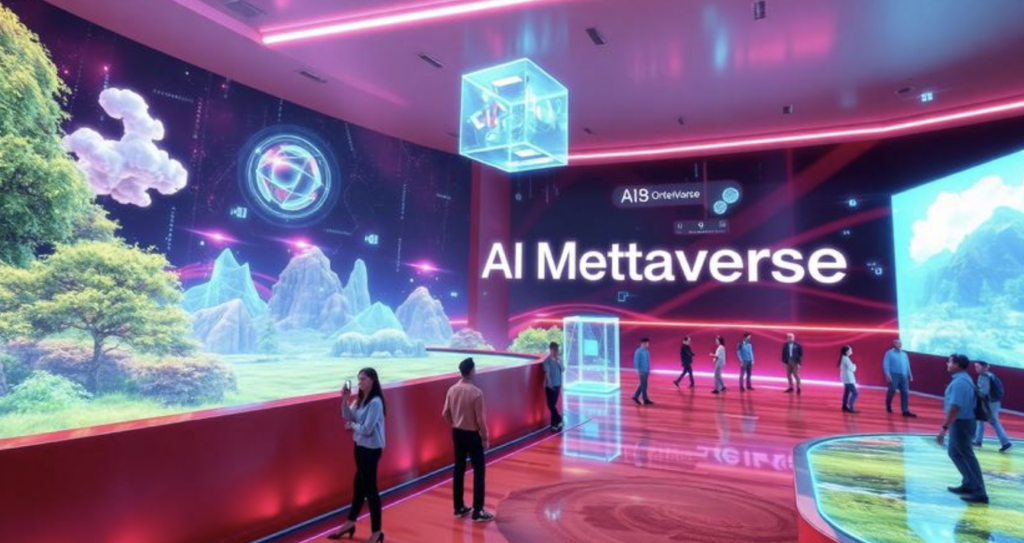
Imagine entering a virtual world that understands your preferences before you speak. Picture digital spaces that evolve with your actions, intelligent assistants that solve problems instantly, and virtual environments that feel alive. This vision is no longer limited to science fiction. The AI Metaverse is steadily becoming one of the most exciting developments in modern technology. Unlike traditional virtual environments, the AI Metaverse combines artificial intelligence with immersive digital experiences.
As a result, users enjoy smarter interactions, realistic environments, and personalized content. Instead of exploring static worlds, people can enter intelligent spaces that learn, adapt, and improve continuously.
Moreover, businesses, educators, developers, and creators are investing heavily in this technology. They recognize its ability to reshape communication, entertainment, education, healthcare, and commerce. Therefore, the AI Metaverse is rapidly becoming the next major step in digital transformation.
In this article, you will discover how the AI Metaverse works, why it matters, the technologies behind it, its real-world applications, potential challenges, and what the future may hold for this revolutionary digital ecosystem.
What Is the AI Metaverse?
The AI Metaverse is the combination of immersive virtual environments with advanced artificial intelligence. Instead of functioning as separate technologies, they work together to create interactive digital experiences that become smarter over time. Artificial intelligence allows virtual worlds to understand user behavior, automate complex tasks, and generate personalized experiences.
Meanwhile, the metaverse provides the three-dimensional environment where these intelligent systems operate. As a result, users experience realistic conversations, adaptive environments, intelligent assistants, and virtual communities that continue evolving with every interaction. Unlike today’s basic online worlds, the AI Metaverse creates experiences that feel dynamic instead of repetitive.
Why the AI Metaverse Is Becoming So Popular
Interest in the AI Metaverse continues to grow because it solves many limitations found in current virtual platforms. Traditional virtual worlds often depend on scripted interactions and fixed environments. Although these platforms remain entertaining, they rarely respond intelligently to user behavior. Artificial intelligence changes this completely. Instead of repeating the same actions, AI enables digital environments to learn continuously.
Consequently, every experience becomes more engaging and personalized. Several factors are driving this popularity, including:
- Smarter virtual assistants
- Personalized digital experiences
- More realistic virtual characters
- AI-generated environments
- Better collaboration tools
- Improved digital creativity
- Faster content generation
- Enhanced customer experiences
Furthermore, organizations view the AI Metaverse as an opportunity to improve productivity while reducing operational costs.
How Artificial Intelligence Powers the Metaverse
Artificial intelligence serves as the brain behind intelligent virtual environments. It processes enormous amounts of information and makes real-time decisions that improve user experiences. Instead of relying on fixed programming, AI continuously analyzes behavior patterns and adjusts virtual environments accordingly. Several AI technologies work together inside the metaverse.
Machine Learning
Machine learning allows systems to improve through experience. Every interaction helps AI understand user preferences more accurately. As users spend more time inside virtual environments, recommendations become increasingly personalized.
Natural Language Processing
Communication becomes much easier through Natural Language Processing. Rather than selecting predefined responses, users can speak naturally with virtual assistants and AI-powered avatars. These systems understand context, recognize emotions, and generate meaningful conversations.
Computer Vision
Computer vision enables AI to recognize facial expressions, gestures, and body movements. Consequently, avatars respond more naturally, creating realistic social interactions inside virtual environments.
Generative AI
Generative AI creates digital assets within seconds. Instead of spending weeks designing virtual buildings, landscapes, clothing, or artwork, creators can generate customized content simply by describing what they want. This dramatically reduces development time while encouraging creativity.
Intelligent Avatars Are Redefining Digital Communication
One of the most exciting aspects of the AI Metaverse is the rise of intelligent avatars. Unlike traditional avatars that perform limited actions, AI-powered avatars behave like digital companions. They remember previous conversations, adapt to user preferences, and provide personalized assistance.
For example, a virtual shopping assistant can recommend products based on previous purchases, current interests, and even personal style.
Similarly, digital teachers can adjust lessons according to each student’s learning speed. Healthcare assistants may also monitor patient progress while providing ongoing support inside secure virtual environments. These intelligent companions make digital experiences feel increasingly human.
AI Creates Virtual Worlds That Never Stop Evolving
Current virtual environments usually remain unchanged unless developers manually update them. The AI Metaverse introduces a completely different approach. Artificial intelligence continuously modifies environments according to user behavior, seasonal events, real-world conditions, and community activities.
Imagine walking through a virtual city where weather changes automatically, businesses update their displays, parks host live events, and entertainment venues respond to audience excitement. Every visit becomes unique because the environment continues learning and adapting. This constant evolution keeps users engaged while making digital spaces feel surprisingly realistic.
Personalization Makes Every Experience Unique
Personalization is one of the strongest advantages of the AI Metaverse. Instead of offering identical experiences to everyone, artificial intelligence creates environments tailored to each individual. Your virtual home may adjust its lighting according to your mood. Your entertainment recommendations may change based on recent interests. Your workspace could automatically organize projects according to your priorities. Even social experiences become smarter by introducing users with similar hobbies, professional interests, or educational goals.
As a result, every interaction feels relevant, efficient, and enjoyable.
The AI Metaverse Is Transforming Online Education
Education is evolving rapidly because of intelligent virtual learning environments. Students no longer need to rely only on textbooks or recorded lectures. Instead, they can enter immersive classrooms where AI tutors provide personalized instruction.
Virtual laboratories allow students to conduct experiments safely. Historical events become interactive experiences instead of simple reading assignments. Medical students can practice complex procedures inside realistic simulations.
Meanwhile, AI continuously measures progress and adjusts lessons according to each learner’s performance. This personalized approach improves understanding while increasing student engagement.
How Businesses Are Using the AI Metaverse to Drive Innovation
Businesses across different industries are adopting the AI Metaverse to improve efficiency, strengthen customer relationships, and create new revenue opportunities. Instead of relying only on traditional websites or video meetings, companies are building immersive digital environments where customers and employees can interact naturally. AI analyzes customer behavior in real time.
Consequently, businesses can deliver personalized recommendations, virtual product demonstrations, and customized support. This approach improves customer satisfaction while increasing sales.
In addition, companies use virtual offices to connect global teams. Employees can collaborate in realistic workspaces, attend meetings, brainstorm ideas, and complete projects together regardless of their physical location. As a result, communication becomes more engaging and productive.
AI Metaverse Is Revolutionizing Healthcare
Healthcare is another industry experiencing significant changes through the AI Metaverse. Doctors, researchers, and medical students are using intelligent virtual environments to improve patient care and professional training. Medical students can practice complex surgeries inside realistic simulations without risking patient safety. AI monitors every movement and provides instant feedback, helping students develop their skills more efficiently.
Furthermore, doctors can meet patients inside secure virtual clinics for consultations and follow-up appointments. This technology saves travel time while improving access to healthcare, especially for people living in remote areas. AI also helps monitor patient health by analyzing medical data and identifying potential concerns early.
Therefore, healthcare providers can make faster and more informed decisions.
Entertainment Becomes More Interactive Than Ever
The entertainment industry is embracing the AI Metaverse to create unforgettable experiences. Instead of simply watching content, users become active participants in virtual worlds. Virtual concerts now feature AI-generated visual effects that react to audience movements.
Similarly, live performances can change based on crowd engagement, making every event unique. Movie studios are also exploring immersive storytelling. Rather than following a fixed storyline, viewers may influence the direction of the narrative through their decisions.
Moreover, artists can perform for millions of fans inside virtual venues without geographical limitations. This creates exciting opportunities for creators and audiences alike.
Gaming Enters a New Era of Intelligence
Gaming has always driven innovation in virtual environments. However, the AI Metaverse takes interactive gaming to an entirely new level. Traditional games often rely on scripted characters and predictable storylines. In contrast, AI-powered games feature intelligent characters that adapt to player decisions. Enemies learn new strategies over time. Friendly characters remember previous interactions. Missions evolve according to each player’s actions.
Additionally, AI generates landscapes, buildings, and quests automatically. Therefore, players enjoy endless adventures without repetitive gameplay. This level of intelligence creates richer gaming experiences while increasing long-term engagement.
Virtual Shopping Is Becoming More Personalized
Online shopping continues to evolve as businesses adopt AI-powered virtual stores. Instead of scrolling through endless product pages, customers can enter realistic digital showrooms and explore products naturally. AI assistants greet shoppers, answer questions, and recommend products based on browsing history and personal preferences. Customers can also try on digital clothing using realistic avatars that match their body shape.
Likewise, furniture buyers can visualize products inside virtual versions of their homes before making purchases. These innovations reduce uncertainty while improving customer confidence.
The AI Metaverse Is Transforming Remote Work
Remote work has become a permanent part of modern business. However, traditional video conferencing often lacks the feeling of real collaboration. The AI Metaverse offers a more immersive solution. Employees can work together inside virtual offices where conversations feel natural and teamwork becomes more engaging. AI assistants schedule meetings, summarize discussions, assign tasks, and organize project information automatically.
Meanwhile, virtual whiteboards, shared workspaces, and interactive presentations improve collaboration across international teams. As a result, businesses maintain productivity while creating stronger workplace connections.
The Rise of a Digital Economy
The AI Metaverse is creating entirely new economic opportunities. People can design digital clothing, virtual homes, artwork, educational experiences, and entertainment services for global audiences. Artificial intelligence accelerates content creation, allowing creators to produce high-quality assets in less time. Businesses are also developing virtual marketplaces where users buy, sell, and trade digital products.
Furthermore, AI helps determine pricing, analyze market demand, and identify emerging trends. Consequently, creators and entrepreneurs can make smarter business decisions. As this digital economy expands, entirely new careers will continue to emerge.
Privacy and Data Security Remain Critical Challenges
Although the AI Metaverse offers exciting possibilities, it also introduces important privacy concerns. AI systems require significant amounts of data to deliver personalized experiences.
Therefore, protecting user information becomes essential. Organizations must implement strong encryption, secure authentication methods, and transparent privacy policies. Users should also understand what information is collected and how it is used. Building trust will remain one of the most important factors in the long-term success of intelligent virtual worlds.
Ethical Considerations Cannot Be Ignored
The rapid growth of AI raises several ethical questions. Developers must ensure that AI systems treat all users fairly and avoid biased decision-making. Transparent algorithms, responsible data collection, and regular system evaluations help reduce these risks.
Additionally, organizations should clearly explain how AI influences recommendations, moderation, and automated decisions. Responsible development will encourage greater public confidence while supporting sustainable innovation.
The Future of the AI Metaverse Looks More Connected Than Ever
The AI Metaverse is still evolving, yet its potential continues to expand. Future developments may include realistic digital twins of cities, advanced wearable devices, intelligent robots, and highly immersive virtual experiences. Artificial intelligence will make these environments more responsive, efficient, and personalized than ever before.
Moreover, advancements in augmented reality, virtual reality, and spatial computing will blur the boundaries between physical and digital life. As technology continues to mature, people may move seamlessly between real and virtual environments for work, education, healthcare, entertainment, and social interaction.
Ultimately, the AI Metaverse has the potential to reshape how individuals connect, create, and experience the digital world.
Will the AI Metaverse Replace the Traditional Internet?
The AI Metaverse is unlikely to replace the traditional internet completely. Instead, it will expand how people interact with digital content. Websites, mobile applications, and social media platforms will continue serving important purposes.
However, immersive virtual environments will offer richer and more engaging experiences for many activities. For example, instead of browsing a product catalog, customers may enter a virtual store. Rather than attending a standard video meeting, employees could collaborate inside a realistic digital office.
Likewise, students may learn through interactive simulations instead of static online courses. As technology advances, the internet and the AI Metaverse will work together to create a more connected digital ecosystem.
Emerging Technologies Powering the AI Metaverse
The rapid growth of the AI Metaverse depends on several cutting-edge technologies working together. Each innovation contributes to creating smarter, faster, and more immersive virtual experiences.
Virtual Reality (VR)
Virtual reality allows users to enter fully immersive digital environments using VR headsets. AI enhances these experiences by making virtual worlds responsive and interactive.
Augmented Reality (AR)
Augmented reality blends digital content with the physical world. AI helps recognize objects, understand surroundings, and place virtual elements naturally into real environments.
Extended Reality (XR)
Extended reality combines VR, AR, and mixed reality into one seamless experience. AI manages these environments while adapting them to user behavior in real time.
Blockchain Technology
Blockchain secures digital ownership within the metaverse. Users can safely own, trade, and verify virtual assets while maintaining transparency and security.
Cloud Computing
Cloud infrastructure provides the computing power needed to support massive virtual environments. It also enables users to access the AI Metaverse from multiple devices without requiring expensive hardware.
5G and Future Networks
High-speed internet connections reduce latency and improve responsiveness. Consequently, users enjoy smoother interactions, better graphics, and real-time collaboration inside virtual worlds.
The Future of the AI Metaverse
The next decade could transform the AI Metaverse into one of the world’s largest digital ecosystems. Artificial intelligence will continue becoming more capable, allowing virtual assistants to communicate almost like humans.
Digital environments will become increasingly realistic, while avatars may express emotions through natural facial expressions and body language. Businesses will create intelligent virtual headquarters where employees collaborate regardless of location. Educational institutions will build immersive classrooms that adapt to every student’s learning style. Healthcare providers will use advanced simulations to improve medical training and patient care. Furthermore, creators will develop entire digital cities with AI-generated architecture, entertainment, and commerce.
As a result, users will experience virtual spaces that constantly evolve without requiring manual updates. Although challenges remain, innovation continues at an impressive pace. Therefore, the AI Metaverse is expected to become an important part of everyday digital life.
Conclusion
The AI Metaverse represents far more than another technological trend. It marks the beginning of a new era where artificial intelligence and immersive virtual environments work together to create smarter, more personalized experiences. From education and healthcare to business, gaming, retail, and entertainment, the possibilities continue expanding. Intelligent avatars, adaptive virtual worlds, AI-powered creativity, and real-time collaboration are already reshaping how people connect and interact online.
However, long-term success depends on responsible innovation. Strong cybersecurity, transparent data practices, ethical AI development, and equal access will play essential roles in building a trusted digital future.
As technology continues to mature, the AI Metaverse will become increasingly integrated into daily life. Organizations that embrace this transformation early will be better positioned to innovate, compete, and deliver exceptional digital experiences. Ultimately, the AI Metaverse is not simply changing virtual worlds, it is redefining how people learn, work, create, communicate, and experience the digital age.
Frequently Asked Questions
1. What is the AI Metaverse?
The AI Metaverse combines artificial intelligence with immersive virtual environments to create intelligent and interactive digital experiences.
2. How does AI improve the metaverse?
AI personalizes experiences, automates interactions, generates content, and makes virtual worlds more responsive.
3. Is the AI Metaverse already available?
Yes, many platforms already use AI features, although the complete AI Metaverse is still evolving.
4. Which industries benefit most from the AI Metaverse?
Healthcare, education, gaming, retail, real estate, manufacturing, entertainment, and business collaboration benefit significantly.
5. Can businesses earn money in the AI Metaverse?
Yes, businesses can generate revenue through virtual products, digital services, immersive experiences, and online commerce.
6. Is the AI Metaverse secure?
Security depends on strong encryption, privacy protection, responsible AI development, and reliable cybersecurity practices.
7. Will AI replace human interaction in the metaverse?
No, AI is designed to enhance human experiences rather than replace meaningful human connections.
8. Do I need a VR headset to access the AI Metaverse?
No, many AI-powered virtual experiences can also be accessed through computers, smartphones, and tablets.
9. What skills are important for the AI Metaverse?
Artificial intelligence, programming, 3D design, cybersecurity, blockchain, cloud computing, and digital content creation are valuable skills.
10. What is the future of the AI Metaverse?
The AI Metaverse is expected to deliver smarter virtual worlds, personalized experiences, advanced collaboration, and new digital economic opportunities.