
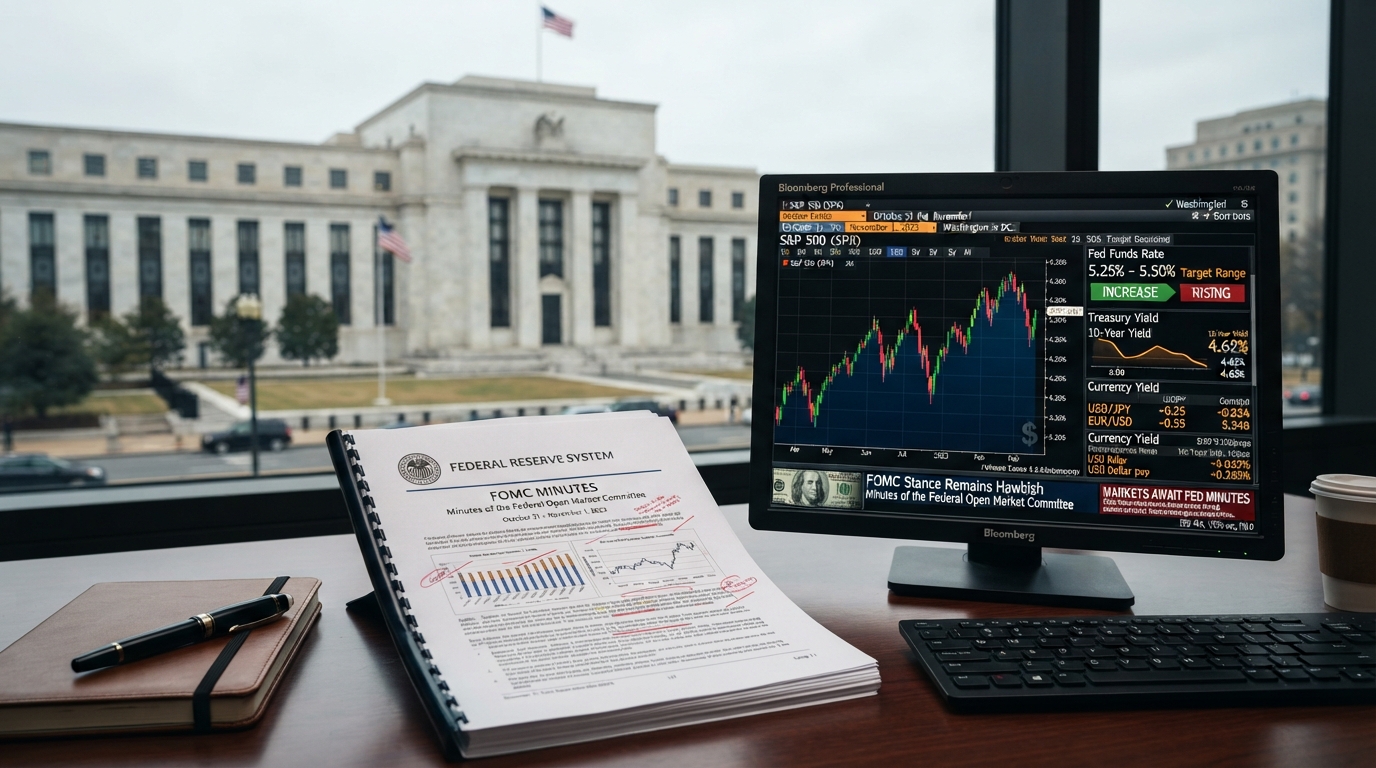
What Are FOMC Minutes and Why Do Markets Read Them Closely?
Financial markets constantly react to Federal Reserve announcements. However, investors also pay close attention to FOMC minutes. These documents reveal important details about central bank discussions.
FOMC minutes help investors understand monetary policy decisions. Moreover, they provide clues about future interest rate movements. Traders, analysts, and businesses use these insights when making financial decisions.
But what exactly are FOMC minutes? Why do they influence financial markets? Let’s explore their meaning, importance, and market impact.
What Are FOMC Minutes?
FOMC stands for the Federal Open Market Committee. It functions as part of the U.S. Federal Reserve System.
The committee meets regularly to discuss economic conditions. Its members evaluate inflation, employment, economic growth, and financial stability.
After each scheduled policy meeting, the Federal Reserve publishes meeting minutes. These documents summarize discussions among committee participants.
Unlike the official policy statement, minutes provide additional details. They explain different viewpoints, economic concerns, and policy considerations.
Therefore, investors use them to understand the reasoning behind Federal Reserve decisions.
Why Are FOMC Minutes Important?
FOMC minutes provide valuable information about the Federal Reserve’s thinking. They also help investors understand potential changes in monetary policy.
Several factors make these documents important.
1. They Reveal Interest Rate Expectations
Interest rates influence borrowing costs across the economy. Consequently, investors closely monitor signals about future rate decisions.
Minutes sometimes reveal disagreements about monetary policy. Some members may support higher rates to control inflation.
Meanwhile, others may prefer lower rates to support economic growth.
These differences help investors evaluate possible policy directions.
2. They Explain Inflation Concerns
Inflation remains a major consideration for Federal Reserve policymakers. Therefore, meeting minutes often discuss rising prices and economic pressures.
Investors examine these discussions for important inflation signals. For example, persistent inflation concerns may suggest tighter monetary policy.
Conversely, improving inflation trends could support future rate reductions.
3. They Highlight Economic Risks
Federal Reserve officials monitor several economic indicators. These include employment, consumer spending, business activity, and financial conditions.
Minutes explain which risks concern policymakers most. As a result, investors gain additional insight into economic priorities.
How Do FOMC Minutes Affect Financial Markets?
FOMC minutes can influence different financial markets. However, their impact depends on the information they contain.
Markets often react when the minutes differ from expectations.
Stock Market Reactions
Stock prices frequently respond to interest rate expectations. Lower rates can support company valuations and investment activity.
However, higher borrowing costs may pressure businesses. Consequently, investors sometimes reduce exposure to interest-sensitive stocks.
Technology and growth companies can experience particularly strong reactions.
Bond Market Movements
Bond investors closely monitor Federal Reserve policy signals. Interest rate expectations influence government bond yields.
For example, expectations of higher interest rates can push yields upward.
Meanwhile, expectations of lower rates may support bond prices. Therefore, Treasury market movements often reflect changing interpretations of FOMC minutes.
Currency Market Volatility
The US dollar also responds to monetary policy expectations. Higher expected interest rates can increase dollar demand.
However, weaker policy expectations may reduce its appeal.
Currency traders therefore examine FOMC minutes for clues about future Federal Reserve decisions.
What Do Investors Look for in FOMC Minutes?
Professional investors rarely read meeting minutes without a clear purpose. Instead, they focus on specific economic and monetary policy signals.
Important areas include:
- Inflation outlook: Whether policymakers remain concerned about rising prices.
- Interest rate direction: Whether members support tightening or easing monetary policy.
- Employment conditions: How officials evaluate labor market strength.
- Economic growth: Whether policymakers expect stronger or weaker economic activity.
- Policy disagreements: Whether committee members have different monetary policy preferences.
- Financial stability: Whether officials identify risks within banking and financial markets.
Together, these details help investors understand potential policy changes.
FOMC Minutes vs. FOMC Statement: What’s the Difference?
Both documents provide important information about Federal Reserve policy. However, they serve different purposes.
An FOMC statement announces the committee’s official policy decision. It typically highlights interest rates and the economic outlook.
FOMC minutes provide a more detailed account of meeting discussions. They explain participants’ concerns, arguments, and policy considerations.
Therefore, the statement delivers the immediate decision. Meanwhile, minutes provide additional context behind that decision.
Investors often examine both documents for a complete picture.
When Are FOMC Minutes Released?
The Federal Reserve generally publishes FOMC minutes approximately three weeks after each scheduled policy meeting.
This delay allows investors to review the committee’s discussions. However, markets have already received the official policy announcement.
Consequently, minutes sometimes confirm existing expectations. In other situations, they introduce unexpected information.
Investors can find official meeting minutes through the Federal Reserve’s website.
How Should Beginners Read FOMC Minutes?
New investors do not need advanced economic knowledge to understand these documents.
Instead, they should follow a simple approach.
- Check the latest policy decision: Understand whether the Federal Reserve maintained, increased, or reduced interest rates.
- Review inflation discussions: Identify whether officials remain concerned about price pressures.
- Examine employment conditions: Look for comments about hiring and unemployment.
- Identify policy disagreements: Notice differences between committee members.
- Compare market expectations: Evaluate whether the minutes introduce new information.
- Avoid emotional decisions: Never trade based on one statement without considering broader economic conditions.
Additionally, beginners should compare multiple meetings. This approach helps identify changing policy trends.
Can FOMC Minutes Predict the Stock Market?
FOMC minutes cannot reliably predict future stock market movements. However, they provide useful information about monetary policy expectations.
Markets consider many factors beyond Federal Reserve decisions. Corporate earnings, geopolitical developments, inflation, and economic data also influence prices.
Therefore, investors should treat minutes as one research tool.
Combining Federal Reserve information with financial analysis can support better investment decisions.
Final Thoughts
FOMC minutes offer valuable insights into Federal Reserve discussions and monetary policy expectations. They help investors understand economic concerns and possible interest rate changes.
Moreover, these documents influence expectations across stock, bond, and currency markets.
Understanding FOMC minutes can help beginners follow financial news more confidently. Ultimately, investors should examine these documents alongside broader economic indicators before making financial decisions.