What the Fed Holding Rates at 3.75%–4.00% Means for Your Savings and Loans
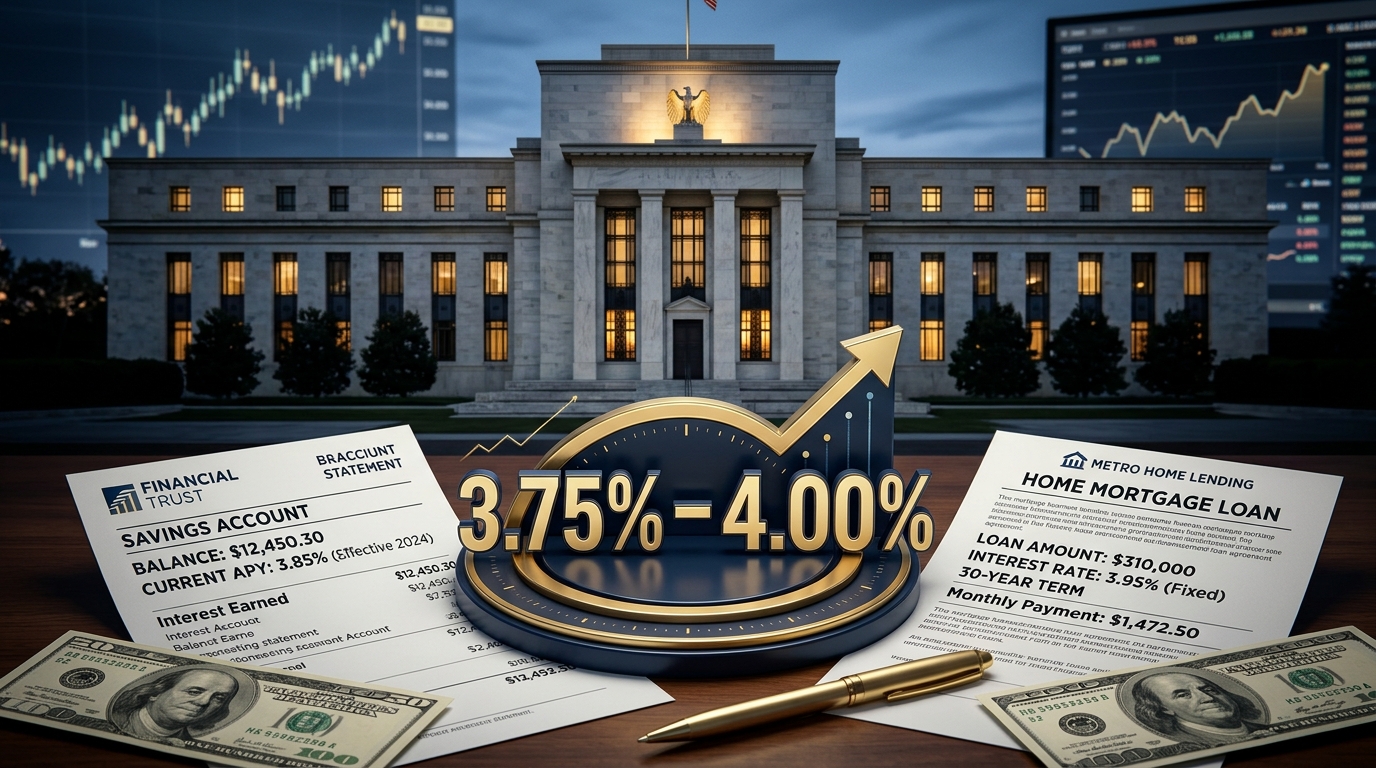
The Federal Reserve has just delivered a decision that could affect millions of American households: keeping interest rates between 3.75% and 4.00% while inflation remains elevated. But here is the surprising part: even though the Fed did not raise rates this time, borrowing costs may remain uncomfortable, and your savings account might not reward you as much as you expect.
On October 28, 2026, the Federal Open Market Committee (FOMC) voted 10–2 to maintain its benchmark federal funds rate. Two policymakers preferred another quarter-point increase. This disagreement highlights how uncertain the economic outlook remains. Federal Reserve.
For ordinary consumers, this decision matters because it influences credit cards, personal loans, mortgages, savings accounts, and other financial products. Understanding these effects can help you make smarter financial decisions.
The Fed’s Rate Hold Does Not Mean Borrowing Is Getting Cheaper
Most people assume that when the Federal Reserve pauses rate increases, loan payments should immediately become cheaper. That is not how the financial system works.
The federal funds rate is the interest banks charge each other to borrow reserve funds overnight. It influences other interest rates throughout the economy, but lenders do not automatically reduce their borrowing rates whenever the Fed pauses.
The latest decision keeps the target range at 3.75%–4.00%. The central bank also described economic activity as strong and inflation as elevated.
This combination creates a difficult situation. Policymakers want to control inflation without unnecessarily damaging economic growth.
The two dissenting votes are particularly interesting. Both Lisa Cook and Beth M. Hammack preferred increasing the benchmark rate by another 0.25 percentage point.
That means consumers should not interpret this pause as a promise of cheaper credit.
Your Savings Account Could Earn More, But There Is a Catch
A higher interest-rate environment can benefit people who keep money in savings accounts. Banks may offer competitive annual percentage yields (APYs) to attract deposits.
However, here is what many savers overlook: the Federal Reserve does not directly determine the interest rate on your savings account.
Banks make their own pricing decisions based on funding needs, competition, operating costs, and expectations about future interest rates.
Why Savings Rates May Stop Improving
When the Fed holds rates steady, banks may decide they no longer need to increase deposit rates. Some institutions might even reduce their APYs if they expect lower borrowing demand or changing market conditions.
This creates a problem for people who leave substantial cash in traditional savings accounts without comparing alternatives.
For example, someone keeping $10,000 in an account earning 0.50% receives approximately $50 in annual interest before taxes. An account paying 3.50% would generate approximately $350 under the same simple-interest assumption.
The difference is $300 per year.
Did You Know?
A savings account’s APY includes the effect of compound interest. Two accounts advertising similar rates can produce different returns depending on compounding, fees, minimum balances, and withdrawal conditions.
The practical lesson is simple: compare actual APYs instead of assuming every bank offers competitive returns.
Credit Cards and Personal Loans Could Keep Costing You More
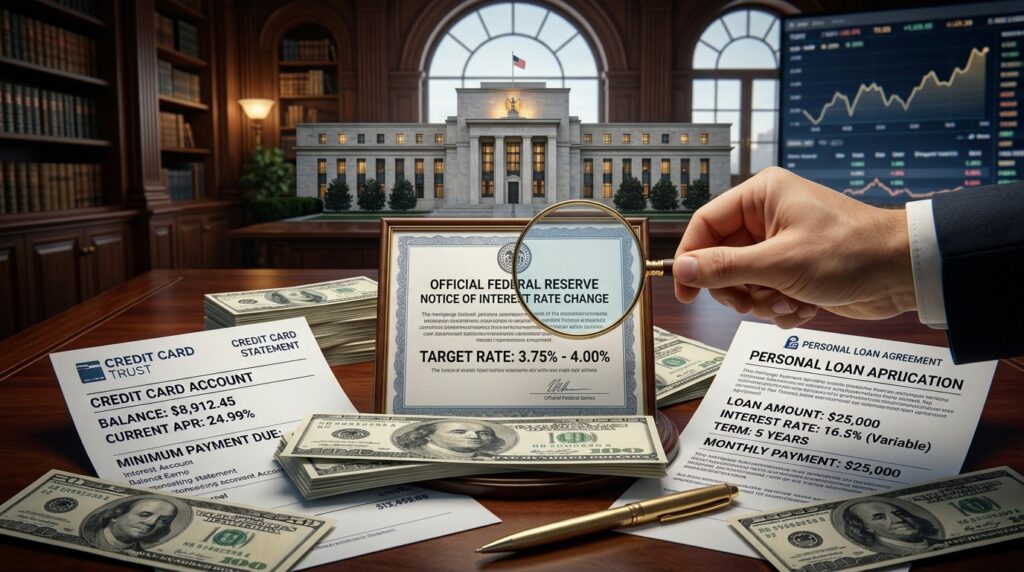
Credit card borrowers may feel the effects of the Fed’s rate policy more directly than savers.
Many credit cards carry variable interest rates linked to the prime rate, which generally moves alongside changes in the federal funds rate.
When benchmark rates remain elevated, credit card interest charges can also remain expensive.
Consider someone carrying a $5,000 credit card balance. Even without another Fed increase, interest can continue accumulating every month if the borrower does not pay the balance in full.
Personal loans can also remain expensive because lenders consider credit scores, repayment periods, income, and overall market conditions.
The real problem is that a rate pause does not erase existing debt costs.
For borrowers, paying down high-interest balances may deliver a more reliable financial benefit than waiting for another Federal Reserve announcement.
Mortgage and Auto Loan Buyers Should Not Expect Instant Relief
Homebuyers often watch Federal Reserve announcements because mortgage affordability matters to their budgets. However, fixed mortgage rates do not move directly with the federal funds rate.
Instead, they are influenced by longer-term Treasury yields, mortgage-backed securities, inflation expectations, and investor demand.
This explains why mortgage rates can rise even when the Fed holds its benchmark rate steady.
Auto loans work differently depending on whether the financing carries a fixed or variable rate. Lenders also consider vehicle prices, borrower creditworthiness, loan duration, and market competition.
What Existing Borrowers Should Understand
If you already have a fixed-rate mortgage or fixed-rate auto loan, the latest Fed decision generally will not change your contractual interest rate.
However, borrowers with adjustable-rate mortgages or variable-rate debt should review their loan terms carefully.
New buyers should compare several lenders rather than assuming that waiting for the next Fed meeting will automatically produce better financing.
What You Should Do Before the Next Fed Decision
The smartest response to changing interest rates is not panic. It is preparation.
First, review your savings account’s current APY and compare it with competitive options. Check minimum deposits, withdrawal restrictions, and fees before switching.
Second, prioritize expensive credit card balances. Reducing outstanding debt can lower the amount of interest you pay over time.
Third, avoid taking on unnecessary variable-rate debt. If you need financing, compare fixed and variable offers and calculate the total repayment cost.
Fourth, build an emergency fund that can cover essential expenses. Keeping accessible cash can help you avoid expensive borrowing when unexpected bills arrive.
As Munawar Gul, my main takeaway from this decision is that households should focus less on predicting the Fed’s next move and more on understanding how their existing financial products respond to interest-rate changes.
The bottom line is that the October decision offers no immediate guarantee of cheaper loans or higher savings returns. Inflation remains elevated, and policymakers are divided about what should happen next.
One action to take today: Check the interest rate on your savings account and your most expensive debt. Those two numbers can reveal where your money is working for you and where it is costing you.
What concerns you more right now: lower savings returns or expensive borrowing costs?
Frequently Asked Questions
1. What does the Fed holding rates at 3.75%–4.00% mean?
It means the Federal Reserve decided to keep its benchmark federal funds rate within the existing 3.75%–4.00% range on October 28, 2026. The decision does not automatically reduce loan rates or increase savings returns. Banks and lenders still make individual pricing decisions based on market conditions.
2. Will savings account interest rates increase after the Fed decision?
Not necessarily. Banks determine their own savings rates based on competition, deposit requirements, and funding needs. Some may maintain attractive APYs, while others could reduce returns. Consumers should compare annual percentage yields, fees, and account conditions before deciding where to keep their money.
3. Will mortgage rates fall because the Fed held interest rates steady?
No immediate mortgage-rate decline is guaranteed. Fixed mortgage rates are influenced by Treasury yields, inflation expectations, and mortgage market conditions rather than directly following the federal funds rate. Buyers should compare lender offers and calculate total borrowing costs before committing to a home loan.