What Is the Difference Between Organic and Paid Social Media Reach?
Social media has emerged as one of the most effective and influential channels for marketing for companies, content creators, and brands alike. However, not all social media visibility is the same. When marketers talk about reach, they usually divide it into two categories: organic reach and paid reach.
Understanding the difference between organic and paid social media reach is essential for anyone who wants to grow an audience, generate leads, or increase sales. While organic reach focuses on attracting people naturally, paid reach relies on advertising budgets to expand visibility.
In this article, you’ll learn what organic and paid social media reach mean, how they work, and when to use each strategy.
What Is Organic Social Media Reach?
Organic social media reach refers to the number of people who see your content without paid promotion.
When you publish a post, video, or story on social media and people discover it naturally through their feeds, searches, shares, or recommendations, that is organic reach.
Organic reach usually comes from:
- Followers
- Shares and reposts
- Hashtags
- Search results
- Comments and engagement
- Recommendations from the platform
The essence of organic marketing lies in nurturing relationships and establishing trust gradually over a period.
What Is Paid Social Media Reach?
Paid social media reach refers to the audience you reach through advertisements or sponsored content.
Companies invest in paid advertising on social media to target particular audiences, leveraging criteria like demographics and interests:
- Age
- Location
- Interests
- Behavior
- Profession
- Online activity
Paid reach allows brands to promote products and services much faster than organic methods.
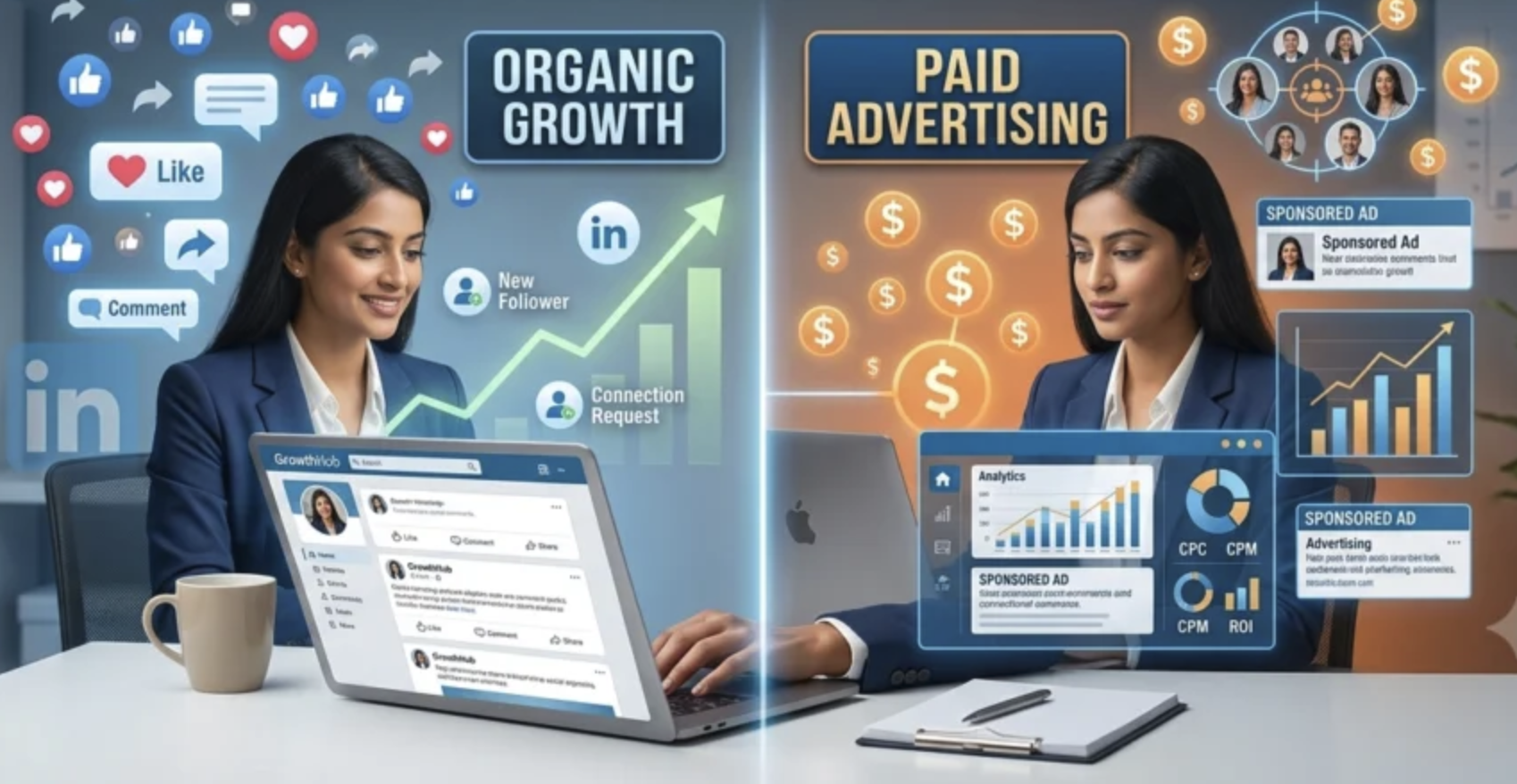
Organic Reach vs. Paid Reach: The Main Differences
Here is a simple comparison between organic and paid social media reach:
| Factor | Organic Reach | Paid Reach |
| Cost | Free | Requires budget |
| Speed | Slow growth | Fast results |
| Audience targeting | Limited | Highly targeted |
| Trust level | Higher | Moderate |
| Long-term value | Strong | Depends on budget |
| Scalability | Slower | Faster |
Both strategies have advantages and disadvantages.
How Organic Reach Works
Organic reach depends heavily on social media algorithms.
Platforms analyze factors such as:
- Likes
- Comments
- Shares
- Watch time
- Saves
- Relevance
Content with higher engagement is usually shown to more people.
To improve organic reach, businesses often create:
- Educational posts
- Tutorials
- Infographics
- Videos
- Case studies
- Behind-the-scenes content
Consistency and quality are essential for long-term growth.
How Paid Reach Works
Paid reach works through advertising systems offered by social media platforms.
Businesses create campaigns and set goals such as:
- Website traffic
- Lead generation
- Sales
- Brand awareness
- App downloads
- Video views
The platform then displays the advertisement to the target audience.
Paid advertising has the ability to produce immediate outcomes in just a few hours, making it an ideal choice for promotions, special events, or introducing new products to the market.
Benefits of Organic Social Media Reach
Organic reach offers several advantages.
Builds Trust
People often trust content that appears naturally in their feed more than advertisements.
Cost-Effective
Beginning to grow your audience doesn’t require a hefty financial investment; even small budgets can be effective.
Long-Term Growth
Creating valuable and engaging content can keep attracting viewers and followers for months, or even years, to come.
Strong Community
Organic engagement helps businesses build loyal communities around their brands.
Benefits of Paid Social Media Reach
Paid reach also provides important benefits.
Immediate Results
Advertisements can quickly increase visibility and traffic.
Advanced Targeting
Companies have the ability to reach precise groups of people by customizing targeting options based on age, location, hobbies, and other interests.
Better Scalability
Paid campaigns make it easier to expand into new markets.
Measurable Performance
Advertisers can track clicks, conversions, and return on investment.
Limitations of Organic Reach
Although organic reach is valuable, it has some challenges.
- Growth can be slow.
- Algorithms constantly change.
- Competition is increasing.
- Results require consistency.
- Reaching new audiences can be difficult.
Businesses should be patient when relying on organic strategies.
Limitations of Paid Reach
Paid reach also has disadvantages.
- It requires ongoing spending.
- Results may stop when the budget ends.
- Competition can increase advertising costs.
- Poor targeting can waste money.
A successful advertising campaign requires proper planning and testing.
Which Strategy Is Better for Businesses?
There is no single answer because the best strategy depends on your goals.
Organic reach is ideal for:
- Building authority
- Creating trust
- Growing a community
- Long-term branding
Paid reach is ideal for:
- Launching products
- Generating leads
- Increasing sales
- Promoting events
Most successful businesses use both methods together.
How to Combine Organic and Paid Reach
The most effective marketing approach combines authentic organic posts with strategic paid promotions to maximize reach and engagement.
For example:
- Create valuable content organically.
- Identify posts that perform well.
- Promote those posts using paid ads.
- Analyze the results.
- Improve future campaigns.
This approach maximizes visibility while keeping costs under control.
Tips to Improve Organic Reach
If you want to grow organically, follow these tips:
- Post consistently.
- Create helpful content.
- Use relevant hashtags.
- Respond to comments.
- Share videos and images.
- Encourage engagement.
Building an audience takes time, but consistency pays off.
Tips to Improve Paid Reach
To get better results from paid advertising:
- Define your target audience.
- Test different ad formats.
- Monitor campaign performance.
- Use attractive visuals.
- Optimize your budget.
- Analyze conversion data.
Small improvements can significantly increase your return on investment.
The Future of Social Media Marketing
Social media marketing continues to evolve as platforms update their algorithms and advertising systems.
Artificial intelligence, personalized recommendations, and short-form video content are shaping the future of both organic and paid reach.
Businesses that understand how to combine these strategies will have a competitive advantage in the coming years.
Conclusion
Understanding the difference between organic and paid social media reach is essential for modern marketing success.
Organic reach helps businesses build trust, authority, and long-term relationships, while paid reach delivers faster results and precise targeting.
Instead of choosing one strategy over the other, businesses should combine both approaches to maximize growth, engagement, and revenue.
With the right balance, social media can become one of the most effective channels for attracting customers and growing a brand.
FAQ’s
1. What is organic social media reach?
Organic social media reach is the number of people who see your content naturally without paid promotion.
2. What is paid social media reach?
Paid social media reach refers to the audience reached through advertisements and sponsored content.
3. Is organic reach better than paid reach?
Neither is universally better. Organic reach builds trust and long-term growth, while paid reach delivers faster results.
4. Should businesses use both organic and paid social media marketing?
Yes. Combining organic and paid strategies often produces the best results for growth and customer acquisition.