
Why Some People Master New Skills Fast While Others Stay Stuck
Have you ever wondered why some people master new skills fast while others stay stuck? You might see one person learning a new language in months while another struggles for years. Some people quickly become excellent at coding, cooking, writing, or playing an instrument, while others lose motivation before making real progress.
The truth is that learning speed is rarely about being naturally gifted. Instead, it depends on mindset, learning strategies, consistency, and the willingness to improve every day.
The good news is that anyone can become a faster learner by following proven methods. In this article, you’ll discover the habits and techniques that successful learners use to develop new skills efficiently.
The Myth of Natural Talent
Many people believe successful learners are born with special abilities. While genetics may influence certain strengths, research consistently shows that practice plays a much bigger role.
Talent can provide a small advantage, but it cannot replace:
- Consistent effort
- Quality practice
- Patience
- Continuous learning
Think about professional athletes, musicians, and entrepreneurs. Behind every success story are thousands of hours of focused practice.
Instead of asking, “Am I talented enough?” ask yourself, “Am I willing to improve every day?”
That simple shift changes everything.
Growth Mindset Makes Learning Easier
One of the biggest differences between successful learners and those who stay stuck is mindset.
People with a fixed mindset believe abilities cannot change.
People with a growth mindset believe intelligence and skills improve through effort.
When challenges appear, growth-minded learners:
- Keep trying
- Learn from mistakes
- Seek feedback
- Enjoy improvement
Meanwhile, people with a fixed mindset often quit because they believe failure proves they aren’t capable.
Changing your mindset may be the single most powerful step toward mastering new skills faster.
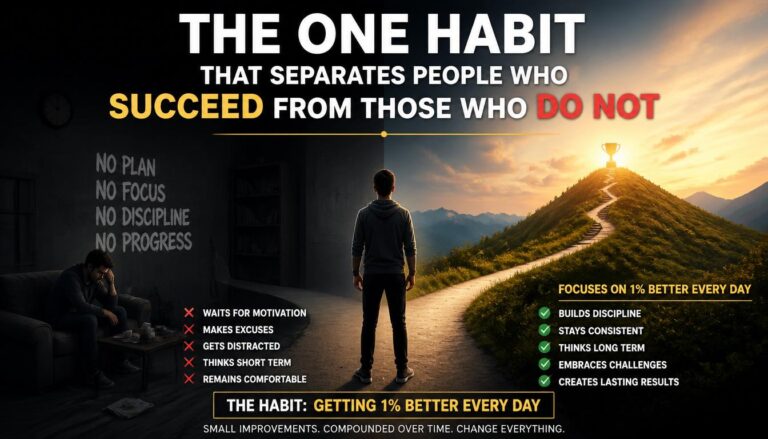
One of the biggest reasons people become fast learners is that they develop daily habits that support continuous improvement. If you want to understand how a single habit can transform your personal and professional life, read our guide on The One Habit That Separates People Who Succeed From Those Who Do Not.
Build Better Learning Habits
Habits determine long-term success.
Learning for ten minutes every day is often more effective than studying five hours once a week.
Helpful learning habits include:
- Setting daily goals
- Practicing at the same time
- Removing distractions
- Reviewing previous lessons
- Tracking progress
Small improvements add up quickly.
Imagine improving just 1% every day. Over a year, those tiny gains become remarkable progress.
Practice With Purpose
Simply repeating the same task isn’t enough.
Fast learners use deliberate practice.
Deliberate practice means focusing on weak areas instead of repeating what already feels comfortable.
For example:
Instead of playing an entire song repeatedly, a pianist practices only the difficult sections until they become effortless.
Instead of writing full essays every day, a writer may focus on creating stronger introductions.
Purposeful practice creates faster improvement because every session has a clear objective.
Learn From Mistakes Instead of Avoiding Them
Many people fear making mistakes.
However, mistakes are valuable teachers.
Every error reveals something that needs improvement.
Successful learners ask themselves:
- What went wrong?
- Why did it happen?
- How can I improve next time?
Keeping a learning journal can help identify recurring problems and measure progress over time.
Remember that every expert was once a beginner who made countless mistakes.
Consistency Beats Motivation
Motivation comes and goes.
Consistency creates lasting success.
Waiting until you “feel motivated” often leads to procrastination.
Instead, create routines that make learning automatic.
For example:
- Read ten pages daily.
- Practice coding for thirty minutes.
- Learn five new vocabulary words each day.
- Watch one educational lesson every evening.
Over time, these routines become habits that require less mental effort.
Remove Common Learning Barriers
Sometimes people stay stuck because hidden obstacles slow their progress.
Common barriers include:
| Barrier | Solution |
| Fear of failure | Accept mistakes as part of learning |
| Perfectionism | Focus on progress instead of perfection |
| Lack of time | Schedule short daily practice sessions |
| Distractions | Create a quiet learning environment |
| Poor planning | Set weekly learning goals |
Identifying your biggest obstacle is the first step toward overcoming it.
Use Technology to Learn Smarter
Technology has transformed education.
Today, learners have access to:
- Online courses
- Educational videos
- Interactive quizzes
- AI-powered tutors
- Digital flashcards
- Virtual communities
These tools make learning more flexible and engaging.
However, avoid spending all your time collecting resources instead of actually practicing.
Learning happens through action.
For additional science-based learning techniques, visit the learning resources provided by the American Psychological Association: American Psychological Association.
Key Takeaways
If you’ve ever wondered why some people master new skills fast while others stay stuck, remember these important lessons:
- Talent matters less than consistent effort.
- A growth mindset encourages improvement.
- Daily habits produce lasting results.
- Deliberate practice accelerates learning.
- Mistakes are valuable opportunities.
- Consistency outperforms motivation.
- Removing distractions increases focus.
- Technology supports learning when used wisely.
People who learn quickly aren’t always the smartest; they just know how to pick up things faster.
They’re simply the ones who keep learning, adapting, and practicing every day.
Conclusion
Understanding why some people master new skills fast while others stay stuck can transform your approach to learning. Success isn’t reserved for naturally talented individuals. Instead, it belongs to those who develop positive habits, embrace challenges, practice deliberately, and remain consistent over time.
Every new skill begins with small steps. Don’t compare your progress to others. Just work on getting a bit better each day, and you’ll be amazed at how much progress you make in a few months.
Whether you’re learning a language, starting a business, improving your career, or developing a creative hobby, the principles remain the same. Stay curious, stay patient, and keep practicing. Over time, you’ll discover that mastering new skills is less about luck and more about the choices you make each day.
Frequently Asked Questions
1. Why do some people learn faster than others?
They often use better learning strategies, stay consistent, and maintain a growth mindset rather than relying on natural talent.
2. Can anyone master a new skill?
Yes. With enough focused practice, patience, and persistence, almost anyone can develop valuable new skills.
3. What is deliberate practice?
Deliberate practice is focused training that targets weaknesses instead of repeating familiar tasks.
4. How much time does it usually take to become really good at a new skill?
The timeline varies depending on the skill, practice quality, and consistency. Most people see noticeable improvement within weeks or months of regular practice.
5. Is motivation enough to succeed?
No. Motivation helps you start, but consistent habits help you finish.
6. What’s the biggest mistake learners make?
Giving up too early. Progress often comes after repeated effort and learning from mistakes.