

What Is UGC Marketing and How Small Businesses Get It for Free
UGC marketing, or User-Generated Content marketing, is a powerful strategy where businesses leverage content created by their customers, fans, or followers to promote their brand.
For small businesses, this approach offers a cost-effective way to build trust, increase engagement, and expand reach without a hefty marketing budget. The best part is, many small businesses can start harnessing UGC for free, simply by encouraging their customers to share their experiences and authentic content online.
In this guide, you’ll learn how to effectively utilize UGC and discover simple ways to get valuable content from your audience at no cost.
What Is UGC Marketing?
User-Generated Content (UGC) marketing is a marketing strategy that uses content created by real customers instead of content produced by the business itself. This content can include reviews, photos, videos, testimonials, social media posts, blog articles, unboxing videos, and product demonstrations.
Unlike traditional advertising, UGC marketing allows customers to become brand advocates by sharing their genuine experiences. Their opinions often carry more weight than polished advertisements because people naturally trust other consumers.
For example, if a customer buys a skincare product and posts before-and-after photos on Instagram, that content becomes valuable marketing material. This principle also holds true when a diner posts a photo of their meal at a restaurant or when an individual shares a quick gadget review on TikTok.
Businesses can ask permission to feature this content on their websites, social media pages, emails, and advertising campaigns.
Today, UGC has become one of the most effective ways to increase trust, improve engagement, and encourage purchasing decisions.
Why UGC Marketing Is Dominating Digital Marketing
Modern consumers are exposed to thousands of advertisements every day. As a result, many people have become less responsive to traditional marketing messages.
They are far more likely to trust:
- Genuine customer reviews
- Honest product experiences
- Unedited photos
- Authentic videos
- Personal recommendations
- Community discussions
This shift in consumer behaviour has made user-generated content one of the strongest forms of digital marketing.
Instead of relying solely on expensive promotional campaigns, brands now encourage customers to tell their own stories.
These stories feel natural, believable, and relatable.
That authenticity is exactly what modern audiences value.
Why Customers Trust UGC More Than Advertisements
People understand that advertisements are designed to sell products.
Customer-created content is different.
It reflects real experiences without sounding overly promotional.
When someone shares both the advantages and minor drawbacks of a product, potential buyers perceive the review as honest.
That honesty creates confidence.
Research consistently shows that shoppers read multiple reviews before making a purchase, especially for products they have never tried before.
Authentic customer experiences answer questions that advertisements often overlook, such as:
- Is the product easy to use?
- Does it look the same in real life?
- Is the quality worth the price?
- Would existing customers buy it again?
These insights reduce uncertainty and help customers make informed decisions.
The Psychology Behind User-Generated Content
UGC works because it aligns with several well-known psychological principles that influence buying behaviour.
Social Proof
When people notice that many others are purchasing and recommending a product, they assume it is reliable.
This phenomenon is known as social proof.
For example, if hundreds of customers leave positive reviews, new buyers feel more comfortable making the same purchase.
Authenticity
Consumers increasingly value transparency.
Highly edited advertisements can appear unrealistic.
UGC feels genuine because it is created by everyday people using products in real-life situations.
Authenticity helps brands build stronger emotional connections with their audiences.
Community
People enjoy belonging to communities.
When customers share their experiences and interact with others using the same products, they become part of a larger brand community.
This sense of belonging increases loyalty and encourages repeat purchases.
Word-of-Mouth Marketing
Word-of-mouth has always been one of the most effective forms of promotion.
UGC simply brings traditional recommendations into the digital world.
Instead of recommending products to one friend, customers now share their experiences with hundreds or even thousands of people online.
Types of User-Generated Content
Not all UGC looks the same.
Different types of content serve different marketing goals.
Customer Reviews
Reviews remain one of the most influential forms of UGC.
They help potential buyers understand:
- Product quality
- Customer service
- Delivery experience
- Overall satisfaction
Businesses should encourage reviews on their website, Google Business Profile, Facebook, and relevant marketplaces.
Product Photos
Customers often take photos of products after receiving them.
These images show products in everyday environments rather than professional studios.
This makes them appear more realistic and trustworthy.
Examples include:
- Clothing outfits
- Home décor
- Electronics
- Food
- Beauty products
Video Reviews
Short-form video has become one of the fastest-growing content formats.
Customers create videos showing:
- First impressions
- Product demonstrations
- Tutorials
- Reviews
- Unboxing experiences
These videos frequently generate higher engagement than static images.
Testimonials
Testimonials provide detailed feedback about customer experiences.
Unlike standard reviews, testimonials often explain:
- The problem the customer faced
- Why they chose the business
- Their overall experience
- The results they achieved
Strong testimonials can dramatically improve conversion rates.
Social Media Mentions
Customers naturally mention brands on platforms such as:
- TikTok
- X
These mentions increase visibility and introduce brands to new audiences.
Before-and-After Photos
Transformation content is extremely persuasive.
It is commonly used by:
- Fitness businesses
- Beauty brands
- Cleaning companies
- Home improvement services
- Interior designers
Visual proof demonstrates product effectiveness more effectively than words alone.
UGC Marketing vs Traditional Advertising
| Feature | UGC Marketing | Traditional Advertising |
| Trust | Very High | Moderate |
| Cost | Low or Free | High |
| Authenticity | Excellent | Often Limited |
| Engagement | High | Moderate |
| Customer Participation | Active | Passive |
| Long-Term Value | Excellent | Depends on Budget |
Traditional advertising still has value, but user-generated content often delivers better engagement because it feels more authentic.
Businesses that combine both approaches usually achieve the strongest results.
UGC Marketing vs Influencer Marketing
Many people confuse UGC marketing with influencer marketing.
Although they are related, they are not the same.
| UGC Marketing | Influencer Marketing |
| Created by everyday customers | Created by paid creators |
| Usually free | Usually paid |
| Focuses on authenticity | Focuses on audience reach |
| Encourages community | Promotes through influencers |
| Builds long-term trust | Generates rapid exposure |
Many successful brands combine both strategies.
Influencers introduce products to new audiences, while UGC reinforces trust by showing genuine customer experiences.
Why Small Businesses Should Focus on UGC
Small businesses often have limited marketing budgets.
Engaging professional photographers, videographers, graphic artists, or ad agencies can quickly add up in costs, making it a pricey endeavor.
UGC solves this challenge by providing a steady stream of authentic content created by satisfied customers.
Instead of investing thousands in professional campaigns, businesses can build a library of genuine reviews, photos, videos, and testimonials that resonate with future buyers.
For local businesses, UGC is especially valuable because it helps build trust within the community and strengthens the business’s online reputation.
How Small Businesses Can Get User-Generated Content (UGC) for Free
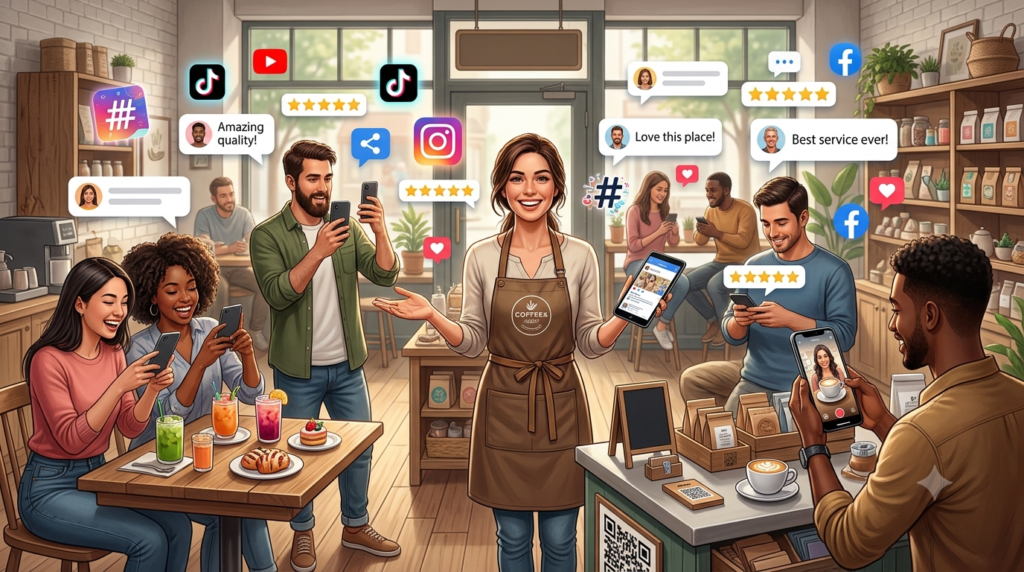
Many small business owners believe they need a large marketing budget to build an impressive online presence. In reality, some of the most successful brands generate thousands of pieces of user-generated content (UGC) every month without paying customers to create it.
The key is to encourage participation, make sharing simple, and reward customers with recognition rather than money. Below are the most effective ways to collect free UGC that builds trust and drives sales.
Ask Customers at the Right Time
The easiest way to get free UGC is to simply ask.
Many satisfied customers are willing to leave a review, upload a photo, or share a short video—but they often need a gentle reminder.
The best times to ask include:
- Immediately after a successful purchase
- A few days after product delivery
- After a positive customer support interaction
- When a customer leaves positive feedback
- After they share your post on social media
Timing is important. Customers are most likely to create content while they are excited about their purchase.
Create a Simple Branded Hashtag
A branded hashtag helps customers share content while making it easier for your business to find and repost it.
Good branded hashtags are:
- Short
- Easy to remember
- Unique
- Relevant to your business
Examples include:
- #MyHealthyKitchen
- #CoffeeWithNova
- #StyleByEmma
- #TravelWithSky
Every time customers use your hashtag, they help increase your brand’s visibility and create valuable UGC.
Encourage Product Reviews
Customer reviews are among the most powerful forms of user-generated content because they influence buying decisions and improve search visibility.
Make reviewing your products easy by:
- Sending a follow-up email after delivery
- Adding a review request inside the package
- Including a review link on your website
- Asking for feedback through social media
Never pressure customers into leaving only positive reviews. Honest feedback builds far more trust than a collection of overly perfect ratings.
Feature Customers on Your Social Media Pages
People enjoy being recognised.
When you repost customer photos or videos, you show appreciation while encouraging others to share their own experiences.
You can feature:
- Customer selfies
- Product photos
- Video testimonials
- Creative product uses
- Success stories
It’s important to seek permission before sharing or reposting content created by someone else to respect their rights.
Run Fun Social Media Challenges
Challenges encourage people to participate because they are enjoyable and interactive.
For example, a fitness business might ask customers to post a workout video using a branded hashtag.
A bakery could invite customers to share photos of birthday cakes.
A clothing brand could ask followers to show how they style their favourite outfit.
Simple challenges often generate hundreds of authentic posts.
Host Giveaways and Contests
You do not need expensive prizes.
Even small rewards can motivate customers to participate.
Ideas include:
- Gift cards
- Discount codes
- Free shipping
- Exclusive products
- Early access to new collections
To enter, customers could:
- Upload a photo
- Leave a review
- Create a short video
- Share your post
- Tag friends
This approach quickly increases brand awareness while producing valuable content.
Build an Online Community
Strong communities naturally create user-generated content.
Consider building a community on platforms such as:
- Facebook Groups
- Discord
- LinkedIn Groups
Within these communities, customers can:
- Ask questions
- Share experiences
- Recommend products
- Offer advice
- Post success stories
Community discussions create fresh content while strengthening customer relationships.
Create Products Worth Sharing
People naturally share products that stand out.
Ask yourself:
- Is the packaging memorable?
- Does the product look attractive?
- Is the unboxing experience enjoyable?
- Does it solve a problem in a unique way?
Small improvements can encourage customers to photograph and share your products without being asked.
Offer Outstanding Customer Service
Excellent customer service creates memorable experiences.
Happy customers often share stories about businesses that exceed expectations.
Simple actions include:
- Fast responses
- Friendly communication
- Personal thank-you notes
- Quick issue resolution
- Unexpected bonuses
Exceptional service often leads to organic recommendations.
Respond to Every Review
Many businesses ignore customer reviews after receiving them.
Instead, reply to:
- Positive reviews
- Neutral reviews
- Constructive criticism
Thank customers for their feedback and address any concerns professionally.
Active engagement demonstrates that your business values customer opinions.
Best Platforms for UGC Marketing
Different platforms attract different audiences. Understanding where your customers spend their time helps you collect more relevant content.
For More: Social Media Marketing
Instagram remains one of the strongest platforms for visual user-generated content.
Popular content includes:
- Product photography
- Reels
- Stories
- Outfit inspiration
- Lifestyle images
Use branded hashtags and encourage customers to tag your account.
TikTok
TikTok rewards authentic content.
Customers often create:
- Product reviews
- Tutorials
- Before-and-after videos
- Unboxing clips
- Day-in-the-life videos
Short, engaging videos can reach large audiences even from smaller accounts.
Facebook continues to perform well for local businesses.
Customers frequently leave:
- Reviews
- Recommendations
- Photos
- Event check-ins
- Community discussions
Local recommendations remain especially valuable for service-based businesses.
YouTube
Long-form videos provide detailed product demonstrations and customer experiences.
Popular UGC includes:
- Product reviews
- Comparisons
- Tutorials
- Unboxings
- Case studies
These videos continue generating traffic long after they are published.
LinkedIn works particularly well for B2B companies.
Businesses can encourage customers to share:
- Success stories
- Project outcomes
- Business achievements
- Professional testimonials
This type of UGC builds credibility within professional networks.
How to Ask for UGC Without Sounding Pushy
Many business owners hesitate to request user-generated content because they worry about annoying customers.
The solution is to keep requests simple, friendly, and optional.
For example:
“We’re so glad you’re enjoying your purchase. If you’d like to share a photo or short review, we’d love to feature it on our page.”
This approach feels genuine rather than demanding.
Reward Customers Without Paying for Content
You do not always need financial incentives.
Many customers simply enjoy recognition.
Consider rewarding contributors by:
- Featuring them on your homepage
- Highlighting them on Instagram Stories
- Including them in newsletters
- Giving them early product access
- Sending personalised thank-you messages
Recognition often encourages repeat participation.
Mistakes Small Businesses Should Avoid
Even the best UGC strategy can fail if common mistakes are ignored.
Avoid these pitfalls:
Ignoring Customer Content
If customers tag your business and receive no response, they are less likely to post again.
Always acknowledge their efforts.
Posting Without Permission
Never assume that public content is automatically available for commercial use.
Always ask before reposting.
A simple message requesting permission protects both your business and your relationship with the customer.
Only Sharing Perfect Content
Authenticity matters more than perfection.
Natural photos often outperform heavily edited images because they feel genuine.
Deleting Honest Feedback
Constructive criticism can improve trust.
Customers expect to see a mixture of opinions rather than a page filled with only five-star reviews.
Respond professionally and show your commitment to improvement.
Failing to Stay Consistent
UGC marketing works best when it becomes part of your ongoing marketing strategy.
Encourage customers to create content every week rather than only during occasional campaigns.
Consistency helps build a continuous stream of fresh, authentic content.
Real-Life Examples of UGC Marketing
Many successful businesses have built loyal communities by encouraging customers to share their experiences.
Examples include:
- A local coffee shop reposting customer latte art photos.
- A clothing boutique featuring customer outfit pictures.
- A skincare brand sharing before-and-after transformation images.
- A fitness coach posting client success stories.
- A home décor business highlighting customer room makeovers.
These examples demonstrate that businesses of every size can benefit from user-generated content without spending heavily on advertising.
Advanced UGC Marketing Strategies for Long-Term Growth

Once your business starts collecting user-generated content (UGC), the next step is to turn that content into a marketing system that consistently attracts new customers, builds trust, and increases sales. The most successful brands don’t collect UGC occasionally—they make it an ongoing part of their marketing strategy.
Below are advanced strategies that help small businesses maximise the value of every customer photo, review, testimonial, and video.
Create a UGC Content Library
Instead of searching for customer content every time you need to post on social media, organise everything into a central library.
Create folders based on:
- Customer reviews
- Product photos
- Video testimonials
- Before-and-after images
- Unboxing videos
- Success stories
- Social media mentions
Having a well-organised content library saves time and ensures you always have authentic content ready to use.
Repurpose UGC Across Multiple Marketing Channels
One piece of UGC should never be used only once.
For example, a customer’s positive review can become:
- A website testimonial
- An Instagram post
- A Facebook update
- A LinkedIn graphic
- An email newsletter feature
- A product page review
- A sales presentation example
- A paid advertisement
Repurposing content increases its value without requiring additional work.
Add UGC to Your Website
Your website should showcase customer experiences throughout the buying journey.
The best places include:
Homepage
Display customer testimonials near the top of the page to build trust immediately.
Product Pages
Include:
- Customer reviews
- Real customer photos
- User-uploaded videos
- Frequently asked questions from buyers
This helps visitors visualise the product in real-life situations.
Landing Pages
Adding testimonials beside call-to-action buttons can improve conversion rates by reducing purchase hesitation.
Case Studies
Detailed customer success stories demonstrate how your product or service solves real problems.
Use UGC in Email Marketing
Email marketing becomes far more persuasive when it features genuine customer experiences.
Ideas include:
- Customer success stories
- Product reviews
- Customer photos
- Before-and-after results
- Monthly featured customer
People are more likely to trust another customer’s experience than promotional copy.
Turn Happy Customers into Brand Advocates
Some customers naturally become enthusiastic supporters of your business.
Identify these loyal customers and encourage them to:
- Test new products
- Share regular updates
- Participate in campaigns
- Join referral programmes
- Provide testimonials
These long-term advocates often generate consistent, high-quality content without requiring payment.
Ways to Evaluate How Well Your User-Generated Content Strategy is Performing
Tracking results helps you understand what is working and where improvements are needed.
Monitor these key performance indicators (KPIs):
Engagement Rate
Track:
- Likes
- Comments
- Shares
- Saves
- Video views
Higher engagement usually indicates that your audience finds the content valuable.
Website Traffic
Use analytics tools to monitor how much traffic comes from:
- TikTok
- YouTube
- Referral links
Growing traffic often signals that your UGC strategy is expanding your reach.
Conversion Rate
Measure how many visitors complete valuable actions such as:
- Purchasing a product
- Booking a service
- Filling out a contact form
- Joining your email list
Improved conversions often result from increased customer trust.
Customer Retention
Satisfied customers frequently become repeat buyers.
Track:
- Repeat purchase rate
- Customer lifetime value
- Referral customers
Loyal customers usually create more UGC over time.
Review Growth
Monitor:
- Number of reviews
- Average rating
- Review frequency
A steady flow of authentic reviews strengthens your online reputation.
SEO Benefits of User-Generated Content
UGC is valuable not only for customers but also for search engines.
Here are several ways it supports your SEO strategy.
Fresh Content
Search engines favour websites that regularly publish new information.
Every review, testimonial, or customer question adds fresh content to your website.
Natural Keyword Usage
Customers describe products using everyday language.
These natural phrases often match the keywords people search for online.
For example:
Instead of writing:
“Premium wireless ergonomic headset.”
A customer may write:
“I find these headphones so comfy that I can wear them all day long while working remotely.”
This type of natural language helps capture long-tail search queries.
Improved Dwell Time
Visitors often spend more time reading reviews and browsing customer photos.
Longer engagement signals that users find the page helpful.
Higher Click-Through Rates
Products with reviews and star ratings often attract more clicks in search results.
Rich snippets improve visibility and encourage users to visit your website.
Useful Tools for Managing UGC
Managing customer content becomes easier with the right tools.
Popular options include:
| Tool | Primary Purpose |
| Google Business Profile | Collect local customer reviews |
| Canva | Create graphics using customer testimonials |
| Trello | Organise UGC campaigns |
| Notion | Store customer content in one place |
| Google Drive | Save photos and videos securely |
| Buffer | Schedule social media posts |
| Hootsuite | Manage multiple social platforms |
Choose tools that match your business size and marketing goals.
Future Trends in UGC Marketing
User-generated content continues to evolve as consumer behaviour changes.
Here are the trends expected to shape the future of UGC marketing.
Short-Form Video Will Continue to Grow
Videos under one minute continue to dominate online engagement.
Businesses should encourage customers to create:
- Quick product demonstrations
- Unboxing videos
- Tutorials
- Reviews
Short-form content is highly shareable and easy to consume.
Community-Led Marketing
Businesses are increasingly building communities rather than simply selling products.
Active communities naturally generate discussions, recommendations, and customer stories that strengthen brand loyalty.
AI-Assisted UGC Management
Artificial intelligence can help businesses:
- Organise customer content
- Categorise reviews
- Analyse customer sentiment
- Suggest the best-performing content to repost
However, authentic customer experiences remain the foundation of successful UGC marketing.
Employee-Generated Content
Employees can also create valuable content by sharing:
- Workplace culture
- Behind-the-scenes activities
- Product development
- Company events
This adds another layer of authenticity to your brand.
Expert Tips to Build a Successful UGC Strategy
Follow these best practices to achieve consistent results.
Always Prioritise Authenticity
Real customer experiences outperform overly polished promotional content.
Ask for Permission Before Reposting
Respecting creators builds trust and protects your brand.
Respond Promptly
Reply to comments, reviews, and customer posts to encourage ongoing participation.
Stay Consistent
Collect and publish UGC every week rather than running occasional campaigns.
Celebrate Your Customers
Recognise contributors by featuring their content and thanking them publicly.
Customers who feel appreciated are more likely to become loyal advocates.
Quick Checklist for Small Businesses
Use this checklist to strengthen your UGC marketing strategy:
- Ask every satisfied customer for a review.
- Encourage customers to share photos and videos.
- Create a memorable branded hashtag.
- Feature customer content on your website.
- Repost customer stories on social media.
- Respond to every review and comment.
- Organise your UGC in a content library.
- Measure engagement and conversions.
- Repurpose content across multiple channels.
- Continue collecting fresh UGC every month.
Final Thoughts
User-generated content marketing is one of the most powerful and cost-effective ways for small businesses to grow online. By encouraging customers to share authentic reviews, photos, videos, and testimonials, businesses can build trust, improve search visibility, strengthen customer relationships, and increase conversions without relying on expensive advertising.
The most successful brands don’t wait for UGC to happen—they actively encourage it, organise it, and showcase it across their websites, social media channels, email campaigns, and product pages. Start with a simple request for reviews, celebrate your customers, and consistently feature their experiences. Over time, these authentic stories become a valuable marketing asset that drives sustainable growth and sets your business apart from the competition.
Frequently Asked Questions
1. How do User-Generated Content and influencer marketing differ from each other?
UGC is created by real customers who share their genuine experiences with a product or service, usually without payment. Influencer marketing involves individuals with established audiences who are often paid or compensated to promote a brand. UGC focuses on authenticity, while influencer marketing focuses on expanding reach.
2. Is user-generated content really free?
In many cases, yes. Customers voluntarily leave reviews, post photos, upload videos, or share testimonials because they enjoy a product or service. Some businesses choose to reward contributors with discounts or recognition, but paying for content is not always necessary.
3. Why is UGC important for SEO?
UGC regularly adds fresh content to your website through reviews, testimonials, and customer discussions. It also introduces natural keywords, increases visitor engagement, and can improve click-through rates when review stars appear in search results.
4. Which businesses benefit most from UGC marketing?
Almost every industry can benefit, including e-commerce stores, restaurants, cafés, beauty brands, travel companies, gyms, real estate agencies, software businesses, educational platforms, and local service providers.
5. How can I encourage customers to create more UGC?
Ask at the right time, make sharing easy, create branded hashtags, run contests, feature customer content on your social media channels, and thank contributors publicly. A positive customer experience is often the biggest motivation.
6. Can I use customer photos in my marketing?
Yes, but you should always obtain the creator’s permission before using their content in advertisements, on your website, or in other promotional materials. Crediting the original creator whenever possible is also a good practice.
7. What types of UGC perform best?
Customer reviews, video testimonials, before-and-after photos, unboxing videos, product demonstrations, and real-life success stories tend to generate the highest levels of trust and engagement.
8. How often should I post user-generated content?
Aim to include UGC in your marketing every week. A consistent mix of customer stories, reviews, photos, and videos keeps your content fresh and reinforces trust with both new and existing customers.
Thank you for reading! If this guide helped you understand UGC marketing, share it with your team, implement these strategies, and start building a library of authentic customer content that grows your business for years to come.