
What Is an Ebook Business for Subject Matter Experts and How to Start
An ebook business for subject matter experts is a business model where a professional turns specialized knowledge, experience, research, or skills into a digital book that customers can purchase and download or read online.
The expert might be a marketer, consultant, teacher, developer, designer, fitness professional, financial educator, career coach, researcher, or business owner.
The key idea is simple:
You already know something valuable. Package that knowledge into a useful digital product.
For example, imagine a cybersecurity consultant who has spent 10 years helping small companies protect their systems. Instead of only offering hourly consulting, the consultant could create an ebook called The Small Business Cybersecurity Checklist.
A career coach might create How to Build a Resume That Gets Interviews.
A photographer could write The Beginner’s Guide to Better Smartphone Photography.
The ebook becomes a product that can be sold repeatedly without rewriting the entire book for every customer.
That doesn’t mean ebooks are completely passive. You’ll still need marketing, customer support, updates, and product improvement. However, the digital format gives experts a way to separate some income from their available hours.
Amazon’s Kindle Direct Publishing platform, for example, allows authors to publish digital and print books and distribute them through Amazon marketplaces.
An ebook can also be sold directly through a creator storefront. Platforms such as Gumroad support digital products including ebooks and allow creators to sell directly to their audiences.
So, an ebook isn’t merely a document.
It’s a packaged knowledge product.
Why Experts Are Well Positioned to Sell Ebooks
Subject matter experts have one major advantage: knowledge that other people want.
You don’t necessarily need millions of followers. You need a specific audience with a specific problem.
Suppose you have helped 100 clients solve the same problem. You’ve probably noticed patterns.
You know:
- What beginners usually get wrong
- Which strategies actually work
- Which mistakes cost people money
- What questions clients ask repeatedly
- What tools people struggle to use
- Which shortcuts are useful
- Which popular advice is misleading
- What steps produce better results
That practical experience can become the foundation of an ebook.
Expertise Creates Trust
People are more likely to purchase educational products when they believe the author understands the problem.
That’s where experience matters.
Instead of writing vague information that anyone could find through a quick search, an expert ebook can include:
- Real examples
- Practical workflows
- Checklists
- Templates
- Case studies
- Step-by-step instructions
- Lessons learned
- Common mistakes
- Expert recommendations
This creates a stronger reason to buy.
You Don’t Need to Be Famous
One common misconception is that only famous authors can build successful ebook businesses.
That’s not necessarily true.
A small audience can be valuable if it is highly relevant.
For example, 1,000 readers interested in a specific professional problem may be more valuable than 100,000 casual followers who don’t need your product.
The goal isn’t simply to maximize audience size.
It’s to build audience-product fit.
How the Ebook Business Model Works
The basic ebook business model has five stages:
- Identify an audience.
- Find an important problem.
- Create a useful ebook.
- Put the ebook in front of potential buyers.
- Turn customers into repeat buyers or leads.
Think of it as a simple funnel.
Content → Trust → Ebook → Customer → Additional Offer
Your free content might be blog posts, YouTube videos, newsletters, LinkedIn posts, podcasts, or social media content.
That content demonstrates your expertise.
Readers who need deeper guidance can then purchase your ebook.
The ebook can eventually lead customers toward other products, such as:
- Courses
- Coaching
- Consulting
- Workshops
- Templates
- Memberships
- Software
- Premium reports
- Corporate training
This is where the model becomes especially powerful.
Your ebook doesn’t have to be your final product.
It can be the entry point into your broader knowledge business.
Choosing a Profitable Ebook Topic
Choosing the right topic is often more important than writing hundreds of pages.
Don’t start by asking:
“What do I want to write about?”
Instead, ask:
“What problem does my target reader desperately want to solve?”
Strong ebook topics usually sit at the intersection of three things:
Expertise + Demand + Specific Problem
For example:
| Weak Topic | Stronger Topic |
| Digital Marketing | Digital Marketing for Local Dentists |
| Fitness | Beginner Strength Training at Home |
| Finance | Budgeting for Freelancers With Irregular Income |
| Photography | Smartphone Photography for Small Business Owners |
| SEO | Local SEO for New Service Businesses |
| Programming | Python Automation for Spreadsheet Tasks |
Notice the difference.
The second version is narrower.
That’s a good thing.
Specificity makes marketing easier because the reader can immediately recognize that the product is designed for them.
Validate Before Writing
Don’t spend two months writing an ebook nobody wants.
Conduct basic market research first.
Look at:
- Search queries
- Reddit discussions
- YouTube comments
- Online communities
- Amazon book reviews
- Competitor products
- Frequently asked questions
- Your own client questions
- Survey responses
- Social media discussions
The U.S. Small Business Administration recommends market research to understand demand, customers, competitors, market size, and pricing.
That principle applies to ebook businesses too.
Look for Repeated Problems
If people repeatedly ask:
“How do I do this?”
“Which tool should I use?”
“Why isn’t this working?”
“What should I do first?”
“Can you show me how?”
You may have found an ebook opportunity.
Defining Your Ideal Reader
An ebook shouldn’t try to help everyone.
The more clearly you understand the reader, the easier it becomes to write the book, choose examples, create the sales page, and market the product.
Define your reader using practical characteristics.
Identify Their Skill Level
Are they:
- Complete beginners?
- Intermediate users?
- Advanced professionals?
- Business owners?
- Students?
- Managers?
- Freelancers?
A beginner ebook should explain basic terminology.
An advanced ebook can move faster and focus on sophisticated strategies.
Identify Their Desired Outcome
Your reader doesn’t really want an ebook.
They want a result.
They may want to:
- Get their first client
- Save time
- Increase sales
- Learn a technical skill
- Pass an exam
- Improve productivity
- Start a business
- Solve a professional problem
- Avoid expensive mistakes
Your ebook should promise a realistic transformation.
Finding the Right Problem to Solve
A strong ebook solves a problem clearly enough that readers can imagine life after solving it.
Consider the difference:
“Learn About SEO”
versus
“Learn How to Build Your First SEO Content Strategy in 30 Days.”
The second statement communicates an outcome.
A good problem also has enough importance to justify spending money.
You can score potential topics using four factors:
| Factor | Question |
| Demand | Are people actively looking for help? |
| Pain | Is the problem frustrating or costly? |
| Expertise | Can you provide better guidance than a general article? |
| Outcome | Can readers achieve a useful result? |
If a topic scores highly across all four, it’s worth investigating.
Creating a Strong Ebook Outline
Once your topic is validated, build the structure before writing.
A good ebook outline prevents repetition and keeps readers moving forward.
A simple structure might look like this:
Introduction
Explain:
- Who the book is for
- What problem it addresses
- What readers will learn
- What result they can expect
Part One: Foundations
Teach essential concepts.
Part Two: Strategy
Explain your framework or method.
Part Three: Implementation
Show readers how to execute it.
Part Four: Mistakes
Explain what commonly goes wrong.
Part Five: Action Plan
Give readers a practical roadmap.
Conclusion
Summarize the main lessons and provide the next logical step.
Don’t worry about making your ebook enormous.
A focused 60-page guide can be more useful than a 250-page book filled with repetition.
Writing an Ebook That Readers Finish
Writing an ebook is different from writing an academic paper.
Your goal is clarity.
Use short paragraphs, descriptive headings, examples, tables, bullet points, and actionable instructions.
Avoid unnecessary jargon.
If you must use technical terms, explain them.
Use a Problem-Solution Format
A useful chapter can follow this pattern:
Problem -> Explanation -> Strategy -> Example -> Action Step
For instance:
Problem: Small businesses struggle to generate consistent website traffic.
Explanation: Publishing random blog posts doesn’t necessarily create a useful search strategy.
Strategy: Build content around customer problems and search intent.
Example: Create one comprehensive guide and supporting articles around the same topic.
Action Step: Create a list of 20 customer questions before publishing your next article.
This structure keeps the content practical.
Include Actionable Material
Whenever possible, give readers something they can use immediately.
Examples include:
- Checklists
- Scripts
- Worksheets
- Templates
- Prompts
- Frameworks
- Tables
- Calculators
- Action plans
These additions can increase the perceived value of an ebook without simply adding more words.
Adding Original Expertise and E-E-A-T
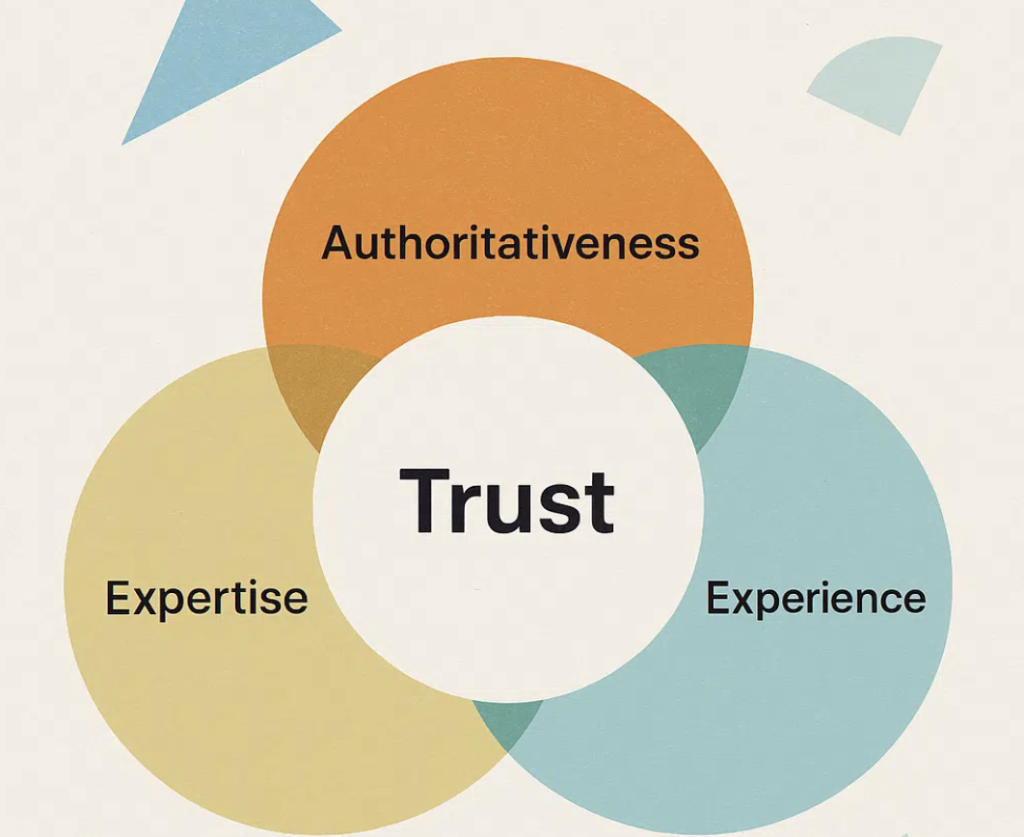
An expert ebook should demonstrate experience rather than merely repeat information.
This is where E-E-A-T principles become useful.
E-E-A-T stands for:
- Experience
- Expertise
- Authoritativeness
- Trustworthiness
You can demonstrate these qualities by explaining how you reached your recommendations.
For example, don’t simply say:
“Email subject lines should be short.”
Explain the context.
Tell readers what you’ve observed, what testing taught you, and when a different approach might work better.
Add Evidence Where Appropriate
Use reputable sources for statistics, research findings, regulations, technical specifications, and other claims that need verification.
For publishing guidance, Amazon’s official KDP documentation explains the process of preparing manuscripts, uploading books, entering metadata, setting rights and pricing, and publishing.
Amazon Kindle Direct Publishing official publishing guide
Your own professional experience can complement external evidence.
That’s much stronger than making unsupported claims.
Designing and Formatting Your Ebook
Readers judge a digital book quickly.
A poor cover, inconsistent formatting, tiny text, or confusing layout can reduce perceived value.
Your ebook should have:
- A professional cover
- Clear chapter headings
- Consistent typography
- Comfortable spacing
- Logical navigation
- A clickable table of contents when appropriate
- Properly formatted images
- Consistent page elements
- Clean tables and lists
Amazon’s Kindle publishing guidelines specifically address areas such as cover images, navigation, hyperlinks, accessibility, tables, and quality assurance.
Don’t Overdesign
Professional doesn’t mean complicated.
A clean layout is usually better than a page filled with decorative elements.
Your design should support the content.
If you’re writing a technical guide, readers want readability and navigation more than visual decoration.
Choosing Where to Sell Your Ebook
There isn’t one perfect platform.
Your choice depends on your audience, marketing strategy, technical skills, and business goals.
Amazon KDP
Amazon KDP is useful if you want access to Amazon’s existing book marketplace.
KDP lets authors upload manuscripts, add book details, set rights and pricing, preview the book, and publish.
It’s a strong option for experts who want marketplace exposure.
Direct Sales
Selling directly gives you more control over the customer relationship.
Platforms such as Gumroad allow creators to sell digital products directly to their audiences, including ebooks and other digital downloads.
Direct sales can also make it easier to bundle the ebook with:
- Templates
- Bonus resources
- Email courses
- Workshops
- Community access
Your Own Website
A website can become the long-term home of your ebook business.
You can publish helpful SEO content, build an email list, and direct qualified visitors toward your product.
The downside is that you’ll need to handle more of the marketing yourself.
Pricing Your Ebook Strategically
Pricing isn’t just about word count.
A 40-page ebook that helps a business owner solve a $10,000 problem could be more valuable than a 200-page general-interest ebook.
Consider:
- Audience income
- Problem severity
- Your expertise
- Competitor pricing
- Included bonuses
- Depth of information
- Brand authority
- Distribution platform
You could use different pricing tiers.
| Offer | Example |
| Basic Ebook | Ebook only |
| Standard | Ebook + templates |
| Premium | Ebook + templates + workshop |
| Expert | Ebook + consultation |
This creates options without forcing every customer into the same package.
Building an Ebook Marketing Strategy
Creating the ebook is only half the business.
People need to discover it.
Your marketing strategy should combine several channels.
Search Engine Optimization
Create useful articles related to your ebook topic.
For example, if your ebook teaches freelance proposal writing, publish articles about:
- How to write a freelance proposal
- Freelance proposal mistakes
- How to price freelance projects
- Proposal templates
- How to win your first freelance client
Each article can introduce readers to your expertise and naturally lead toward the ebook.
Email Marketing
Email is particularly valuable because you aren’t entirely dependent on social algorithms.
Offer a useful free resource in exchange for an email address.
For example:
Free: 10-page checklist
Paid: Complete 100-page ebook
Then create a simple email sequence:
- Welcome email
- Educational tip
- Common mistake
- Case study
- Ebook introduction
- Offer
- Reminder
Don’t make every email a sales pitch.
Teach first.
Sell naturally.
For more: Best professional option: Email Marketing Strategies
Social Media
Turn your ebook into smaller pieces of content.
One chapter can produce:
- Five LinkedIn posts
- Three short videos
- Ten social tips
- One carousel
- One newsletter
- Several quote graphics
In other words, the ebook becomes a content engine.
Using Content Marketing to Sell More Ebooks
Content marketing is particularly useful for subject matter experts because your expertise is the marketing asset.
Imagine you’ve written an ebook about local SEO.
Instead of repeatedly saying:
“Buy my ebook!”
You can publish helpful content such as:
5 Local SEO Mistakes Costing Small Businesses Customers
At the end, readers who want the complete process can learn about your ebook.
This approach builds trust.
The SBA also emphasizes that a marketing plan should define your target market, competitive advantage, and the actions you’ll use to attract and retain customers.
Create a Topic Cluster
Choose one major subject.
Then build supporting content around it.
For example:
Main ebook: Local SEO for Small Businesses
Supporting content:
- Google Business Profile basics
- Local keyword research
- Local citations
- Review strategies
- Local link building
- Location pages
- Local SEO mistakes
This creates multiple paths for potential customers to discover your expertise.
Turning One Ebook Into Multiple Products
This is one of the biggest opportunities in an ebook business.
Don’t stop after selling the ebook.
Turn the original knowledge into a product ecosystem.
For example:
Ebook -> Templates -> Course -> Workshop -> Coaching
Each product serves a different buyer.
A reader might only want the ebook.
Another customer might want templates.
A business owner might pay for consulting.
Your ebook becomes the foundation.
Create an Ebook Bundle
A bundle could include:
- Main ebook
- Workbook
- Checklist
- Templates
- Resource directory
- Bonus video
- Private webinar
This can increase average order value.
Create a Second Ebook
Once you understand what your readers want, create another book that solves a related problem.
For example:
Ebook 1: Start Freelancing
Ebook 2: Get Your First 10 Clients
Ebook 3: Raise Your Freelance Rates
Now you have a small product library instead of a single product.
Common Ebook Business Mistakes
Even experienced professionals can make mistakes when turning knowledge into products.
Mistake 1: Writing for Everyone
A general audience produces general content.
Choose a clear reader.
Mistake 2: Writing Before Validating
Don’t assume people will buy because you think the topic is interesting.
Test demand first.
Mistake 3: Making the Ebook Too Broad
A broad book is difficult to position.
Specific problems are easier to market.
Mistake 4: Focusing Only on Information
Information is everywhere.
Your advantage is interpretation, organization, experience, and implementation.
Mistake 5: Ignoring Design
Readers expect digital products to look professional.
Mistake 6: No Marketing Plan
Publishing doesn’t guarantee sales.
You need traffic.
Mistake 7: No Email List
If every sale depends on social media algorithms or marketplace traffic, your business has less control.
Build an audience you can reach directly.
Mistake 8: Promising Unrealistic Results
Avoid exaggerated claims.
Trust is a long-term asset.
Your ebook should clearly explain what readers can realistically achieve.
A 30-Day Ebook Business Launch Plan
You don’t need to spend a year planning your first ebook.
Here’s a practical 30-day roadmap.
Days 1–5: Choose the Topic
Identify your expertise.
List the problems people repeatedly ask you to solve.
Research competitors and audience demand.
Choose one specific problem.
Days 6–8: Validate the Idea
Talk to potential readers.
Review search results, communities, comments, reviews, and competing products.
Ask whether your proposed solution is genuinely useful.
Days 9–12: Build the Outline
Create your chapters.
Define the goal of each chapter.
List examples, checklists, templates, and exercises you’ll include.
Days 13–22: Write
Write consistently.
Don’t edit every sentence immediately.
Get the complete first draft finished.
Then revise.
Days 23–25: Edit and Format
Fix:
- Grammar
- Repetition
- Structure
- Formatting
- Broken links
- Inconsistent terminology
Then create a professional cover.
Days 26–27: Prepare the Sales Page
Write a clear product description.
Explain:
- Who the ebook is for
- What problem it solves
- What’s inside
- What readers will learn
- What bonuses are included
- Why you’re qualified to teach it
Days 28–29: Prepare Marketing Content
Create launch posts, emails, short videos, and supporting articles.
Day 30: Launch
Publish the ebook.
Announce it to your audience.
Contact relevant communities where promotion is allowed.
Then monitor results.
Don’t anticipate perfection right from the very first day.
Your first launch is also research.
How to Measure Ebook Business Success
Sales are important, but they’re not the only metric.
Track:
- Website visitors
- Email subscribers
- Conversion rate
- Ebook sales
- Average order value
- Refund rate
- Traffic sources
- Email open rates
- Repeat purchases
- Customer feedback
For example, suppose 1,000 people visit your sales page and 30 purchase.
Your conversion rate is 3%.
If you improve the page and reach 4%, the same amount of traffic produces more customers.
This is why optimization matters.
Ask Customers for Feedback
After purchase, ask:
- What did you find most useful?
- What was confusing?
- What was missing?
- What result did you achieve?
- What would you like to learn next?
Customer feedback can become your roadmap for version two.
Conclusion
An ebook business for subject matter experts is more than a way to sell a PDF.
It’s a practical model for turning expertise into a scalable digital asset.
The process starts with one important decision: choose a specific problem that your knowledge can solve better than generic information.
From there, validate the idea, define your reader, build a useful outline, write with clarity, add real experience, create a professional design, choose the right sales platform, and build a marketing system around the product.
The most successful approach isn’t to write the longest ebook.
It’s to create the most useful ebook for a clearly defined audience.
Once the first product is working, you can expand the business into templates, courses, consulting, workshops, memberships, and additional ebooks.
In short, your expertise doesn’t have to remain locked inside your head.
Package it. Teach it. Market it. Improve it. Then build an entire business around the knowledge you’ve already earned.
A strong ebook business starts with expertise, but sustainable growth comes from solving a clearly defined customer problem and building a repeatable marketing system around your knowledge.
FAQ’s
1. What is an ebook business for subject matter experts?
An ebook business allows professionals to package their specialized knowledge into a digital book and sell it to a defined audience. The ebook can generate direct revenue while also building authority and attracting customers to related services, courses, consulting, or other products.
2. Do I need to be a published author to start an ebook business?
No. You don’t need a traditional publishing deal to create a digital book. Self-publishing platforms such as Amazon KDP provide tools for authors to prepare, upload, publish, and sell books.
Your priority should be creating a useful product for a specific audience.
3. How long should an expert ebook be?
There’s no universal ideal length.
An ebook should be long enough to solve the promised problem without unnecessary filler.
A focused guide may be relatively short, while a comprehensive professional manual may be much longer.
Useful content matters more than page count.
4. Can I sell my ebook without Amazon?
Yes.
You can sell directly through your own website or digital product platforms. Gumroad, for example, supports digital product sales including ebooks.
Direct sales can be especially useful when you already have an email list, website traffic, or social audience.
5. What should I include in an expert ebook?
Consider including:
- Your framework
- Step-by-step instructions
- Examples
- Case studies
- Checklists
- Templates
- Common mistakes
- Tools
- Exercises
- Action plans
The exact contents should depend on the reader’s problem.
6. How do I find an ebook topic people will buy?
Start with problems rather than subjects.
Look at questions from clients, search queries, online discussions, competitor reviews, social comments, and industry communities.
Then validate whether your audience actually wants a solution.
7. Can an ebook lead to other income streams?
Absolutely.
An ebook can introduce customers to higher-value products such as consulting, coaching, courses, workshops, memberships, templates, and corporate training.
In many cases, the ebook is the beginning of the business rather than the entire business.
8. Should I give my ebook away for free?
Sometimes.
A free ebook can work as a lead magnet when your main goal is building an email list.
However, if the ebook contains substantial expertise and solves an important problem, charging for it can position the product differently.
You can also offer a short free guide while selling the comprehensive ebook.
9. Is an ebook business passive income?
It can become partially scalable, but it isn’t automatically passive.
You’ll still need to market the product, answer customer questions, update information, improve your sales page, and create new products.
Think of it as a scalable digital business, not effortless income.
10. What’s the biggest advantage for a subject matter expert?
The biggest advantage is that you can turn existing knowledge into an asset.
Instead of explaining the same process repeatedly, you can document your framework once and package it into a product.
You can then use the ebook to attract, educate, and qualify potential customers.