
Ledger Hardware Wallet Implant: How a Reseller’s Devices Drained Crypto and How to Check Yours
A hardware wallet is meant to be the safest place to keep crypto, so news that some units shipped with a hidden spy board has rattled people who hold their own coins. Ledger has confirmed that at least one device sold through a Southeast Asian reseller carried an unauthorized implant, and an outside investigator has put the losses at a very large, unconfirmed number.
In this article we will explore what is confirmed, how the implant works, what remains unproven, and the checks that make sense for any owner.
The Confirmed Facts About the Tampered Devices
Ledger has confirmed that at least one hardware wallet sold through a reseller called CryptoBilis contained an unauthorized hardware implant. BleepingComputer and The Hacker News both describe the reseller as a Malaysia-based retailer that operates across Southeast Asia.
Ledger says every confirmed case so far traces back to devices sold through that seller, and it describes the affected volume as “limited.” It also says it has seen no sign that its own systems were compromised, and it says it is working with authorities. CryptoBilis, for its part, stopped selling hardware wallet inventory while the investigation continues.
A Timeline That Depends on Which Report You Read
Reports differ on exact dates, so it is safer to think in ranges than in single days. According to the coverage, Ledger began looking into user reports of losses sometime between 9 and 11 October, and it confirmed the implant between 10 and 12 October.
The Hacker News adds that on 13 October Ledger asked resellers and distributors in Southeast Asia and Hong Kong to suspend sales. The spread may simply reflect outlets counting from different moments, such as the first public complaints versus Ledger’s own written update, but the reports do not say. The order of events is consistent across them even where the calendar days are not.
What Ledger Has Not Said
Ledger has not explained how or when the tampering happened. That gap matters, because it leaves open where in the chain between factory and customer the devices were altered, and nothing in the reporting settles it. This article does not say who modified the devices, and you should not infer it from the name of a seller. The confirmed statement is narrower: the affected units were sold through that channel. Until the company or investigators publish more, the mechanism of the attack is better documented than its origin.
What the Sales Suspension Means for Buyers
The request to suspend sales applies to resellers and distributors in Southeast Asia and Hong Kong, according to The Hacker News, so it is a regional measure and not a worldwide recall. It tells you where Ledger is concentrating its concern, but it does not tell you that devices elsewhere are free of risk, because the company has not published an inspection result for every channel.
A suspension also does nothing for devices already in customers’ hands, which is why the owner-side advice later in this article matters more than any seller-side pause.
How the Implant Captures a Recovery Phrase
To see why this matters, it helps to recall what a hardware wallet protects. The device holds the private keys that authorize spending inside a tamper-resistant chip called the Secure Element. During setup it generates a recovery phrase, a list of 24 words that works as the master backup, and shows those words on its screen so that you can write them down. Anyone who obtains the words can rebuild your wallet on a different device and move the funds, with no need for your PIN or the original hardware.
According to Ledger’s update and the researchers who examined affected units, the implant sits inside the casing and captures what the screen displays during setup, including the 24-word phrase. It then sends that data to the attacker over an LTE cellular connection, using an eSIM. Ledger says the implant does not alter the Secure Element, the operating system or the transactions the device signs. In other words, the wallet behaves normally in daily use, which is exactly what makes this kind of attack hard to notice from the outside.
Why Setup Is the Critical Moment
Because the capture happens while the words are on screen, the harm is done at first-time setup. Once a copy of the phrase has left the device, later behavior no longer matters, since the attacker holds the full key to the wallet and can use it from anywhere. This explains why Ledger’s guidance splits owners into two groups. People who have not yet set up a device from the affected seller can still avoid exposure, while people who already have should treat their phrase as potentially copied.
Ledger’s wording that the implant leaves the Secure Element, the operating system and transactions alone also explains why ordinary signs of trouble, such as failed transactions or odd prompts, would not appear. An owner could use the wallet for months with no visible symptom, which is why the advice here depends on where the device came from and not on how it behaves.
The Variants Researchers Found
Tibane Labs identified multiple variants of the implant. BleepingComputer reported two of them: one swapped the original battery for a smaller one to free up room, and another fit into the foam space under the display. That variety suggests the modification was built around whatever room the casing offered, so there may be no single visual tell.
Mark Karpelès said an antenna cable would have shown tampering, which implies that at least some units carry physical evidence inside the case for someone who knows where to look. That is not a reason to pry open your own device, which can damage it; it is a reason to ask the manufacturer for guidance if something seems off.
Losses, Estimates and What Remains Unconfirmed
On-chain investigator Specter estimated losses above $86 million, according to The Hacker News. Ledger has not confirmed that figure, and BleepingComputer did not publish a total at all. So the number belongs in the category of a third-party estimate, not an established count of victims or a sum that anyone with authority has verified. If you see it repeated as fact elsewhere, remember that its only named source is the investigator, and treat it accordingly.
How on-Chain Estimates Are Built
Investigators of this kind follow transactions on public blockchains. They identify wallets believed to belong to victims, trace the funds as they move into addresses believed to belong to the attacker, and add up the value.
The movement of coins is visible to everyone, but the labeling of who owns which address is inference. Estimates can run high if unrelated thefts get grouped in, and low if victims have not yet been identified or if stolen funds have not moved. The dollar total also depends on the price of each asset on the day it is converted, so the same theft can be worth a different amount a week later.
Reading “Limited” Next to a Large Dollar Figure
Ledger calls the affected volume “limited,” while the estimate above $86 million sounds large. These two descriptions need not conflict, because one counts devices and the other counts dollars. A modest number of devices could hold a great deal of value if their owners were serious holders.
Still, neither description has been backed by a published device count, so outsiders cannot test either one. The clearest sign that the picture is firming up would be an updated notice from Ledger with numbers in it. Until then, the responsible reading is that real losses occurred, since Ledger itself was responding to user reports of losses, while their total size is unknown. For an individual owner the total is beside the point; what counts is whether your own device and phrase were exposed.
Where the Examined Units Were Bought
Researchers said the units they examined were bought in two places: on Amazon Japan, from a China-based seller whose goods shipped from Malaysia, and on Yahoo! Auctions Japan.
Ledger’s own statement ties confirmed cases to devices sold through CryptoBilis, and the reporting does not spell out how those marketplace purchases relate to that reseller. What the details do show is that affected devices reached buyers through more than one kind of sales channel, including marketplaces where the seller is a third party and not the manufacturer.
Marketplaces and Auctions
On a large marketplace, a listing can look professional and the item can arrive in convincing packaging. The name of the platform at checkout tells you little about who the seller is, because many platforms mix their own warehouse stock with third-party sellers. For a device whose entire job is to guard a secret, the safer rule is the one Ledger gave: buy only from authorized channels.
For most makers that means the maker’s own website or a reseller the maker lists on its official page. A price well below the official one is the usual lure, and it deserves suspicion, not excitement. Before ordering from any seller you do not know, look for the maker’s own list of approved resellers, compare the price with the official store, and be wary of listings that push you toward a private chat or an off-platform payment.
The European Reports
In Europe, a retailer paused in-store sales after one customer in Germany reported an implant; no loss was reported in that case. Ledger said inspected retail and distributor stock in Europe showed no tampering.
Read together, these statements describe a precaution: a single customer report was enough for a store to stop selling, and the company’s inspections of European stock came back clean. The episode also shows the difference between a found implant and a realized loss.
An implant can be caught before a recovery phrase is ever generated on the device, and that is the outcome everyone is hoping for. Owners in Europe should not assume that this means they can ignore the notice, though; the sensible step is the same as everywhere, which is to confirm where your device came from.
Checks to Run on Any Hardware Wallet You Own
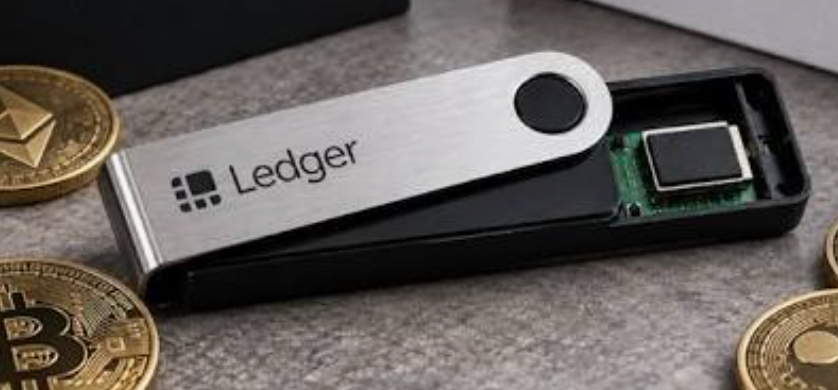
Nothing here replaces the manufacturer’s own notice, so start by reading Ledger’s official statement if you own one of its devices. The table below turns the guidance and the general good practice for self-custody into a short list you can run through in a few minutes. It cannot prove a device is clean, but it can catch the situations Ledger itself flagged.
| Check | What good looks like | What should worry you |
| Where you bought it | The maker’s own store or a reseller the maker lists officially | A marketplace seller, an auction listing, or an unsolicited offer |
| Whether you bought from this reseller | You did not | You did, within the past 90 days (Ledger’s window) |
| The recovery card | Blank when you open the box | Words already written on it |
| Who has seen the words | Only you, written by hand, stored offline | A photo, a cloud note, or anyone else who has seen them |
| Packaging and casing | Intact seals and no gaps or glue marks | Signs of resealing or a case that looks reopened |
| Where words are entered | Nowhere except the device you own | Any website, app or caller asking for them |
Handling the Packaging and the Recovery Card
The recovery card is the easiest item to judge. A normal setup process produces the words on the device screen, so a card that arrives already filled in is a red flag in its own right, regardless of any implant. Treat any pre-written word list as compromised and do not use it, because someone other than you already knows it. Packaging is a weaker clue: seals and boxes can be reproduced or reused, so intact packaging reassures only when it is paired with a trustworthy seller.
If You Have Not Set up the Device Yet
Ledger’s advice is plain: if you bought from this reseller in the past 90 days and have not set up the device, do not set it up. Keep it unused, contact the manufacturer through its official support page, and buy a replacement from an authorized channel. Setting up is the step that exposes the phrase, so leaving the device sealed removes the main risk described in the reporting.
If You Already Set It Up
Do not wait for a visible loss before acting, because the exposure happened at setup and not at the moment of theft. Move your assets to a new signer with a new seed phrase. That wording, taken from Ledger’s guidance, matters, because moving funds between addresses on the same compromised phrase would leave the attacker holding the keys to the destination as well. Anyone whose recovery phrase arrived pre-written, or whom anyone else has seen the words of, should treat that wallet as unsafe even if no loss has happened yet.
Limits of the Built-in Authenticity Check
Many owners reach for the manufacturer’s own authenticity check as soon as they feel doubt. Ledger itself says that tool cannot detect added hardware if the original Secure Element is intact. That is consistent with how such checks generally work: the software challenges the chip and verifies a cryptographic response, which proves that the chip inside the device holds the maker’s credentials.
A separate board glued next to that chip does not take part in the exchange, so the check passes even though the device is compromised.
What a Passing Check Does Prove
A pass is useful for one narrow question, which is whether the core chip is a legitimate one made by the manufacturer and not a counterfeit imitation. It was designed to catch fakes that replace the secure chip, not parasites that sit beside it.
For the implant described in this case, which leaves the Secure Element untouched, a passing result should not be read as a clean bill of health. Treat the check as one input, never as the final word on a device you bought from a doubtful source. The deeper lesson is that a hardware wallet is only as trustworthy as the path it took to reach you, and software cannot fully repair a broken path.
The Dispute Over Detection
On 19 October CoinGabbar reported that Mark Karpelès disputed Ledger’s claim that its secure element can detect spy hardware, and that he cited Ledger’s own documentation. This is a single-source report of a disagreement, and the report available here does not include Ledger’s reply, so the matter should be considered open.
What both sides appear to agree on is the practical conclusion: the safest protection is the supply chain, meaning where and how you bought the device, because no after-the-fact software test is a reliable stand-in for that.
Moving Funds After a Suspect Setup
If you have reason to think a phrase was exposed, the goal is to get your assets under keys the attacker has never seen. The order of steps matters more than speed, since a hurried transfer to the wrong place can make things worse. The steps below are general good practice, with Ledger’s published guidance as the baseline; a security professional can advise on a specific situation.
Most of the damage in incidents like this one comes from panic, so it helps to work slowly and in a fixed order. Set aside an hour in a private place, keep your phone and any messaging apps out of the way, and decide in advance that you will not respond to anyone who contacts you uninvited.
Step One: Get a Clean Device
Obtain a new hardware wallet from the manufacturer’s own store or an officially listed reseller, and check the packaging and the recovery card on arrival. If you cannot get a device quickly, resist the temptation to use a shortcut such as a random download or a borrowed device. Speed matters, but a rushed purchase from the very kind of source that caused the problem would repeat it.
Step Two: Create a New Phrase and Record It Carefully
Set up the new device so that it generates a new recovery phrase, and write the words down by hand, on paper or a metal backup, in a private place. Do not photograph them, store them in a notes app or type them into any website. The phrase from the compromised device must be retired, because it can still be used by whoever has copied it, even if the old hardware is thrown away.
Step Three: Transfer in a Sensible Order
Work from the most valuable holdings down, so that the largest balances leave the exposed wallet first. Send a small test amount to the first address on the new device, confirm that it arrives, and only then move the rest. Account for network fees, and remember that tokens, staked positions and approvals tied to the old addresses may need separate handling. If you hold assets in several networks, repeat the sequence for each one. Keep records of the transactions, since they may help if you later report a loss to authorities.
Step Four: Close Out the Old Wallet
After the funds have moved, check each old address once more to confirm it is empty, and keep a private note of which phrase belonged to which device so that nobody, including you, reuses the exposed one by accident. Do not sell or give away the old device without resetting it, and be cautious about using it again for anything of value.
Step Five: Expect Impersonators
Incidents like this attract scammers who pose as support staff. Ledger says it will never call or message you, and it will never ask for your 24-word recovery phrase. Anyone who does is not the company, whatever their caller ID or profile picture says. Support questions should go through the official support page that you reach by typing the address yourself, not through a link in a message.
Final Thoughts
Begin with a simple question: did you buy a hardware wallet from this reseller in the past 90 days, or from a marketplace or auction seller that is not an officially listed channel? If the answer is no, and you set the device up yourself from a sealed box bought from the maker, the reporting does not suggest you are affected, though reading the manufacturer’s notice is still worthwhile. If the answer is yes and you have not set up the device, leave it unused and contact the manufacturer through its official page.
If the answer is yes and you did set it up, treat the recovery phrase as exposed and follow the sequence above: clean device, new phrase, small test transfer, then the rest. Along the way, stay skeptical of unsolicited help, and keep in mind that the loss figure of more than $86 million is an unconfirmed estimate, so you should not use it to judge your own risk in either direction. For large holdings, a qualified security professional is worth paying for; for any loss, report it to the relevant authorities and to the manufacturer. This article offers general information, not advice on your personal situation.
One more habit is worth adopting whatever the answers turn out to be. Keep a short record of where and when you bought each wallet, including the seller name and order number, so that the next time a notice like this appears you can check it in a minute instead of trying to remember. Finally, watch Ledger’s official channels for updates, since the company has not yet said how or when the tampering happened and the facts may change as the investigation proceeds.
Frequently Asked Questions
Which Ledger Models Were Affected by the Implant?
The coverage ties the problem to devices sold through one reseller, not to a named model line. Check Ledger’s official notice for the latest details, because the company is still investigating. Do not rely on a model name alone to decide whether your device is safe.
How Can I Tell if My Hardware Wallet Was Bought From CryptoBilis?
Look at your order confirmation, the shipping label and the seller name on the receipt or marketplace page. The reseller has been described as a Malaysia-based retailer operating across Southeast Asia. If you cannot tell, ask the seller and Ledger support through the official support page before you set the device up.
Can the Ledger Authenticity Check Detect a Hardware Implant?
Ledger says the tool cannot detect added hardware if the original Secure Element is intact. Mark Karpelès has disputed a related Ledger claim about its secure element detecting spy hardware, according to a 19 October report. In practice, a passing check should not be treated as proof of a clean device.
Is It Safe to Buy a Hardware Wallet From Amazon or an Auction Site?
Ledger advises buying only from authorized channels. Researchers said the units they examined came from Amazon Japan, via a China-based seller, and from Yahoo! Auctions Japan, so third-party listings deserve extra caution. The safest route is the manufacturer’s own store or an officially listed reseller.
What Should I Do if I Already Set up a Device From This Reseller?
Ledger’s guidance is to move your assets to a new signer with a new seed phrase. Do not reuse the old phrase on the new device, and treat it as exposed. Use a device bought from an authorized source and follow the sequence in the article.
Will Ledger Ever Ask for My 24-Word Recovery Phrase?
No. Ledger says it will never call or message you or ask for your 24-word recovery phrase. Anyone who asks, by phone, email, chat or a website, should be treated as a scammer.