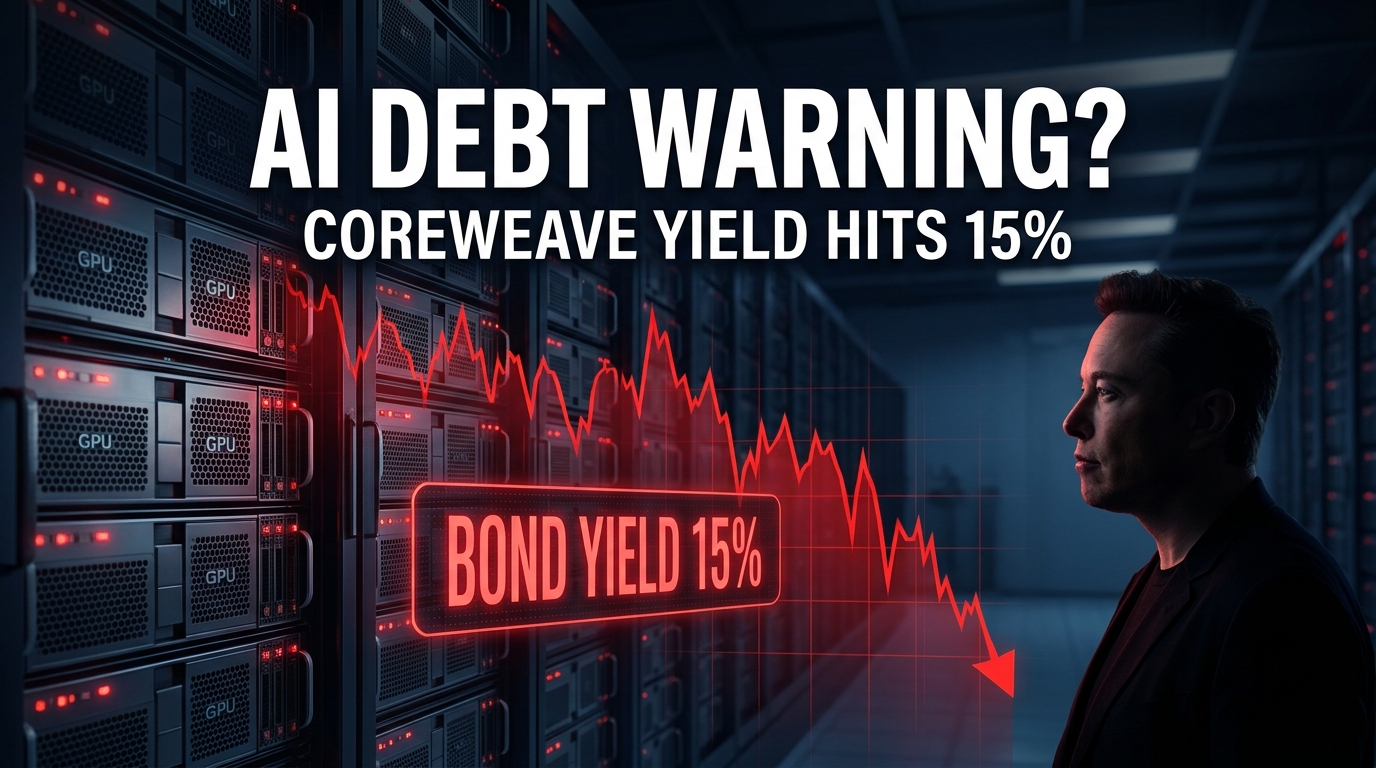
What Is the CoreWeave Bond Yield Crisis and Why Did It Go Viral With One Musk Tweet?
The CoreWeave bond yield crisis highlights growing concerns about debt, artificial intelligence infrastructure, and investor confidence. CoreWeave has become an important name in AI computing. However, the company’s financing needs have also attracted attention from bond investors.
Meanwhile, Elon Musk’s influence on social media can bring financial discussions into the public spotlight. A single widely shared comment can amplify existing concerns about a company or an industry. Yet, investors must separate verified financial developments from online speculation.
What Is CoreWeave and Why Does It Matter?
CoreWeave is a cloud computing company specializing in artificial intelligence workloads. It provides access to powerful graphics processing units, commonly called GPUs. These processors help companies train and operate advanced AI models.
Unlike traditional cloud providers, CoreWeave focuses heavily on accelerated computing infrastructure. Its customers include businesses that need substantial computing power for demanding AI projects.
However, building this infrastructure requires significant investment. CoreWeave must secure GPUs, construct data centers, obtain electricity, and maintain networking systems. Consequently, financing plays a major role in its business strategy.
The company can benefit when AI demand grows. Nevertheless, expensive infrastructure creates financial risks if revenue fails to meet expectations.
What Does the CoreWeave Bond Yield Crisis Mean?
A bond’s yield shows the income an investor can expect relative to what the bond costs in the market. When bond prices rise, yields typically fall, and when prices drop, yields tend to climb.
When investors become concerned about a company’s financial health, they may demand higher yields. This can push existing bond prices lower.
For a company like CoreWeave, rising borrowing costs could become particularly important. Its infrastructure expansion requires substantial capital, and debt can help fund that growth.
However, a higher yield does not automatically mean a company faces bankruptcy. Investors also consider maturity dates, cash flow, available assets, and overall market conditions.
The phrase “CoreWeave bond yield crisis” therefore needs careful examination. Readers should verify the specific bonds involved, their reported yields, and the dates of any market movements.
Why Are Investors Watching CoreWeave’s Debt?
1. AI Infrastructure Requires Huge Investments
AI companies need powerful chips, advanced cooling systems, reliable electricity, and specialized data centers. These resources involve considerable upfront costs.
CoreWeave must invest before it can generate returns from every new facility. Therefore, delays in construction or customer demand can affect its financial performance.
Additionally, rapid expansion can increase borrowing requirements. Investors want evidence that future revenue can support those commitments.
2. Interest Rates Affect Borrowing Costs
Higher interest rates can make financing more expensive across the technology sector. Companies that rely heavily on borrowing may face greater pressure.
However, market interest rates are only one factor. A company’s creditworthiness, bond terms, and repayment schedule also influence borrowing costs.
If lenders view CoreWeave as riskier, they may demand additional compensation. This difference is known as a credit spread.
3. AI Demand Does Not Guarantee Profits
The AI industry continues to attract major investment. Nevertheless, strong demand alone does not guarantee sustainable profits.
Companies must manage operating expenses, equipment depreciation, customer concentration, and infrastructure utilization. Otherwise, revenue growth may not translate into sufficient cash flow.
As a result, investors increasingly examine whether AI infrastructure spending can deliver lasting financial returns.
How Could One Elon Musk Tweet Make the Story Go Viral?
Elon Musk has a substantial online audience and regularly influences public discussions about technology. His comments can quickly attract attention from investors, journalists, and market analysts.
When a prominent figure comments on AI companies or financing risks, social media users may connect that statement to broader market concerns. As a result, an existing financial debate can spread rapidly.
However, the distinction between attention and evidence matters. A viral post does not independently prove that a company’s bonds are collapsing or that a financial crisis has begun.
To establish a direct connection, readers need the original post, its publication date, and reliable reporting about subsequent market movements.
Without that evidence, attributing a CoreWeave bond selloff to one Musk tweet would be premature.
What Happens When Bond Yields Rise?
Higher yields can create several challenges for a company that needs continued financing.
First, new borrowing may become more expensive. This can increase the cost of building additional computing facilities.
Second, existing investors may demand stronger financial performance. Consequently, management could face greater pressure to control spending and demonstrate profitability.
Third, higher financing costs can influence how investors value a company’s future earnings. They may become less willing to pay premium prices for growth.
Nevertheless, the actual impact depends on the company’s debt structure. Fixed-rate debt does not automatically become more expensive when market yields rise. Refinancing needs and floating-rate obligations matter considerably.
What Should Investors Watch Next?
Investors should examine several indicators before deciding whether CoreWeave faces a genuine credit problem.
Bond Prices and Credit Spreads
Look for verified trading data covering the company’s specific bonds. Compare their yields with relevant government securities and similarly rated corporate debt.
Cash Flow and Debt Obligations
Review operating cash flow, capital expenditure, debt maturities, and available liquidity. These figures help explain whether the company can fund its expansion responsibly.
Customer Commitments and Revenue Growth
Long-term customer agreements can support revenue visibility. However, investors should also examine contract terms, customer concentration, and the costs required to deliver services.
Official Filings and Credible Reporting
Company filings, bond documents, and established financial news outlets provide stronger evidence than viral posts. Check publication dates because financial conditions can change quickly.
Is the CoreWeave Bond Yield Crisis a Warning for the AI Industry?
The broader issue extends beyond CoreWeave. AI infrastructure companies face a difficult balance between rapid expansion and financial discipline.
On one hand, increasing AI adoption creates opportunities for specialized cloud providers. On the other hand, expensive infrastructure can expose businesses to financing and demand risks.
Therefore, investors must evaluate both growth potential and financial resilience. Revenue growth, customer commitments, manageable debt, and sustainable cash flow all matter.
The CoreWeave story illustrates why financial headlines deserve careful scrutiny. Social media can accelerate a market narrative, but verified data must establish whether that narrative reflects a real crisis.
Conclusion
The CoreWeave bond yield crisis narrative combines AI infrastructure spending, corporate debt, and the influence of online commentary. Rising bond yields can signal greater investor concern, but they do not automatically indicate financial collapse.
Likewise, a viral Elon Musk tweet may amplify a discussion without causing the underlying market movement.
The most reliable approach is to examine actual bond data, company filings, and credible reporting. Ultimately, CoreWeave’s financial position depends on its ability to turn substantial AI infrastructure investments into sustainable cash flow.