How Oura Ring and Samsung Galaxy Ring Are Competing for Your Wrist
Smart rings have moved from being a niche fitness accessory to becoming serious health and wellness devices. Instead of wearing a smartwatch all day, users can now place a small sensor-packed ring on their finger and quietly collect information about sleep, heart rate, activity, temperature, and recovery.
Two of the biggest names in this space are Oura Ring and Samsung Galaxy Ring. While both products focus heavily on health tracking, they approach the smart-ring market from different directions. Oura has built its reputation around detailed wellness insights and sleep tracking, while Samsung is connecting its Galaxy Ring closely with the broader Galaxy ecosystem and Samsung Health.
The competition is becoming more interesting because consumers are no longer simply asking whether a smart ring can track their health. They want to know which ring provides the most useful insights, the best battery life, the strongest ecosystem, and the easiest everyday experience.
Oura Ring vs Samsung Galaxy Ring: What Is the Real Difference?
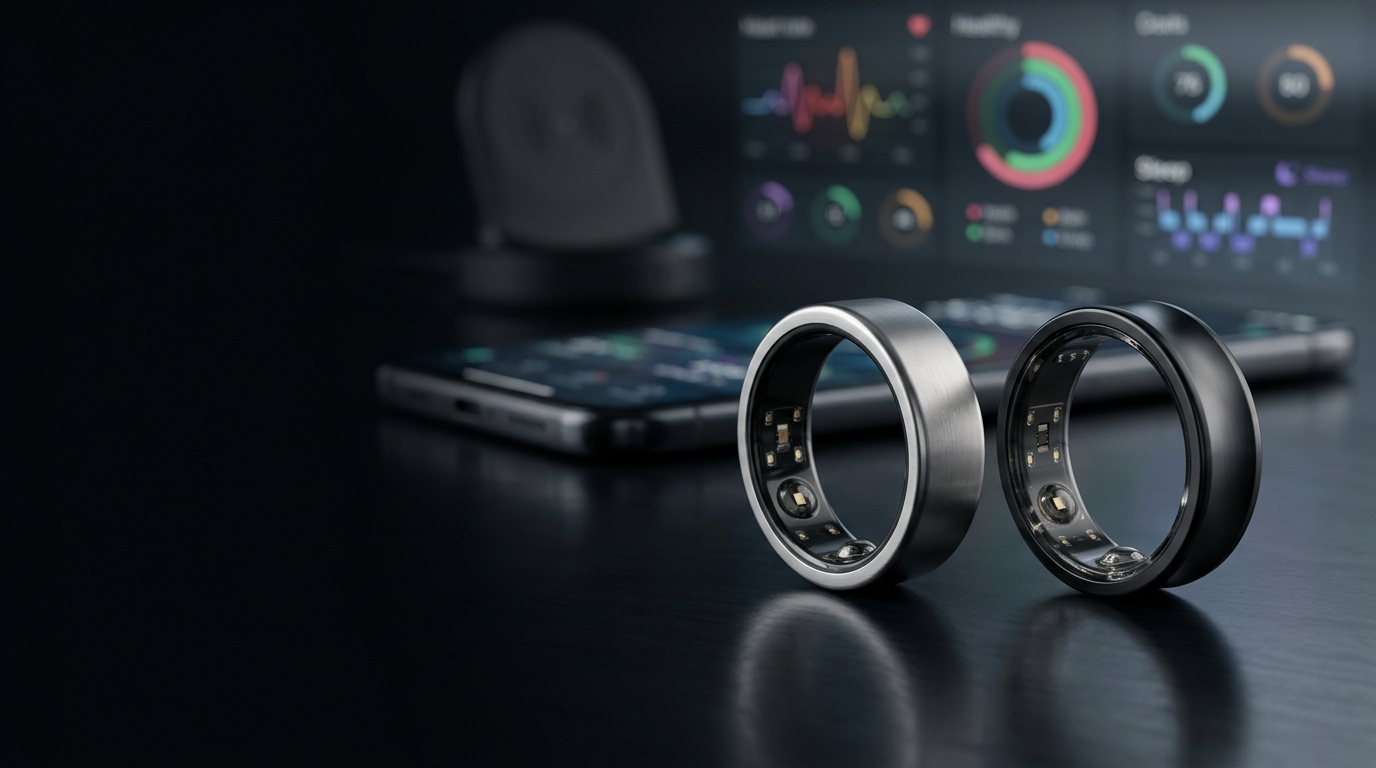
At first glance, the Oura Ring and Galaxy Ring appear remarkably similar. Both are compact, screen-free wearables designed to stay on the finger throughout the day and night.
The major difference is the philosophy behind each product.
Oura focuses heavily on personal health insights, turning collected data into information about sleep, readiness, stress, activity, recovery, and other wellness patterns. Oura Ring 4 uses its Smart Sensing platform and multiple sensors to continuously collect health information. Oura says the Ring 4 typically delivers five to eight days of battery life depending on size, settings, and usage.
Samsung takes a broader ecosystem approach. Galaxy Ring works with Samsung Health and is designed to complement other Galaxy devices, particularly Galaxy smartphones and Galaxy Watches. Samsung also uses Galaxy AI to analyze health information and provide personalized insights such as Energy Score and wellness recommendations.
That difference could become one of the biggest factors when deciding between them.
Oura Ring Puts Sleep and Recovery at the Center
Oura has spent years establishing itself as one of the best-known names in smart rings. Its strength is not simply collecting numbers but organizing them into understandable health trends.
Oura Ring 4 tracks metrics including heart rate, heart-rate variability, blood oxygen, temperature variations, movement, sleep, stress, activity, and cardiovascular-related information. Its software also offers personalized reports and health insights.
Sleep is particularly important to the Oura experience.
Rather than treating sleep as just another fitness statistic, Oura places significant emphasis on understanding sleep quality, recovery, readiness, and daily behavior. The company describes its platform as a combination of measurement and interpretation, with membership features designed to turn collected data into guidance.
For people who want a wearable that they can put on before bed and largely forget about, this approach remains one of Oura’s strongest advantages.
Samsung Galaxy Ring Builds Around the Galaxy Ecosystem
Samsung has a major advantage that Oura cannot easily replicate: the enormous Galaxy ecosystem.
The Galaxy Ring is designed to work with Samsung’s existing health and wearable platform. Data can be viewed through Samsung Health, giving Galaxy users a familiar place to review sleep, activity, heart rate, and other wellness information.
Samsung also positions the Galaxy Ring as part of a larger wearable experience rather than a standalone product.
When combined with a Galaxy Watch, users can get a broader picture of their health and activity. Samsung’s platform can combine information from different devices, making the Galaxy Ring especially attractive to people who already own a Galaxy smartphone or smartwatch.
This creates an important distinction: Oura is primarily a smart-ring and wellness platform, while Samsung is making the ring part of a much larger hardware ecosystem.
Battery Life Is Important for a Device You Wear 24/7
Battery life matters more with a smart ring than many people initially realize.
A ring is supposed to remain on your finger while you work, exercise, sleep, and go about your normal routine. Frequent charging can interrupt the very data collection that makes the device useful.
Oura Ring 4 is rated for typically five to eight days of battery life, although actual results vary according to size, settings, feature usage, and battery age.
Samsung Galaxy Ring is rated for up to seven days depending on usage and ring size, with its charging case playing an important role in keeping the ring powered.
The difference is therefore less dramatic than it might appear in marketing comparisons. Both are designed to provide several days of use rather than requiring daily charging.
The better choice may depend more on how convenient each charging system feels in everyday life.
Health Tracking Goes Beyond Step Counting
Modern smart rings are much more sophisticated than simple pedometers.
Oura Ring 4 uses optical sensors, temperature sensing, blood oxygen sensing, and an accelerometer to monitor different aspects of the body and activity. Its Smart Sensing system is designed to select appropriate sensing pathways according to the user’s circumstances.
Samsung Galaxy Ring also uses three primary sensor categories: an accelerometer, optical bio-signal sensors, and a skin-temperature sensor. Samsung uses these sensors for measurements related to heart rate, activity, sleep, and other wellness information.
This means the competition is not simply about who can count more steps.
The bigger question is who can turn health measurements into useful decisions.
For example, a useful wearable should not merely tell us that we slept for seven hours. It should help us understand whether our sleep and recent activity suggest that we should push harder, recover, or change our routine.
Galaxy AI Gives Samsung a New Competitive Weapon
Artificial intelligence is becoming an important part of wearable technology.
Samsung uses Galaxy AI within its health experience to turn collected information into more understandable insights. Its Energy Score analyzes factors such as sleep, heart rate, and activity to provide an indication of daily readiness. Samsung also offers Wellness Tips based on collected health information.
This changes the role of the smart ring.
Instead of opening an app and interpreting several charts ourselves, AI can summarize patterns and suggest actions.
Oura has also developed a sophisticated software experience around personal insights, but Samsung’s connection between Galaxy AI, Samsung Health, smartphones, watches, and the ring gives it a particularly strong platform for expansion.
Design and Comfort Could Decide the Winner
A smart ring has one major requirement: people need to be willing to wear it.
Unlike a smartphone, it does not have a screen demanding attention. Unlike a smartwatch, it does not provide notifications on your wrist. Its value comes from quietly collecting information in the background.
Oura Ring 4 uses a fully titanium design with recessed interior sensors designed for comfort. Depending on size, the ring weighs approximately 3.3 to 5.2 grams.
Samsung Galaxy Ring also uses titanium and has a lightweight design. Samsung lists its weight at approximately 2.3 to 3.2 grams depending on size.
These numbers suggest that both products are designed for long-term wear, but comfort remains personal. Finger shape, ring size, lifestyle, and individual preference can all influence which feels better.
Subscription Costs Can Change the Value Equation
Hardware price is only part of the decision.
Oura’s software experience includes membership features, and the company describes its membership as the layer that interprets the measurements collected by the ring and provides detailed health insights.
That recurring cost can become significant over several years.
Samsung’s Galaxy Ring takes a different approach by integrating much of its experience into Samsung Health and the Galaxy ecosystem. This can make the overall ownership model more appealing to consumers who already use Samsung devices.
For a buyer comparing total ownership cost, it is therefore important to consider the ring price, software requirements, phone compatibility, and long-term subscription costs together.
Which Smart Ring Is Better for Samsung Users?
For someone already invested in Samsung’s ecosystem, the Galaxy Ring has an obvious advantage.
A Galaxy smartphone owner can access Samsung Health, Galaxy AI features, and other connected-device functions without introducing an entirely separate health platform into their daily routine.
Samsung also offers features designed to work alongside Galaxy Watch devices. This makes the Galaxy Ring particularly attractive to users who want to combine discreet overnight tracking with a more traditional smartwatch during the day.
In this situation, Galaxy Ring is not merely another wearable. It becomes another component of an existing ecosystem.
Who Should Choose Oura Ring?
Oura remains highly compelling for people who prioritize sleep, recovery, readiness, stress, and detailed wellness insights.
Its long-established smart-ring platform gives it a strong identity in the health-tracking category. Oura Ring 4 is built around continuous sensing and an app experience designed to make health trends easier to understand.
People who use services such as Strava and other health platforms may also appreciate Oura’s third-party integrations.
The strongest reason to choose Oura is therefore not necessarily a single hardware specification. It is the overall health-focused experience.
Who Should Choose Samsung Galaxy Ring?
Samsung Galaxy Ring makes more sense for people who already use Galaxy smartphones, Samsung Health, or Galaxy Watches.
Its strengths include ecosystem integration, AI-powered health insights, sleep tracking, activity tracking, and the ability to work alongside other Samsung wearables. Samsung also rates the ring for up to seven days of battery life.
For a Galaxy user, the decision can be straightforward: why add another health platform when Samsung already provides one that connects the phone, watch, and ring?
The Smart Ring Competition Is Just Getting Started
The competition between Oura and Samsung is important because it represents a larger shift in wearable technology.
Smartwatches have traditionally dominated fitness tracking, but rings offer something different. They are smaller, more discreet, and generally easier to wear while sleeping.
The next stage of competition will likely focus less on adding more sensors and more on making health data genuinely useful.
Consumers do not necessarily need hundreds of measurements. They need accurate information presented at the right time, in language they can understand, with recommendations that fit their daily lives.
Oura has an advantage in health-focused experience and personalization. Samsung has the advantage of a massive ecosystem and an increasingly important.
Oura Ring vs Samsung Galaxy Ring: Final Verdict
There is no single winner for every user.
Oura Ring is the stronger choice for people who want a health-first smart ring with a deep focus on sleep, recovery, stress, and personalized wellness insights.
Samsung Galaxy Ring is especially attractive for Galaxy users who want their smart ring connected to Samsung Health, Galaxy AI, and other Samsung devices.
The most interesting part of this competition is that both companies are proving that a wearable does not need a screen to become useful.
The smart ring is evolving into a quiet health companion that collects information throughout the day and night. As Oura and Samsung continue improving their software, sensors, AI capabilities, and ecosystems, consumers will have more powerful options for understanding their health without constantly checking a watch or phone.
The battle may be taking place on a finger rather than a wrist, but its impact on the wearable market could be much bigger.